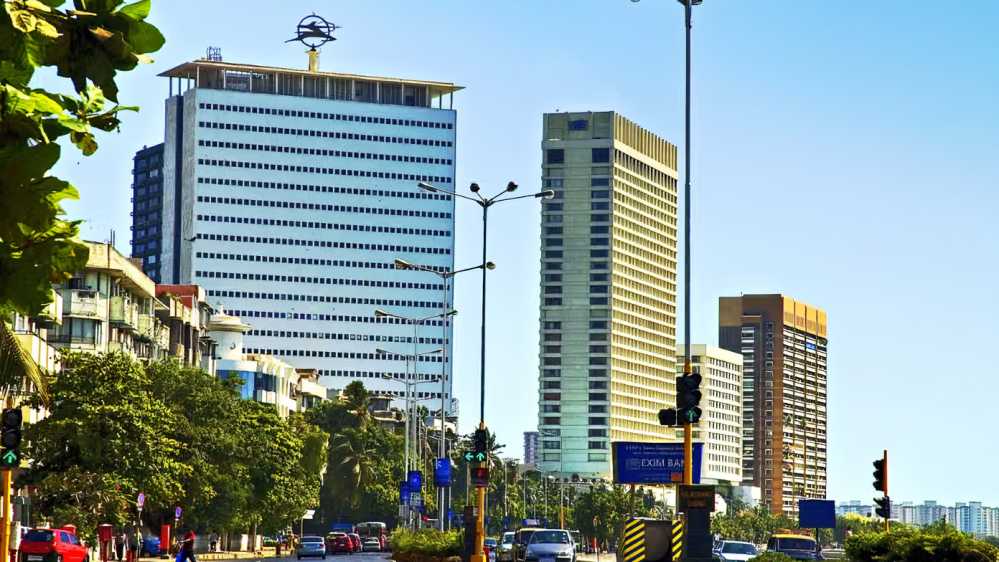

For more than 50 years, the Air India Building at Nariman Point has stood as one of Mumbai’s most prominent landmarks, symbolising the rise of India’s civil aviation sector. Overlooking the Arabian Sea and crowned by Air India’s iconic centaur emblem, the tower is now transitioning from an aviation headquarters to a key government office complex.
On Tuesday, Chief Minister Devendra Fadnavis oversaw the formal transfer of the property from Air India Assets Holding Limited (AIAHL) to the Maharashtra government. The acquisition, valued at Rs 1,601 crore, was approved by the Centre in March 2024 and subsequently cleared by the state cabinet. Earlier this year, the state released Rs 1,600 crore to complete the transaction.
Constructed in 1974 on reclaimed land at Nariman Point, the 22-storey tower was designed by renowned American architect John Burgee. Equipped with modern amenities for its time, including central air-conditioning and basement parking, it served as Air India’s headquarters and housed several commercial and government offices over the decades.
The building also witnessed one of Mumbai’s darkest moments. During the 1993 serial bomb blasts, an explosives-laden vehicle detonated outside the tower, causing significant damage and claiming lives. Despite the tragedy, the structure was restored and continued functioning, becoming a symbol of the city’s resilience.
Air India shifted its headquarters to the Delhi-NCR region in 2013 as part of a restructuring exercise, leaving much of the building vacant. Plans to sell the asset began in 2018, but the process faced valuation disputes, competing bids and procedural hurdles.
The Maharashtra government has long pursued the acquisition to address the growing shortage of office space near Mantralaya. “At present, even with the Mantralaya and an annexe, the space for government offices is insufficient, hence the demand for this building,” Fadnavis had said in 2022.
With nearly 46,470 square metres of space, the landmark is expected to play a crucial role in streamlining government operations while preserving its place in Mumbai’s architectural and historical landscape.
Source: The Print