
The Mumbai Metropolitan Region Development Authority’s (MMRDA) new “Public Transport Friday” initiative aims to encourage employees in Bandra Kurla Complex (BKC) to leave their private vehicles at home and rely on public transport once a week. However, a ground-level assessment suggests that while reaching BKC is relatively manageable, returning home during peak hours remains a major challenge.
The initiative was launched after an MMRDA survey revealed that more than half of BKC commuters spend over two hours travelling daily. Despite significant investments in transport infrastructure, 52% of commuters still depend on private vehicles, taxis and auto-rickshaws, while only around one-fourth regularly use public transport.
A test of key commuter routes highlighted both the strengths and shortcomings of the existing network. Morning journeys from Bandra East Depot and Kurla Depot to Diamond Market in BKC were relatively smooth, with travel times of approximately 15 to 20 minutes. Buses were available within a reasonable waiting period, although many passengers had to travel standing due to crowding.
The introduction of Metro Line 3 has improved access to BKC, but the last-mile challenge continues to persist. The 1.3-kilometre stretch between the Metro station and Diamond Market lacks covered pedestrian infrastructure, forcing many commuters to either walk in difficult weather conditions or use shared auto-rickshaws, which typically charge around Rs 40 per seat.
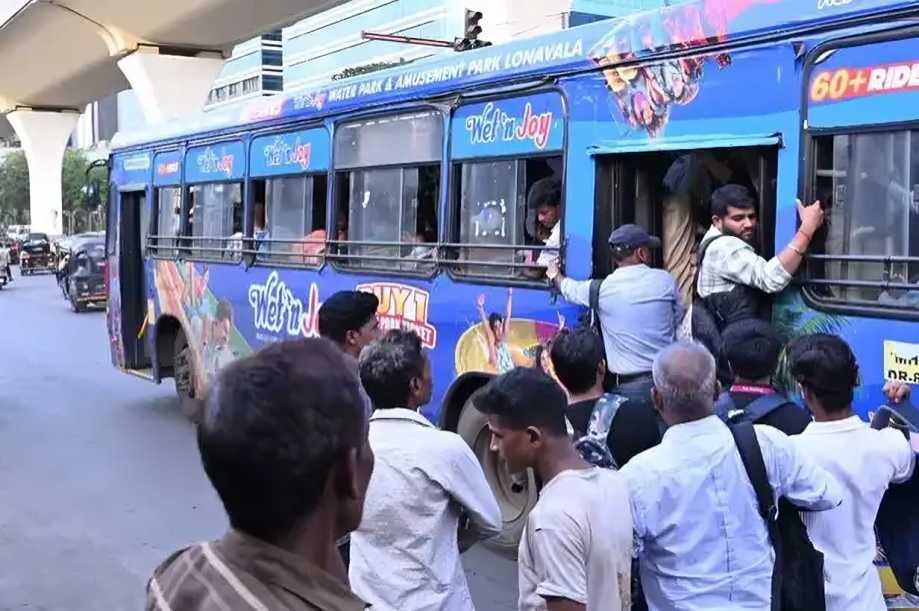
The biggest difficulties emerged during the evening rush. A journey from Diamond Market to Kurla Depot that took about 20 minutes in the morning stretched to nearly 52 minutes in the evening due to traffic congestion, bottlenecks and illegally parked vehicles. Commuters also faced longer waiting times and overcrowded buses.
The findings suggest that while the city’s public transport network is functional during non-peak hours, it struggles to cope with heavy evening demand. Experts believe that increasing bus frequency, improving last-mile connectivity, enhancing pedestrian infrastructure and better traffic management will be critical if authorities want more commuters to shift away from private vehicles.
For now, the BKC commute remains a test of endurance, particularly at the end of the workday, when overcrowding and congestion continue to overshadow the benefits of expanded transport infrastructure.
Source: Mumbai Mirror