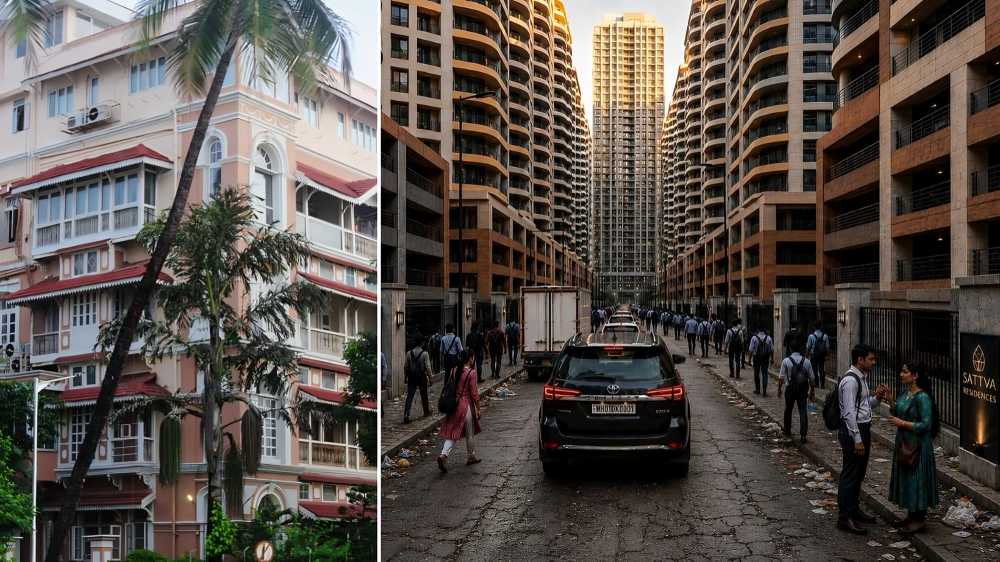

Mumbai’s Bandra, long celebrated for its tree-lined streets, heritage bungalows and distinctive character, is undergoing another wave of transformation as redevelopment accelerates under the city’s planning regulations. While new projects promise modern housing and better utilisation of land, many residents and urban planners fear the suburb is gradually losing the identity that once defined it.
The debate over Bandra’s changing landscape is not new. Decades ago, the suburb witnessed the steady replacement of its iconic bungalows with apartment buildings. Today, that shift has entered a new phase, with mid-rise residential structures increasingly giving way to towers rising 18 to 20 storeys. The implementation of the Development Control and Promotion Regulations (DCPR) 2034, particularly Regulations 33(5), 33(6) and 33(7), has made redevelopment financially attractive by permitting a higher Floor Space Index (FSI).
The impact is visible across the suburb, where construction activity has become widespread. Redevelopment not only changes the skyline but also significantly increases residential density. A property that once housed a single bungalow can now accommodate dozens of apartments, resulting in a sharp rise in population, vehicle ownership and pressure on civic infrastructure.
Urban planners argue that the challenge extends beyond new buildings. Architect and urban designer Samir D’Monte of the Bandra Collective believes current redevelopment policies could fundamentally alter the suburb’s urban fabric. In his presentation, This is the Way Bandra Ends, he argues redevelopment “could transform a typical Bandra street from a community of just 100 residents and eight cars in the 1950s into a corridor accommodating thousands of residents and vehicles in the decades ahead.”
Experts have also questioned whether supporting infrastructure is keeping pace with this growth. Architects Sameep Padora and Shantanu Poredi have advocated community-led planning and incentives that encourage developers to contribute to neighbourhood improvements, including more walkable streets and public spaces. Alan Abraham has similarly raised concerns, asking, “Are we creating more parks, playgrounds, schools, hospitals or public spaces to match the increase in population”?
While redevelopment is widely regarded as essential for renewing ageing housing stock, the discussion around Bandra reflects a broader question facing Mumbai: how can the city accommodate growth without sacrificing the unique character, public spaces and liveability of its established neighbourhoods?
Source: The Hindu