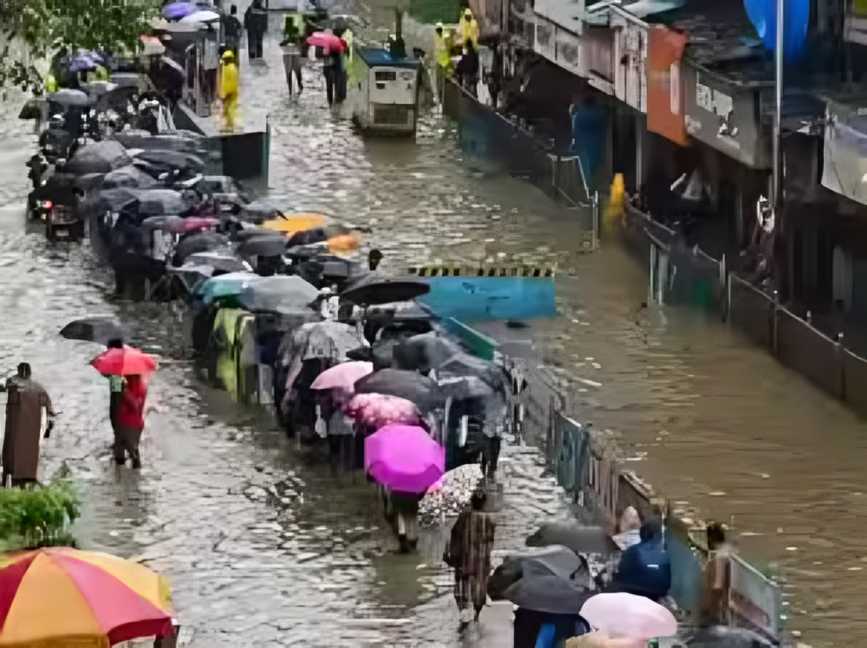

Mumbai’s recent spell of heavy rain has once again highlighted the city’s vulnerability to flooding despite years of investment in stormwater infrastructure. Between June 30 and July 6, the India Meteorological Department (IMD) recorded nearly 883 mm of rainfall at Colaba and close to 989 mm at Santacruz. Updated figures show Santacruz has already crossed the 1,000 mm mark in early July, surpassing the total rainfall recorded there during the entire month of July last year.
The sheer volume of rainfall is remarkable. Within just a week, Mumbai received more rain than Delhi typically records in an entire year and came close to Bengaluru’s annual average, underscoring the increasing intensity of extreme weather events.
Experts say the changing rainfall pattern reflects the growing impact of climate change. Rising temperatures allow the atmosphere to retain more moisture, leading to shorter but far more intense downpours. “For every one degree Celsius increase in temperature, the atmosphere can hold about 7 % more water vapor.” When weather systems align, this additional moisture is released rapidly, resulting in extreme rainfall.
Warmer sea surface temperatures in the Arabian Sea are also contributing to stronger monsoon systems. Moisture-laden winds move towards the Western Ghats, where they rise, cool and produce intense rainfall over Mumbai and neighbouring regions.
Despite extensive flood-control measures introduced after the devastating 2005 floods—including pumping stations, wider stormwater drains, floodgates and improvements to the Mithi River—many parts of the city continue to experience severe waterlogging.
“What every great flood asks: Why does a little rain still bring Mumbai to a standstill?”
Urban planners point out that drainage systems are designed using historical rainfall patterns and can become overwhelmed when 200-300 mm of rain falls within a few hours.
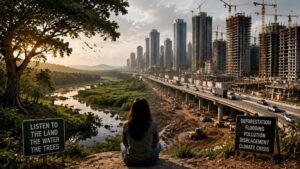
Rapid urbanisation has further compounded the problem. Wetlands, mangroves and open spaces that once absorbed rainwater have gradually given way to concrete development, increasing surface runoff. At the same time, construction debris, silt and plastic waste often clog drains during the monsoon, reducing their carrying capacity and worsening flooding even during relatively moderate spells of rain.
Source: The Economic Times