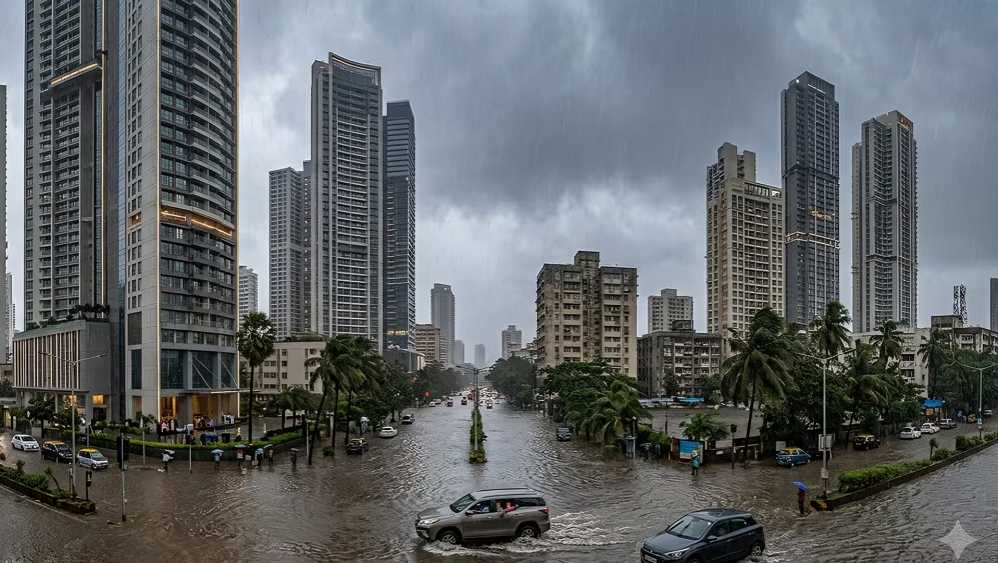

The arrival of the monsoon marks not just a change in weather, but the beginning of Mumbai real estate’s annual stress test.
Every year, around late June, Mumbai’s real estate market receives its most rigorous quality audit. Not from consultants. Not from rating agencies. Most certainly not from the glossy brochures, but from the monsoon.
After the first heavy spell of rain, the city transforms into an open-air exhibition of architectural truth. Basements become swimming pools without club memberships. Parking lots discover underground springs that no geological survey ever mentioned. “Future-ready infrastructure” begins searching for a functioning drainage outlet.
The monsoon has a remarkable ability to translate marketing language into plain English.
“Water-facing property” suddenly means your society gate is surrounded by water. “Resort-style living” now includes boating from the entrance to the security cabin. “Natural cooling” refers to the ceiling developing a new drip irrigation system.
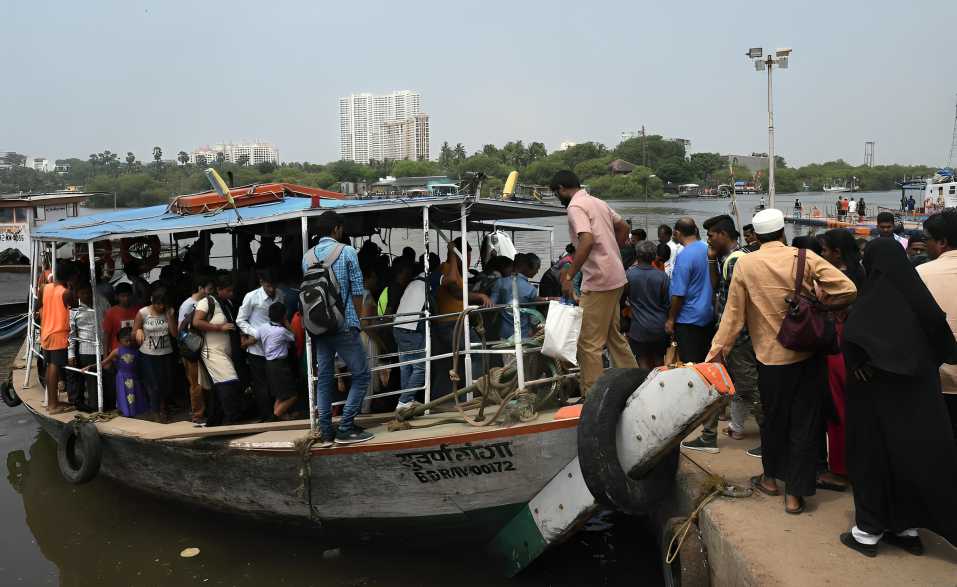
The first spell of the 2026 monsoon brought heavy rainfall across Mumbai, leaving several roads and low-lying neighbourhoods waterlogged and disrupting daily life. On June 29 alone, Mulund recorded 160.4 mm of rainfall and Versova 156.8 mm within a few hours, leading to waterlogging and traffic disruptions across the city, conditions that reveal far more about urban infrastructure than any project brochure can. For many homebuyers, it served as another reminder that drainage, flood resilience and civic infrastructure can matter just as much as premium amenities.
Mumbai’s skyline has undoubtedly grown taller. Luxury towers now compete for altitude rather than acreage. In several neighbourhoods, residential prices now exceed Rs 50,000 per sq ft, with premium locations comfortably crossing Rs 1 lakh per sq ft. The city also recorded over 1.4 lakh property registrations in 2025, reflecting continued demand despite rising prices. Yet every June, buyers ask a far simpler question than any sales brochure answers: “Does this road flood?”
To be fair, not every builder deserves criticism. Many projects today are better engineered than before. Flood-resistant designs, pumping systems, elevated electrical infrastructure and waterproofing have become part of modern construction. Yet every monsoon reminds us that a building can only be as resilient as the neighbourhood around it.
A residential tower cannot outsmart a clogged storm-water drain.
This is where Mumbai’s real estate story becomes uniquely fascinating. With more than 35,000 ageing buildings across the city and redevelopment reshaping entire neighbourhoods, buyers no longer ask only about carpet area or amenities. They ask questions that never appeared in property advertisements a decade ago.
“Does this road flood?”
“How many hours does waterlogging last?”
“Has the society’s generator ever failed during heavy rain?”
“Can my car survive the basement?”
These questions may not sound glamorous, but they increasingly influence purchase decisions as much as modular kitchens and rooftop lounges.
Ironically, the monsoon also exposes one of Mumbai’s greatest strengths. The city receives around 2,500 mm of rainfall every year, yet business resumes, trains return, construction sites reopen and property launches continue. Somewhere, despite knee-deep water outside, someone is still signing a home loan because Mumbai continues to promise opportunity, even when wrapped in rain clouds.
Perhaps that explains why property prices remain remarkably waterproof.
The lesson for the industry is straightforward. In an era of climate uncertainty, resilience is becoming the newest luxury amenity. Rainwater management, drainage planning, flood mitigation and infrastructure coordination deserve as much attention as Italian marble and sky decks. Because in Mumbai, the monsoon is not merely a season. It is the city’s toughest real estate reviewer. It neither reads brochures nor attends launch events. It simply arrives, rains without bias, and leaves behind a report card that every resident understands.
Five stars if your basement stays dry.
Anything less and next year’s sales pitch may need more than artist impressions.