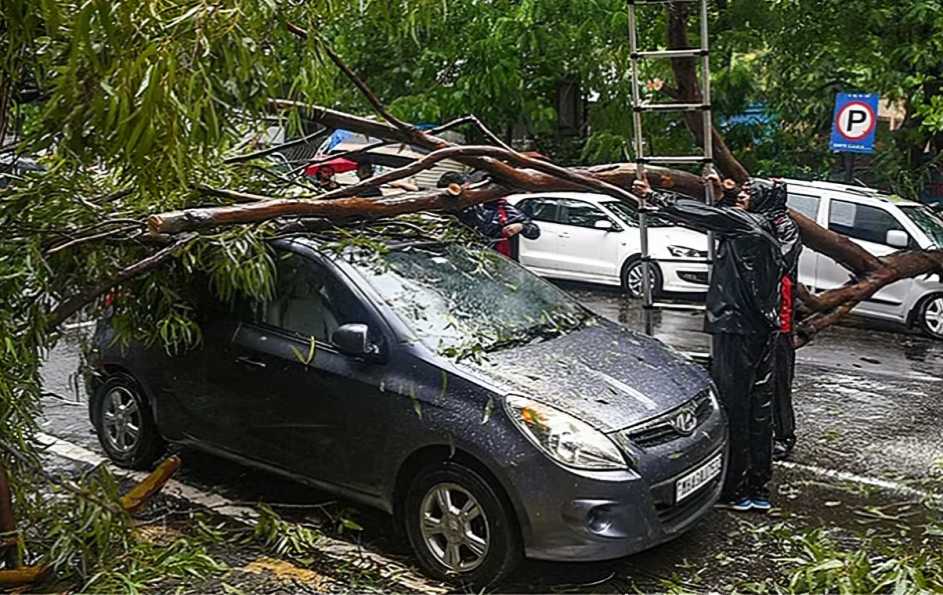

Every monsoon, Mumbai witnesses hundreds of trees falling that block roads, disrupt power supply, damage vehicles, and, in some cases, claim lives. While heavy rain and strong winds are often blamed, experts say weather is only one part of the problem. The real causes lie in years of accumulated stress on trees, including root damage during infrastructure works, concretisation around tree bases, improper pruning, fungal decay, ageing and the lack of scientific monitoring.
According to Brihanmumbai Municipal Corporation (BMC) data cited by The Indian Express, Mumbai recorded 687 tree-fall incidents in 2023, 653 in 2024 and 855 in 2025. The trend has continued this year, with The Times of India reporting that 826 trees fell within the first 14 days of the 2026 monsoon, averaging nearly 59 incidents a day.
Experts say healthy trees with strong root systems can generally withstand heavy rainfall and gusty winds. However, repeated excavation for roads, Metro projects, drainage works and utility lines often weakens roots. In many areas, tree bases have been covered with concrete, restricting water absorption, oxygen flow and root growth, while poor pruning practices further reduce structural stability.
Recent incidents have intensified concerns. In Chembur, an 11-year-old boy died after a roadside tree fell on a school bus. A preliminary BMC inquiry found extensive internal decay and damaged roots, while reports indicated that root damage caused during nearby road works had previously been flagged.
Arborists say many hazardous trees can be identified before they fail through internationally accepted Tree Risk Assessment methods. These involve evaluating root systems, trunk condition, canopy health, soil quality and surrounding land use. Where internal decay is suspected, specialised diagnostic tools can help determine whether pruning, structural support or removal is necessary.
Although the BMC conducts inspections and pre-monsoon pruning, environmentalists argue that the current approach relies heavily on visual assessments rather than scientific risk evaluation. They have also raised concerns over reduced funding for the Tree and Garden Department and the absence of a comprehensive digital tree-risk inventory.
Experts believe preventing future tree falls requires year-round monitoring, scientific assessments, protection of root zones during infrastructure projects and better urban planning. With climate change expected to increase the frequency of intense rainfall and strong winds, they stress that proactive tree management will be essential to preserve Mumbai’s green cover while ensuring public safety.
Source: Outlook