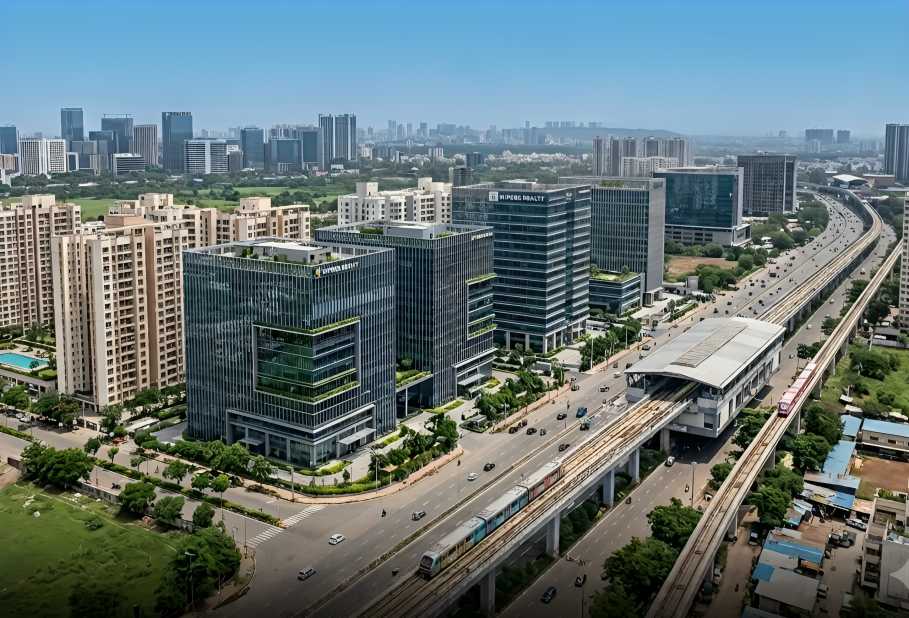

Mumbai’s Eastern Suburbs are steadily transforming into one of the city’s most prominent live-work corridors, supported by expanding infrastructure, growing commercial activity and sustained residential demand. Areas such as Chembur, Ghatkopar, Vikhroli, Kanjurmarg and Bhandup, traditionally known for their residential appeal, are now witnessing a parallel rise in office developments.
For years, these suburbs have attracted homebuyers due to their established social infrastructure, reputed educational and healthcare institutions, and seamless connectivity to South Mumbai, Navi Mumbai and the western suburbs. Today, improving transport infrastructure and changing workplace strategies are driving the region’s evolution into an integrated residential and commercial hub.
As companies increasingly adopt decentralised office models and seek locations closer to where employees live, the Eastern Suburbs are emerging as a preferred alternative to established business districts such as Bandra-Kurla Complex (BKC), Lower Parel and Powai, where land costs and congestion continue to rise.
The trend is supported by market data. According to CBRE, Mumbai recorded nearly 9.8 million sq ft of gross office leasing in 2025. Meanwhile, reports by Knight Frank India and ANAROCK highlight sustained demand for homes in infrastructure-driven suburban markets located close to employment centres.
Infrastructure projects including the Eastern Freeway, Santacruz-Chembur Link Road (SCLR), Eastern Express Highway and the Mumbai Monorail have significantly improved accessibility across the corridor. The upcoming Metro Line 2B is expected to further strengthen connectivity and support long-term growth.
Commercial development is gaining momentum across Vikhroli, Kanjurmarg, Bhandup, Ghatkopar and Chembur, with Grade A office projects and mixed-use developments gradually reshaping the region.
“The Eastern Suburbs are witnessing a significant shift as residential strength, infrastructure upgrades and commercial development increasingly reinforce one another. Well-established neighbourhoods across the corridor offer businesses access to a deep residential talent pool, while improving connectivity is making these locations far more accessible for employees and customers alike. Occupiers today are also seeking future-ready workspaces that prioritize sustainability, employee well-being and operational efficiency. As more Grade A commercial developments and mixed-use destinations emerge across the Eastern Suburbs, the region is steadily evolving into a compelling alternative to Mumbai’s traditional business districts,” says Shilpin Tater, Managing Director, Superb Realty.
The region has also attracted significant investments from developers such as Godrej Properties, Mahindra Lifespaces, Puravankara, Chandak Group, The Wadhwa Group, Rustomjee, Ajmera Realty and JP Infra, reflecting confidence in its long-term growth potential.
Highlighting Chembur’s transformation, a spokesperson from Chandak Group says, “One of Chembur’s biggest strengths is that its growth is not being driven by a single asset class. Alongside improving commercial activity, the suburb continues to witness sustained residential development, creating a strong catchment that supports offices, retail and social infrastructure. This integrated live-work ecosystem is becoming increasingly important for businesses as well as homebuyers. As connectivity continues to improve and new developments take shape, Chembur is evolving into a destination where people can live, work and access everyday conveniences within the same neighbourhood.”
With continued infrastructure investment, rising office demand and a strong residential base, Mumbai’s Eastern Suburbs are increasingly positioning themselves as one of the city’s fastest-growing integrated urban corridors.
Source: SME Street