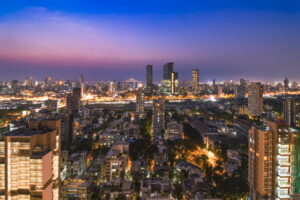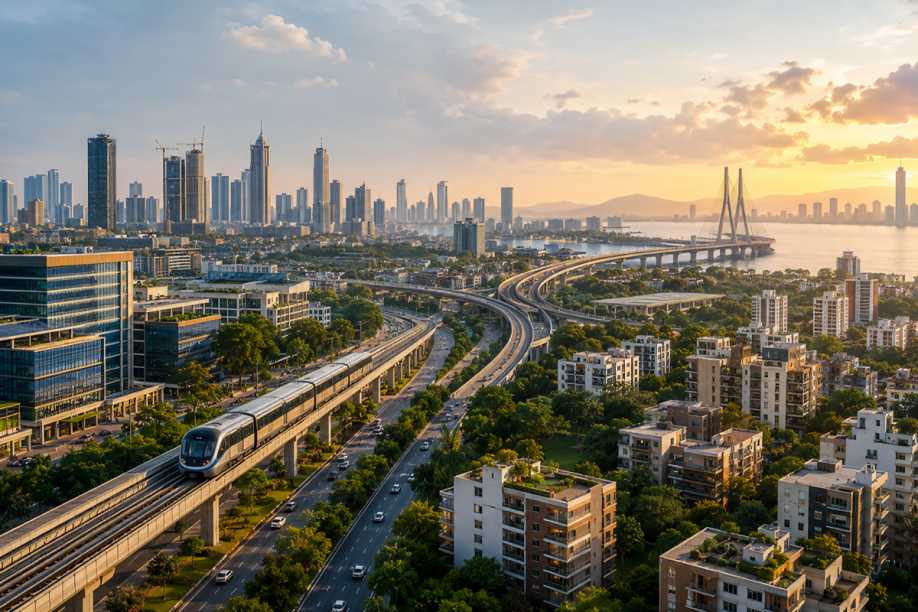

Infrastructure development is increasingly reshaping Mumbai’s real estate landscape, with emerging micro-markets across the Mumbai Metropolitan Region (MMR) becoming key drivers of residential and commercial growth. Improved connectivity, decentralised business hubs and large-scale redevelopment are encouraging buyers and businesses to look beyond the city’s traditional commercial districts.
According to ANAROCK’s Residential Market Viewpoints Q2 2026 report, the average residential property price in the MMR reached Rs 17,780 per sq. ft. during the second quarter of 2026, reflecting a 4% year-on-year increase. The report also highlighted that the MMR retained its position as India’s largest residential market, registering nearly 28,700 housing sales during the quarter and accounting for around 32% of the country’s total residential transactions.
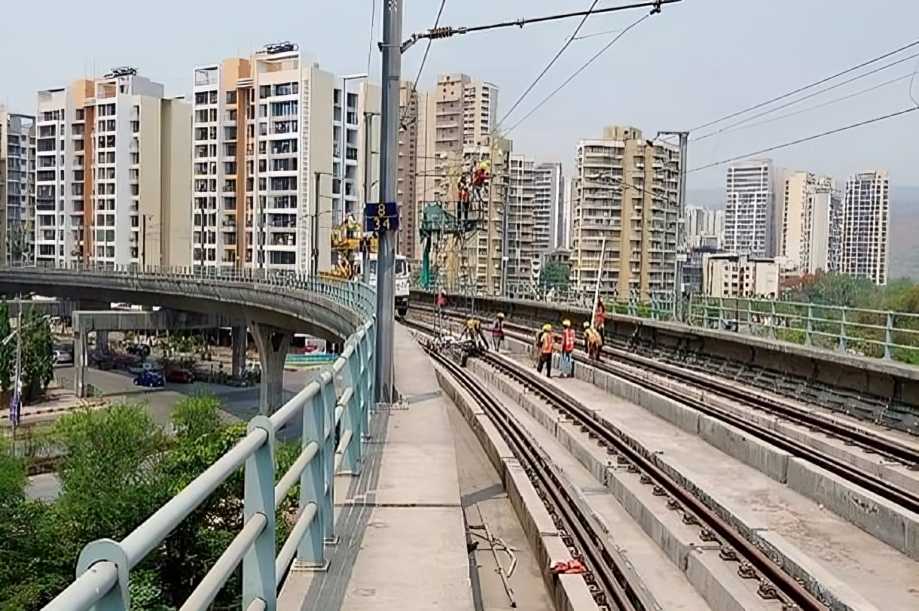
Real estate experts attribute this growth to the rapid expansion of transport infrastructure, including metro corridors, the Mumbai Coastal Road, the Mumbai Trans Harbour Link (MTHL) and several new road projects. Enhanced connectivity is enabling homebuyers and businesses to prioritise accessibility, employment opportunities, social infrastructure and long-term liveability over proximity to traditional central business districts.
Among the beneficiaries of this trend is Mulund. Chintan Sheth, Chairman and Managing Director of Sheth Realty, said the suburb’s infrastructure upgrades, established civic amenities and strategic connectivity have transformed it into a major residential destination. He noted that buyers are increasingly choosing neighbourhoods that offer both lifestyle advantages and long-term appreciation potential.
Industry leaders believe similar growth patterns are emerging across the MMR. Nishant Deshmukh, Founder and Managing Partner of Sugee Group, said Mumbai’s expansion is no longer centred on a single commercial district but is now being distributed across multiple self-sustaining urban hubs.
Referring to Thane, Deshmukh said the city’s commercial ecosystem is expanding alongside its residential market, creating growing demand for Grade A office developments. He added that quality commercial projects would be essential to maintaining balanced urban growth.
Mira Road is also witnessing increased interest from homebuyers and investors due to improving connectivity and comparatively affordable property prices. Aditya N. Shah, Director at Mayfair Housing, said the suburb’s strategic location and ongoing infrastructure projects have strengthened its long-term residential and investment prospects.
Redevelopment is similarly revitalising established central Mumbai neighbourhoods. Rajendra M. Rajan, Founder of TransIndia Group, said the Sion-Matunga corridor is attracting renewed housing demand by combining central connectivity, mature social infrastructure and modern homes developed through redevelopment.
On the commercial front, Gagan Mehta, Director of AGM Vijaylaxmi Group, said Metro Line 3, the upcoming Versova-Bandra Sea Link and the expanding Coastal Road network are accelerating office development along the Andheri-Goregaon corridor while encouraging professionals to live closer to their workplaces.
Rohit Garodia, Founder and Managing Partner of Pecan Realty, added that improved metro connectivity, upgraded roads and proximity to Mumbai airport have further strengthened Andheri’s position as one of the city’s leading commercial hubs.
Developers believe these emerging infrastructure-led corridors will continue to shape Mumbai’s future, provided they evolve into integrated urban centres offering housing, employment, transport and social infrastructure within well-connected neighbourhoods.
Source: Prop News Time