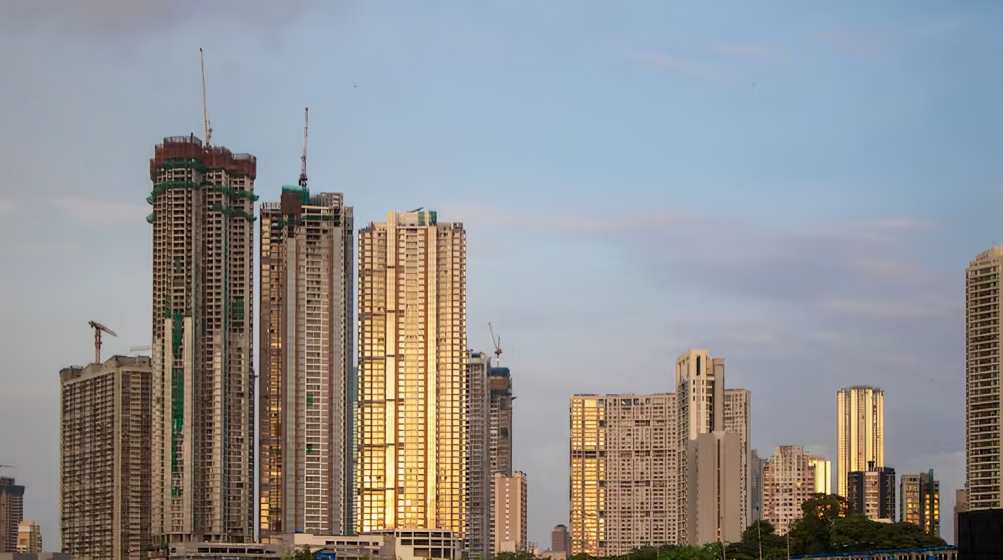

Panvel is emerging as one of the Mumbai Metropolitan Region’s (MMR) key residential growth corridors, with 42,330 homes added to the market between 2021 and the first half of 2026. The expansion has been largely driven by mid-market housing, with homes priced between ₹50 lakh and ₹1 crore accounting for 47% of residential launches during the period.
The supply profile also reflects a strong preference for compact homes. One-bedroom and two-bedroom units together accounted for 85% of the total residential supply, indicating continued demand from first-time buyers, young professionals and nuclear families.
Panvel’s Residential Supply Expands
Residential launches in Panvel increased sharply during the early part of the period under review. New supply grew 211% in 2022 and a further 261% in 2023, before declining 7% in 2024.
Panvel’s contribution to Navi Mumbai’s overall residential supply also increased, rising from 28% in 2021 to 46% in 2024. The share subsequently moderated to 42% in 2025.
One-bedroom homes accounted for 43% of the total supply between 2021 and the first half of 2026, while two-bedroom units made up another 42%. Together, the two configurations represented 85% of all residential launches.
Infrastructure Drives Panvel Real Estate
The region’s residential growth has coincided with major infrastructure development. The Navi Mumbai International Airport, Atal Setu, Mumbai-Pune Expressway, Sion-Panvel Highway, Panvel-Karjat rail corridor and emerging metro connectivity are improving access to Mumbai, Navi Mumbai, Pune and the wider Konkan region.
The airport is also expected to generate employment across aviation, logistics, hospitality, retail and commercial sectors. Proposed developments such as the 667-acre Aerocity, along with FedEx’s automated cargo hub and CIDCO’s Integrated Logistics Park, are adding to the region’s economic potential.
This infrastructure push is reflected in property values. Panvel’s residential price index reached 176 in H1 2026, with 2021 as the base year at 100, representing a 76% increase. Navi Mumbai’s corresponding index stood at 164.
Construction Pipeline Remains Strong
Panvel also has a substantial pipeline of upcoming housing. As of H1 2026, 91% of available residential inventory was under construction, while only 9% was ready for possession.
The high share of under-construction inventory indicates continued developer confidence in future demand. However, rising land and construction costs could affect affordability, while project approvals, infrastructure timelines and employment creation will remain important factors.
For Panvel, sustained growth will depend not only on adding housing but also on ensuring that transport, civic infrastructure and employment opportunities expand alongside its rapidly growing residential market.
Source: Business Today