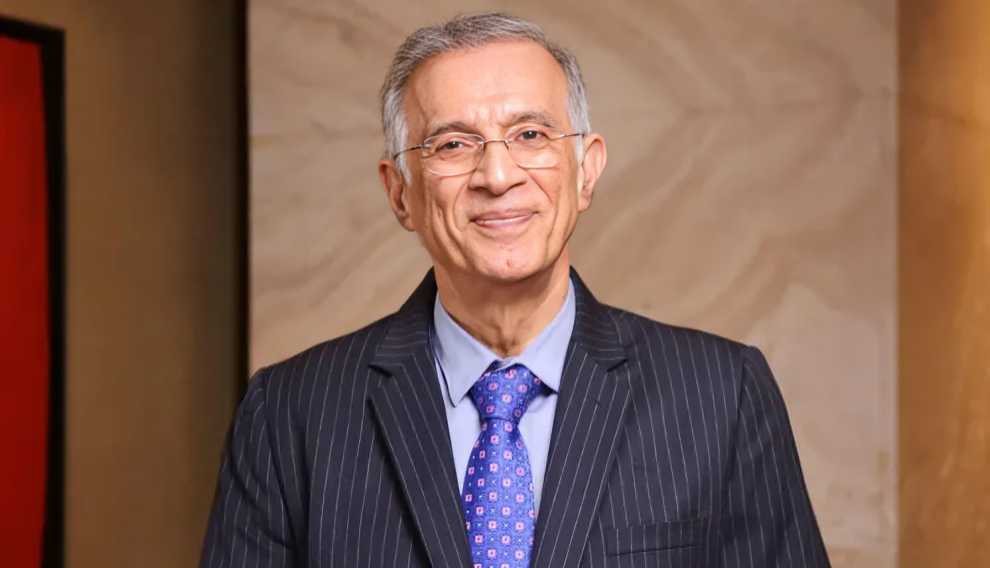

Hiranandani Group founder and chairman Dr Naranjan Hiranandani has called on India to use the disruption caused by the Middle East conflict to accelerate infrastructure development and adopt a new approach to urban planning.
Speaking at a Conclave, Hiranandani said future urban centres should have roads, hospitals, schools and other essential facilities ready before large-scale construction begins. He said Mumbai’s experience of congestion, inadequate roads and gaps in civic infrastructure offered lessons for the proposed Mumbai 3.0 expansion.
“What is needed to do Mumbai 3.0 is really to lay the entire infrastructure up front. If you do the roads, if you make the hospitals, if you make the schools, we are getting foreign universities to come over there. All these aspects of it had to be put up front,” Hiranandani said.
He added, “I think we need to put the cart the horse before the cart instead of the cart before the horse.”
Data Centres And AI Opportunity
Hiranandani also highlighted India’s expanding data centre sector, driven by rising digital consumption and artificial intelligence. “Data is the new oil. India now produces more data than China and the United States put together and they are not stored in India,” he said.
He said India’s digital ecosystem, including UPI and Aadhaar, provides a strong foundation for developing technology products locally. “If we can actually create products like you have the Google, like you have the Apple phone which is India oriented over the next five years, I think we can be ahead of the world instead of being of service to the world,” he said.
Mumbai 3.0 Eyes USD 1 Trillion Economy
According to Hiranandani, infrastructure projects such as Navi Mumbai International Airport, Atal Setu and emerging connectivity corridors could transform the Mumbai Metropolitan Region.
“India today is a USD 4 trillion economy for the whole of India and we are targeting just to get Mumbai 3.0 to be USD 1 trillion economy,” Hiranandani said.
He also pointed to the growth potential of Alibaug and the Karjat-Panvel corridor.
Skills & Quality Remain Concerns
Hiranandani acknowledged that India still trails China in infrastructure development. “We are far behind China as far as development is concerned,” he said.
He also flagged a shortage of skilled construction workers. “We are today 2 million construction workers short,” Hiranandani said.
On infrastructure quality, he said, “Today you can blame the government, the bureaucracy and the contractors if they make bad quality because now they know how to do good quality.”
He added: “And they should be hanged if they put bad quality on any of the items of work that is done and I think that should percolate from top to down and down to up both. Nobody should tolerate bad quality anymore.”
Source: ET Now