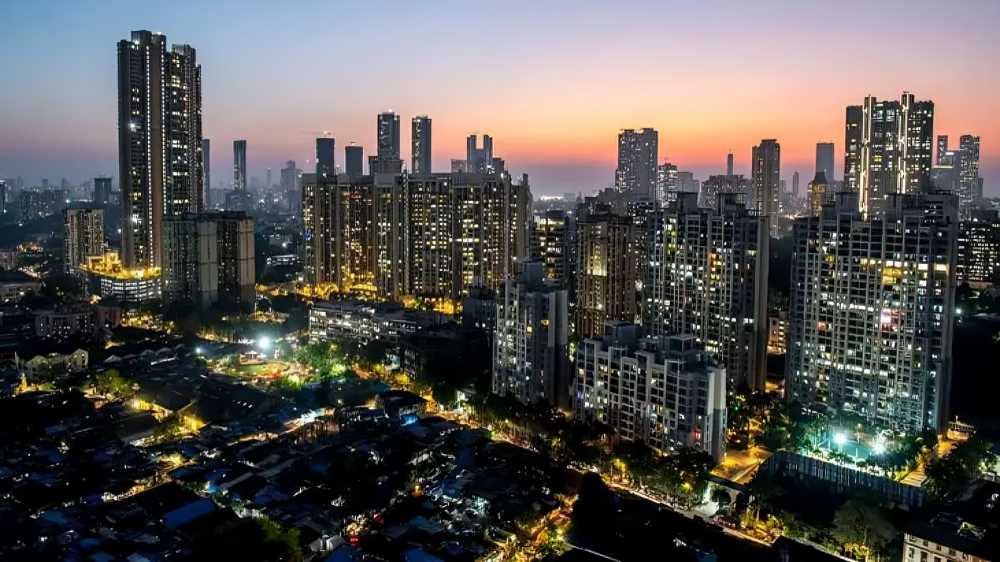

Redeveloped homes account for 15% of housing sales as ageing buildings, land scarcity and infrastructure drive urban renewal.
Mumbai’s redevelopment market is witnessing a sharp acceleration, with more than 1,000 projects launched since 2020, accounting for nearly 13% of the city’s overall residential supply, according to a JLL-NAREDCO Maharashtra report.
The share of redevelopment projects in housing sales has also risen significantly, reaching 15% during 2025 and the first half of 2026, compared with 6% during 2016-2021, signalling a growing shift towards redevelopment-led housing in the city.
The report, titled “Redevelopment in Mumbai: The Inflection Point, from Land Scarcity to Systematic Urban Renewal”, was released at NAREDCO Maharashtra’s Real Estate & Infrastructure Investors’ Summit 2026 in Mumbai on 3rd September, Thursday.
JLL Senior Managing Director – Mumbai MMR & Gujarat and Alternatives Karan Singh Sodi said redevelopment had moved beyond being a commercial opportunity and had become an essential part of Mumbai’s urban transformation. He noted that redevelopment sales were now outpacing launches for the first time.
Mumbai has around 13,500 cessed buildings requiring urgent replacement, underlining the scale of the redevelopment opportunity. The Western Suburbs account for 22.4% of the city’s ageing building stock, followed by South Mumbai at 14.2%.
Among suburban markets, Borivali, Malad, Andheri, Vikhroli and Goregaon account for nearly 36% of projects launched since 2020. The Western Suburbs contributed around 35-45% of redevelopment launches and sales during 2025-H1 2026.
Slum rehabilitation is also emerging as a major component of Mumbai’s redevelopment pipeline. The report identifies 1,202 active projects covering 321,858 hutments across 2,156 acres, nearly four times the acreage completed during the first three decades of the Slum Rehabilitation Authority.
Large-scale projects such as the 101-acre Juhu Lane-Gilbert Hill cluster, Dharavi redevelopment and the 420-acre Motilal Nagar project in Goregaon are expected to further reshape established residential areas.
Infrastructure development is adding momentum, with projects including Metro Lines 4, 6 and 11, the Coastal Road, Borivali-Thane Twin Tunnel, Goregaon-Mulund Link Road, Airoli-Katai Naka Freeway and Metro Line 8 opening up new redevelopment corridors.
Regulatory changes under DCPR 2034, including a reduction in the consent threshold to 51%, have also helped improve redevelopment feasibility. Cluster and slum redevelopment projects can receive up to 4.0 FSI, while self-redevelopment has grown to more than 1,600 active proposals.
Property prices in redevelopment-led locations have also strengthened. Worli commands around Rs 1 lakh-Rs 1.15 lakh per sq ft, Bandra-Khar Rs 90,000-Rs 95,000, and Kandivali-Borivali Rs 32,000-Rs 37,000 per sq ft.
NAREDCO Maharashtra President Kamlesh Thakur said redevelopment had evolved from a policy initiative into a primary engine of Mumbai’s housing supply, supported by regulatory reforms and cluster-focused policies.
With limited vacant land, a large ageing building stock and expanding infrastructure, redevelopment is increasingly emerging as Mumbai’s principal route to creating new housing within the existing city.
Source: The Free Press Journal