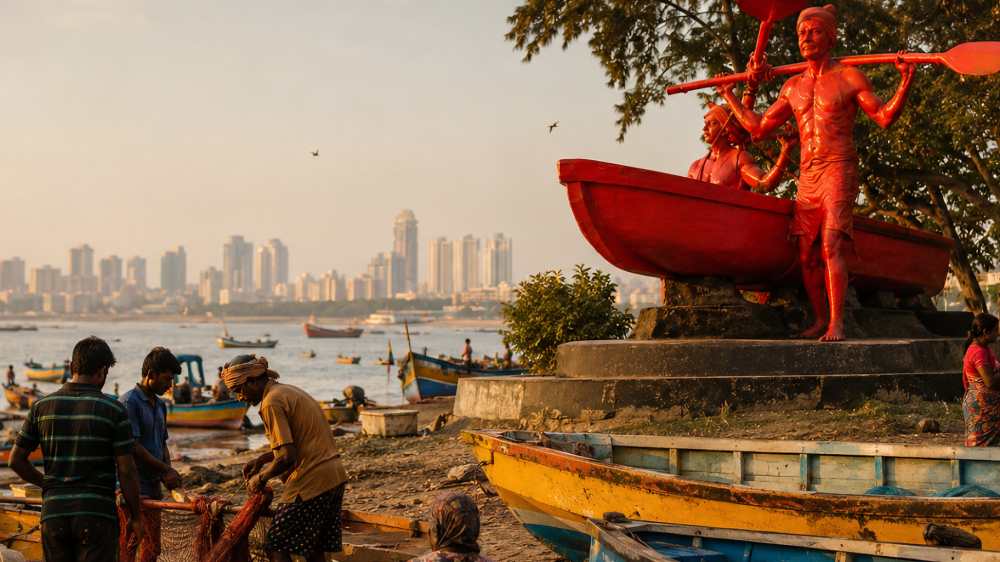

Mahim Koliwada, one of Mumbai’s oldest Koli settlements, is facing growing concerns over redevelopment and land rights as residents fear that the traditional fishing village could come under pressure from developers amid changing coastal regulations and the absence of dedicated development rules for Koliwadas.
The Koli community has lived in Mahim for centuries and remains closely associated with traditional fishing. Historical accounts trace the settlement to Mumbai’s early development, while the Koliwada today extends across areas including Mori Road, Machhimar Nagar, Upper and Lower Slope, Mahim Bazaar and the expanded Sand Port.
Urbanist Pankaj Joshi said Mahim has significant historical importance and that archaeological remains were discovered during underground Metro excavation. He said efforts by development groups to redevelop the Koliwada should not displace the community.
“Mahim Island has great historical importance. When excavations were carried out in this area for the underground metro, old remains were found that could have been a city. Among them, the original Koli tribe must have survived. The Pathare Prabhu tribe was also present here from time immemorial, as evidenced by the old buildings of Pathare Prabhu located in the area between the Mahim Dargah and the fort. This Koliwada has a tradition of hundreds of years. The original Koliwada has been shifted three-four times. Some development groups are trying to destroy this Koliwada in the name of redevelopment. But that is not possible. The transformation of Koliwadas can only happen through self-redevelopment.”
Residents also point to declining fish availability caused by pollution, infrastructure projects and large-scale fishing activity. Bhushan Nijai of the Koliwada Gaonthan Sudhar Samiti said traditional fishermen are struggling to maintain their livelihoods.
The community also faces uncertainty over housing. Around 5,000 homes are estimated to exist in the Koliwada, many in poor condition, while residents say dedicated development control regulations for such settlements are still absent.
Bhalchandra Tandel, president of the Mahim Nakhwa Fishermen Cooperative Society, expressed concern over the future of the settlement, while Hemant Nijap highlighted the difficulties faced by traditional fishermen despite diesel subsidies.
The Sand Port area, developed as a Koli settlement in 1980, has also faced repeated notices over alleged unauthorised construction, despite community claims of long-standing occupation.
Residents are now demanding separate development rules and self-redevelopment rights. Ujjwala Patil, chairperson of the Koliwada Village Thana Committee, said a draft development control framework prepared after 27 meetings has yet to receive government approval.
The community maintains that redevelopment should protect traditional settlements, livelihoods and ancestral land rights rather than facilitate their displacement.
Source: Loksatta