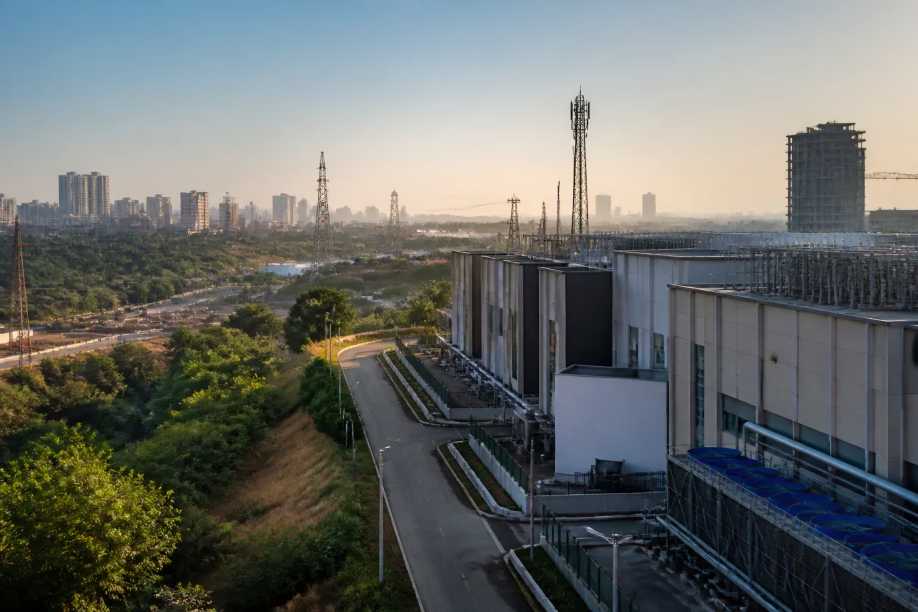

Mumbai and Pune are increasingly emerging as a connected data centre corridor, driven by rising cloud adoption, artificial intelligence and rapid business digitisation. A Cushman & Wakefield report cited by Loksatta indicates that the two metropolitan markets could more than double their combined data centre capacity by 2030.
Mumbai currently leads the market with 890 MW of operational capacity, while Pune accounts for 133 MW. Together, the two cities represent 1,023 MW, more than half of India’s total operational data centre capacity of 1,789 MW during the first half of the year.
The growth pipeline is also substantial. Mumbai is expected to add another 1,726 MW, while Pune could receive around 258 MW of additional capacity. If these projects materialise, the two markets would add nearly 2,000 MW to their existing operational base.
The expansion highlights the growing importance of physical infrastructure behind India’s digital economy. Data centres require large parcels of land, dependable electricity, high-speed connectivity and supporting transport networks. Mumbai’s established digital infrastructure, energy availability and connectivity continue to attract investment, while Pune benefits from business expansion and comparatively lower property costs.
Nationally, India had 147 data centres operated by 33 service providers during the first half of the year. Around 178 MW of new capacity was added during the six-month period, taking operational capacity to 1,789 MW.
The national pipeline is estimated at 3,860 MW through 2030, although only 509 MW is currently under construction and the remaining 3,351 MW is still at the planning stage.
Mumbai remains the larger established market, while Pune’s planned additions represent a significant expansion relative to its existing capacity. The figures indicate that both cities are likely to play important roles in India’s growing digital infrastructure ecosystem.
However, the eventual scale of the transformation will depend on land availability, power infrastructure, approvals and the conversion of planned projects into operational facilities.
Source: Urban Acres