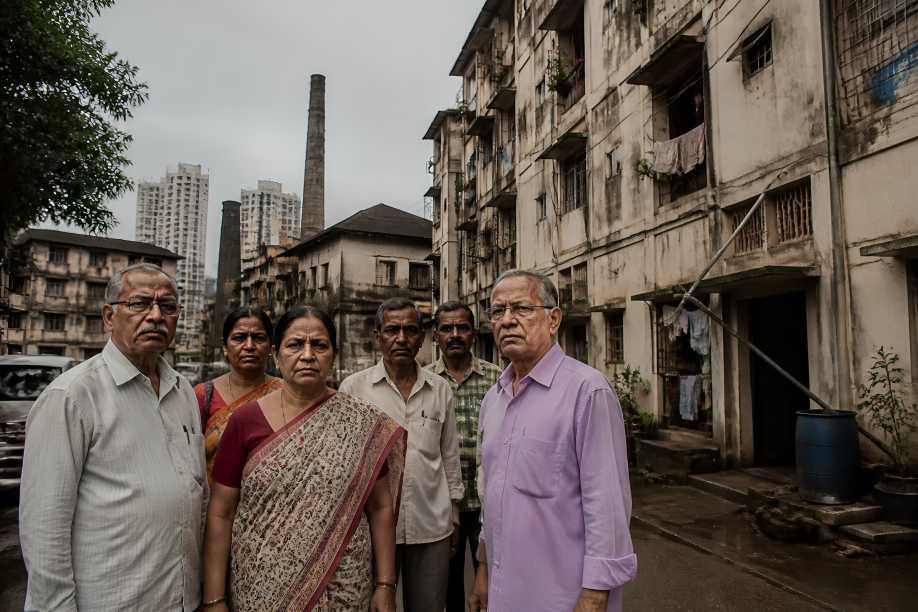

The long-running wait for housing among Mumbai’s mill workers and their heirs continues, with more than one lakh applicants still seeking homes under the rehabilitation programme. Recent figures show that while thousands have benefited from housing lotteries, a large portion of applicants remain in the eligibility and allotment process.
According to the latest figures reported by news syndicate, nearly 1.75 lakh applications have been submitted to the Maharashtra Housing and Area Development Authority (MHADA) in two phases. Around 16,000 applicants have received homes, while roughly 1.5 lakh remain in the queue. Of these, about 1.09 lakh workers and heirs have submitted documents for eligibility verification, with around 1.01 lakh declared eligible and the remaining applications under scrutiny.
The housing programme traces its origins to the closure and sickness of Mumbai’s textile mills following the 1982 strike. Government records state that applications from workers and their heirs linked to 58 closed or sick mills were received, with 15,870 homes allotted so far — 13,453 constructed through MHADA and another 2,417 obtained under the MMRDA rental housing scheme.
The challenge has become more complex as the original beneficiaries age or pass away and their heirs take over claims. MHADA continues to publish eligibility lists and updates for mill workers and legal heirs, indicating that verification and succession-related documentation remain active parts of the process.
The state has also outlined additional housing models for the remaining beneficiaries, including construction on government land, partnerships involving private landowners under the Pradhan Mantri Awas Yojana (Urban) and housing through private developers. An official 2025 housing department document said around 2,874 additional units were then available or under construction for distribution.
For families still awaiting allotment, the issue therefore extends beyond construction. It also involves eligibility verification, succession records, land availability and the creation of sufficient housing stock to meet a decades-old rehabilitation commitment.
Source: Urban Acres