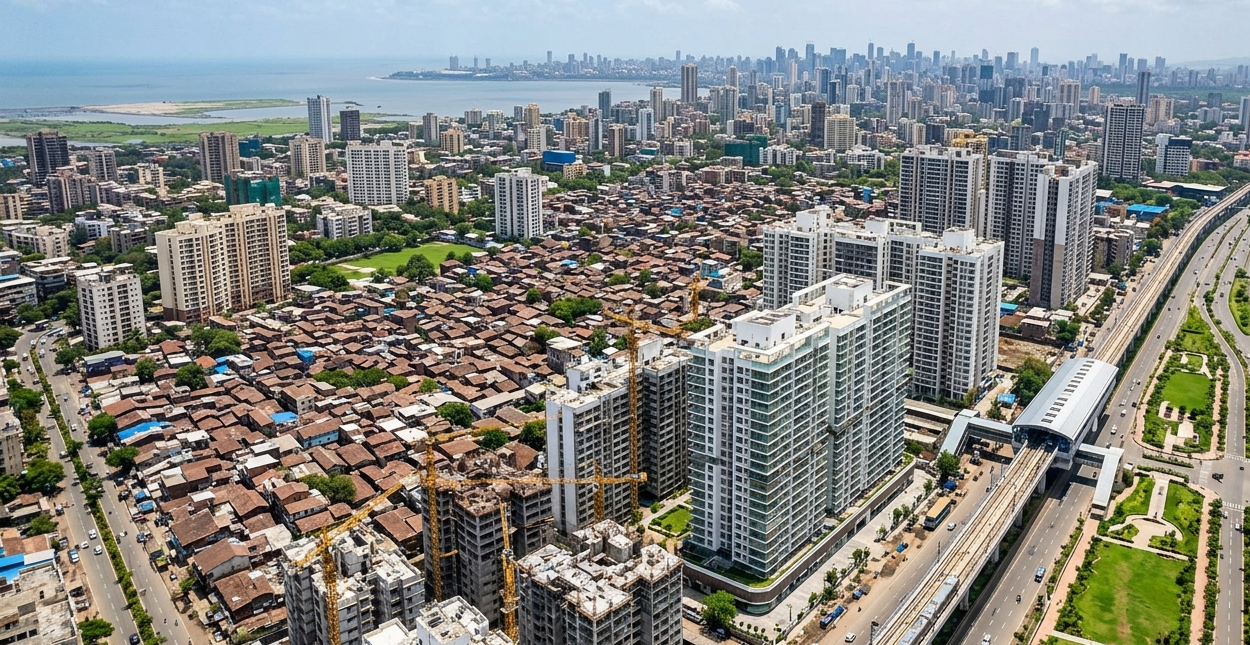

Indian cities should adopt an infrastructure-first approach, ensuring roads, drainage, public transport and essential civic systems are established before large-scale housing and commercial development, CREDAI President Shekhar G. Patel said at the 24th edition of NATCON.
A CREDAI report prepared with its Research & Advisory team estimated that India’s real estate market expanded from around USD 120 billion in 2017 to nearly USD 600 billion in 2025. The market could reach USD 1 trillion by 2030 and approximately USD 5.8 trillion by 2047. The value of under-construction real estate also rose from about USD 94 billion in 2009 to USD 503 billion in 2025.
Patel said urbanisation could be managed more effectively by planning land already designated for urban use rather than continually expanding city boundaries. India currently has around 55 crore urban residents, a number that could approach 100 crore by 2047 as urbanisation reaches nearly 60%.
“We don’t need more land for urban areas. We just have to plan the land which we have already notified as urban land,” Patel said.
He argued that infrastructure should no longer follow construction but become the foundation of future urban expansion.
“Infrastructure first should be the first rule,” he said, referring to initiatives in Gujarat and Maharashtra.
Patel also highlighted redevelopment as an increasingly important requirement as older buildings across Indian cities reach the end of their useful lives.
“Every city will have to have a redevelopment law and every city will go through redevelopment,” he said, noting that Ahmedabad already has more than 50 redevelopment projects.
CREDAI Chairman Boman Irani pointed to Mumbai’s experience, where redevelopment is progressing alongside infrastructure expansion.
“Every city should follow the Mumbai model. We went through our learning curve,” Irani said.
He said Mumbai’s road, metro, airport, sewage-treatment and waste-management infrastructure could support continued redevelopment and urban growth.
Meanwhile, CREDAI West Bengal President Sushil Mohta said construction had resumed at projects in Kolkata that underwent structural scrutiny.
“None of the CREDAI members’ projects is stuck. None of the CREDAI members’ projects has been found to be violating,” Mohta said.
CREDAI leaders also discussed artificial intelligence, highlighting its growing use across sales, marketing, planning, construction monitoring and customer engagement. Patel said technology should ultimately improve productivity, transparency and project execution.
Source: Mega Project