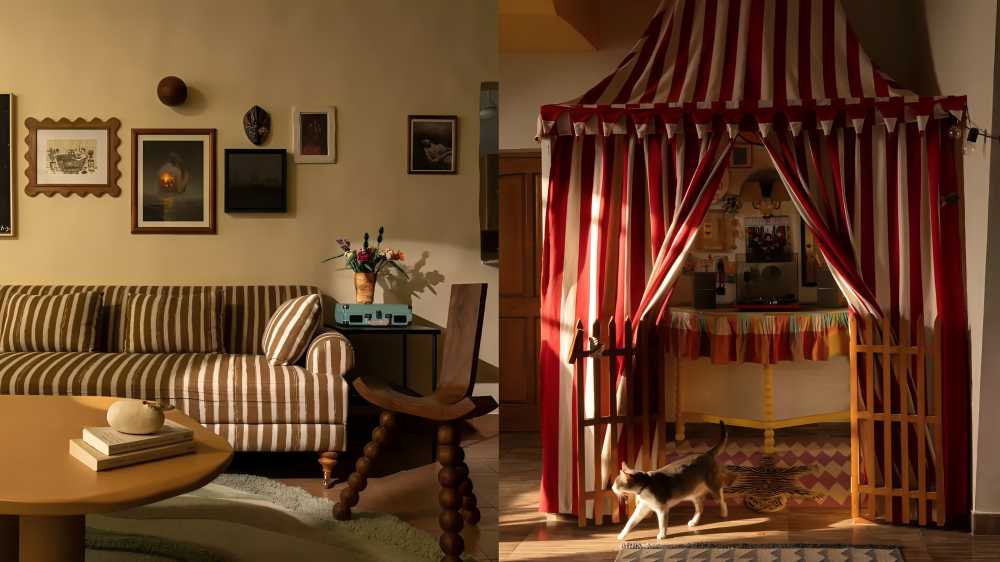

Indian creatives are bringing their professional sensibilities into their homes, transforming everyday spaces into highly personal environments filled with colour, art, collected objects and unconventional design ideas. From a furniture designer’s Gurgaon apartment furnished with workshop rejects to an art director’s colourful Bandra rental, each residence reflects its owner’s individual approach to creativity.
Aanchal Goel: Designing With Imperfection
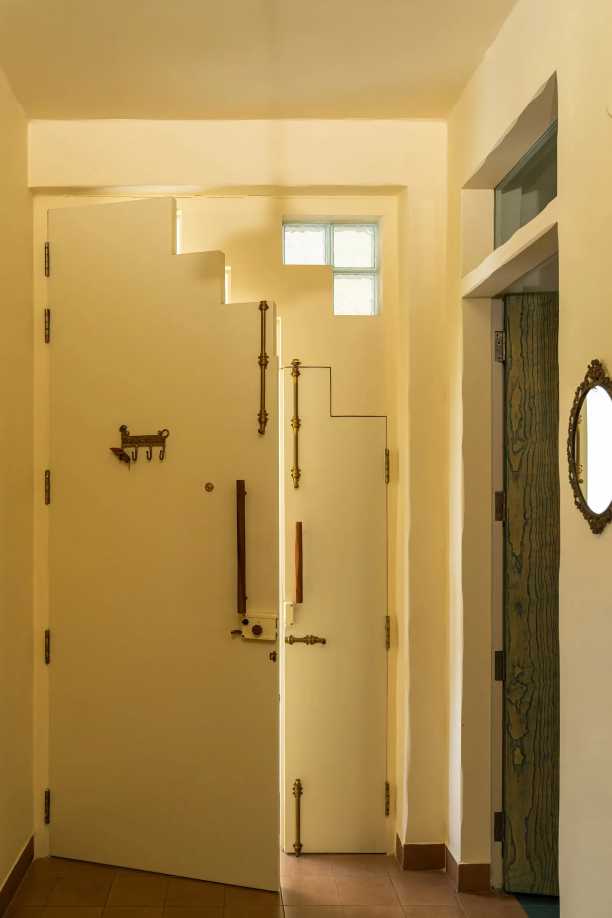
Objectry founder Aanchal Goel used rejected pieces, prototypes and leftover materials from her furniture workshop to furnish much of her apartment. “None of them were unusable, just not perfect from a sales standpoint. The dining tabletop had failed quality control, the dining chairs never sold, the bar stools were prone to cracking, the convex mirror in the living room was an unsuccessful first sample. Several timber components had just been made incorrectly.”
The home embraces irregularity, with softened stone ledges and uneven furniture edges. “It gave the home a tactility that polished spaces rarely achieve,” she says. “As a bonus, it’s also saved my elbows countless collisions.”
Goel divided the three bedrooms by colour, creating red, green and blue spaces, while a geometric yin-and-yang-inspired front door adds another personal touch.
Ria Panjabi: A Colourful Bandra Canvas
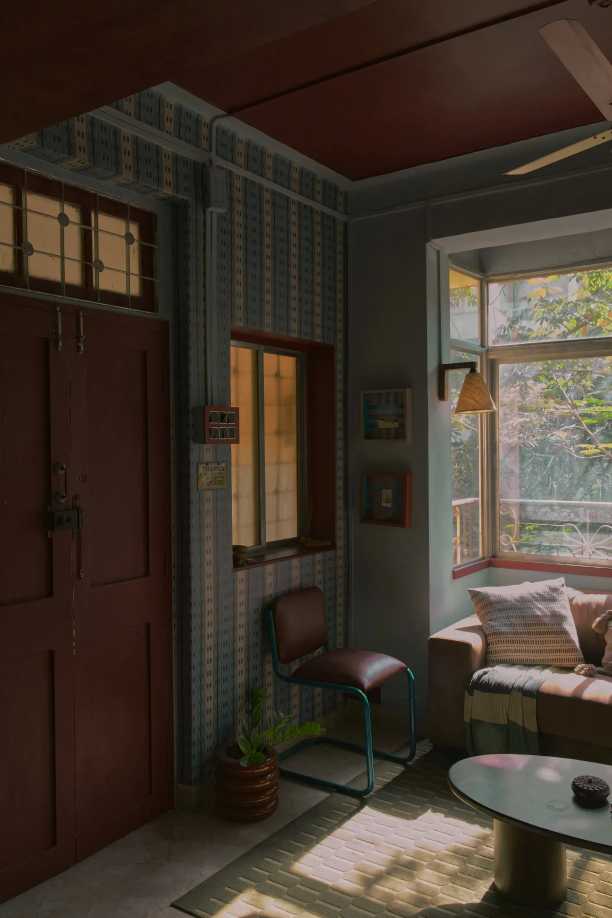
Art director Ria Panjabi brought her artistic instincts into her Bandra home after years of working within other people’s briefs. “I picked up a paintbrush very young and actually started painting on canvas by the age of seven or eight,” she says.
The living room combines powder blue with burgundy inspired by Mumbai’s Art Deco architecture. “Colours are like a puzzle to me in my brain, and I love a good challenge,” she declares.
Her studio takes a bolder direction with pink plaid walls. “Pink feels a bit rebellious,” Ria confesses, “I’m single and in my mid-30s, so I don’t have any family or partner to account for when deciding how to decorate.”
Joy Bimal Roy: A Home With a Haunted History
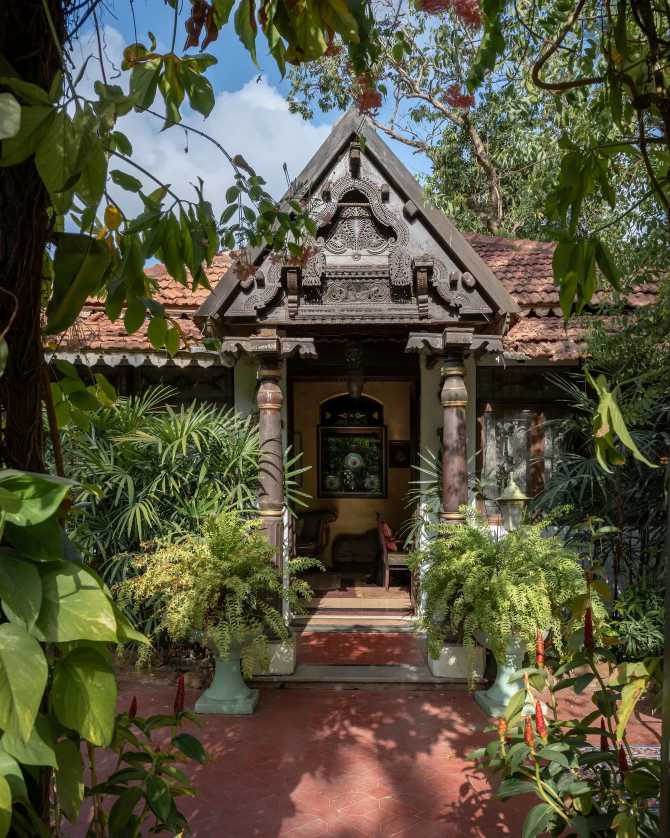
Filmmaker and author Joy Bimal Roy lives in a 150-year-old Bandra property linked to a long and unsettling history. “Home, to me, is my world. Since 2002, I have lavished so much love on this house that it has gradually become an extension of me,” Joy reveals.
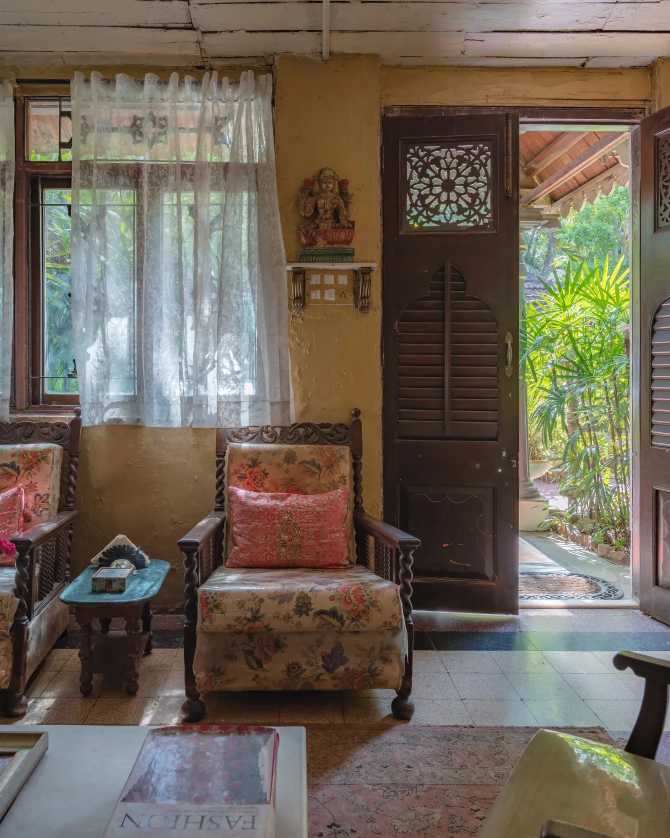
The residence was acquired by his father, filmmaker Bimal Roy, in 1962. Stories of unexplained incidents and deaths surrounding the property have become part of its history. Joy has preserved elements from the original Godiwala Bungalow, including its door, window grilles, wooden panels and entrance gate, giving old architectural fragments new life.
Mehek Malhotra: Colour, Music and a Listening Cave
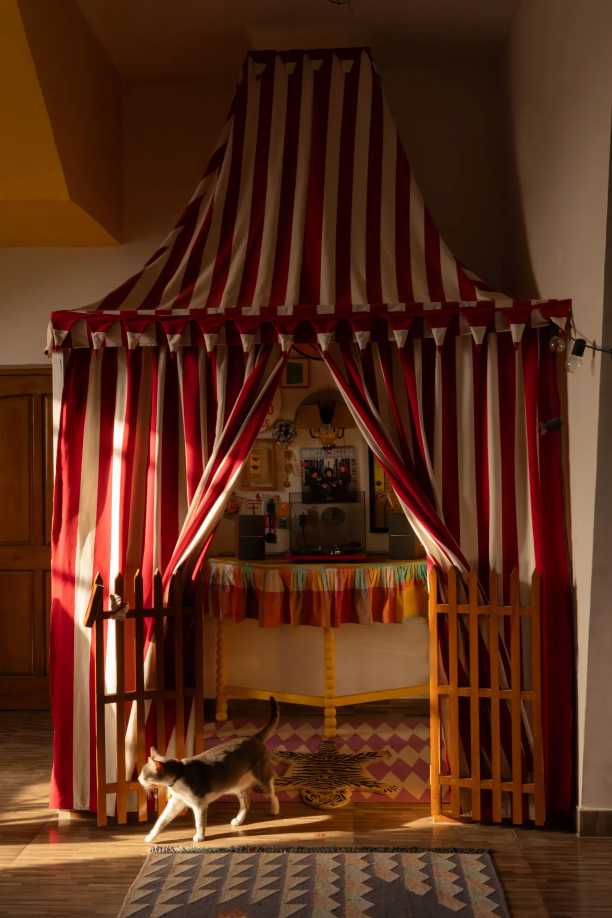
In her Dehradun bungalow, designer and visual artist Mehek Malhotra uses vivid colours as expressions of mood and memory. “I’ve always used colour to mark space,” she says. “In college, I didn’t have the budget to decorate, but I had leftover fabric and Fevicol. That was enough.”
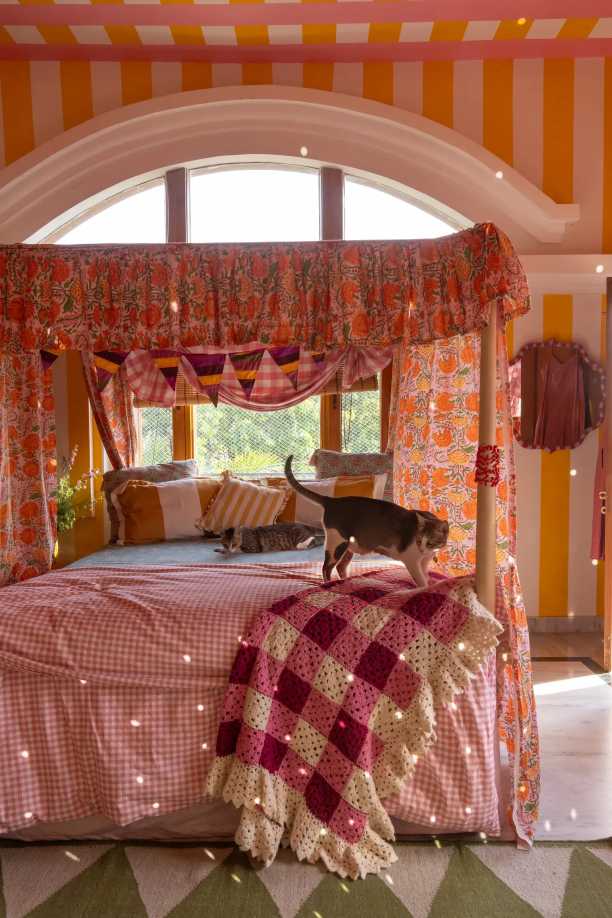
A red study table, mustard ceiling and hand-painted green bookshelf establish the home’s maximalist character. Her bedroom combines stripes, florals and gingham, while a disco ball adds movement and sparkle.
A striped cotton tent houses her vinyl player and rugs, creating what she calls “a listening cave”. “It’s a listening cave,” she says, smiling. “Exactly one person can dance in it, and two can sit and listen. It’s a party of one, sometimes two.”
Anupam Poddar and Eeshaan Kashyap: Textiles as Art
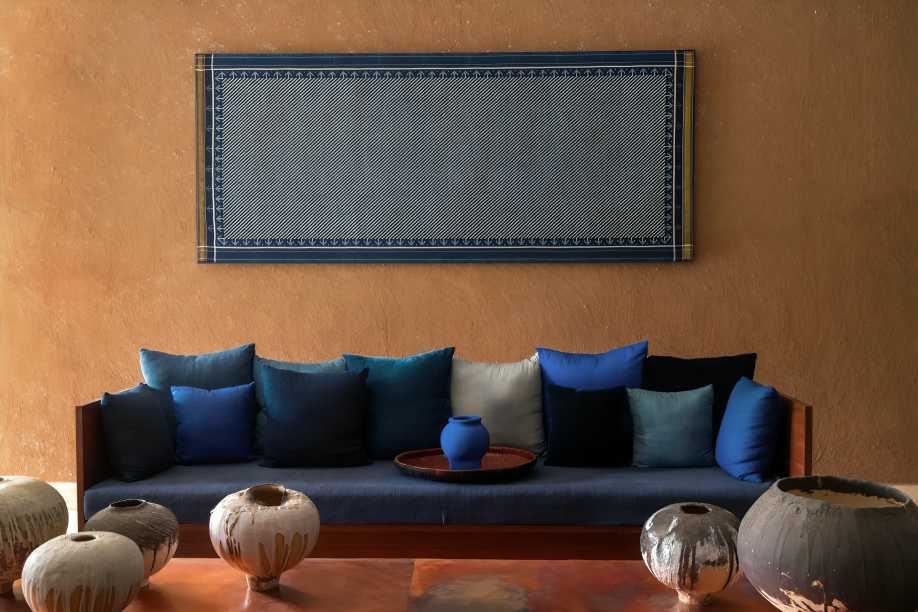
Delhi-based creatives Anupam Poddar and Eeshaan Kashyap have filled their home near Humayun’s Tomb with layered colour, ceramics and collected textiles. Indigo, emerald, rose madder and yellow ochre create a richly composed backdrop for sculptural objects and rare pieces.
Textiles displayed across the walls soften the strong colour palette while adding historical depth. “I wanted to soften the large blocks of pure colour that dominated the spaces,” admits Poddar.
Among the highlights are 19th-century resist-dyed Indian textiles created for Indonesian markets, including lawon shoulder cloths and a striking Mata Hari sunburst design.
Together, these homes demonstrate how personal stories, professional instincts and treasured objects can transform a residence into a distinctive creative statement.
Source: Architectural Digest