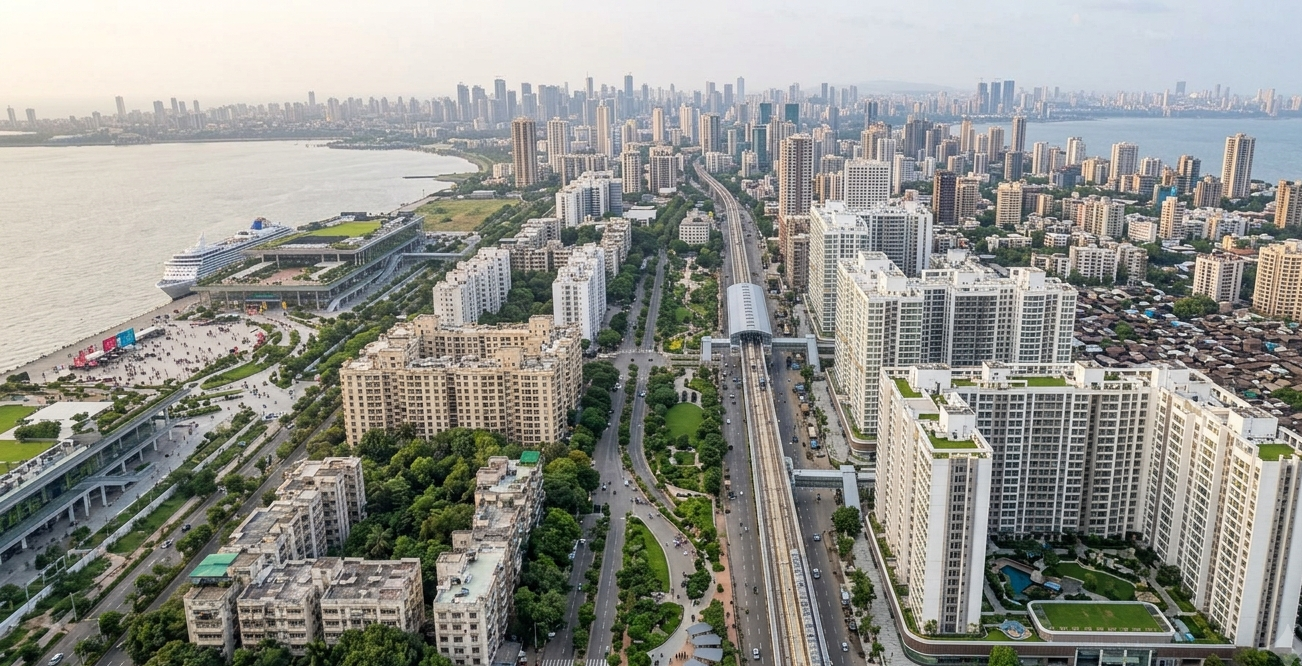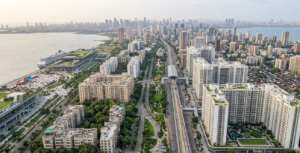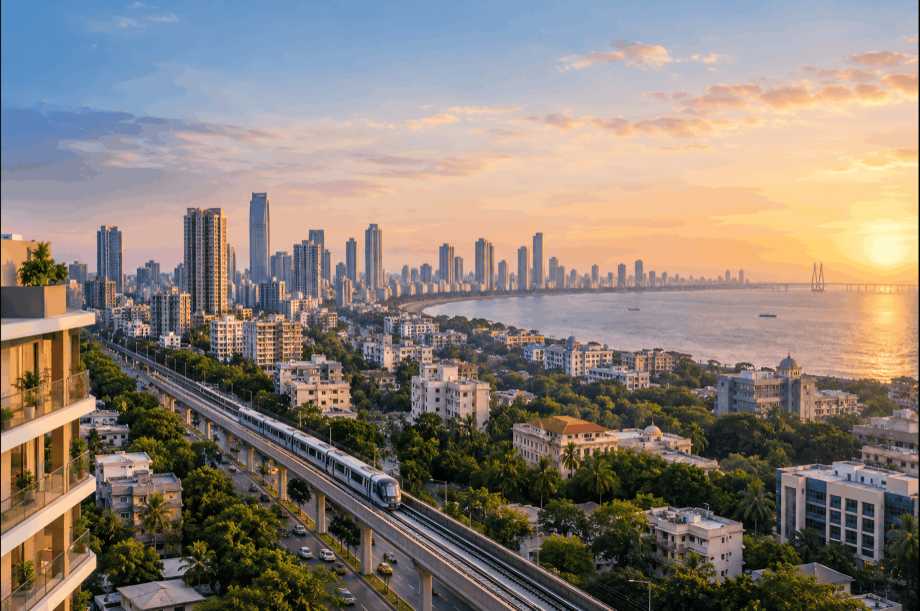

Mumbai’s limited land availability and geographical boundaries are reshaping its property market, placing greater importance on established residential neighbourhoods. With the city surrounded by the sea and having little room for outward expansion, future real estate growth is expected to depend increasingly on improved connectivity, redevelopment and rising value in existing locations.
According to Rajendra M Rajan, Founder of TransIndia Group, investors have traditionally focused on identifying emerging destinations and upcoming growth corridors. However, established areas offer an advantage because their residential demand and appeal are already well established.
Localities such as Bandra–Khar, Andheri–Juhu, Goregaon–Malad and Sion–Matunga have developed strong ecosystems supported by transport links, commercial centres, educational institutions, healthcare facilities and social infrastructure.
This accumulated neighbourhood value, described as “location equity”, extends beyond a property’s size, amenities and construction quality. It develops over decades through schools, hospitals, markets, workplaces, cultural spaces and established communities. While buildings may age, their surrounding locations can continue gaining value as infrastructure improves and demand remains steady.
Sion–Matunga illustrates this trend. Emerging from Mumbai’s early planned suburban development, the area has evolved into a mature residential and institutional hub. Its educational institutions include VJTI, the Institute of Chemical Technology, Ramnarain Ruia College, R.A. Podar College and Welingkar Institute of Management. Five Gardens, Dadar Parsi Colony, Matunga’s Tamil community and Sion Koliwada further contribute to its distinct identity.
Other established markets have similar strengths. Bandra–Khar benefits from its proximity to BKC, while Andheri–Juhu draws support from commercial, entertainment and aviation activity. Goregaon–Malad has also developed through residential expansion and better regional connectivity.
Connectivity remains a major factor influencing property values. Access to railway networks, highways and Metro services improves links to employment hubs, educational institutions and healthcare facilities. Consequently, buyers may increasingly assess properties through their accessibility and travel times rather than relying solely on price per square foot.
Limited land availability, sustained housing demand and established infrastructure could support capital appreciation, rental potential and resale prospects in these neighbourhoods, strengthening their long-term investment appeal.
Source: EPC World