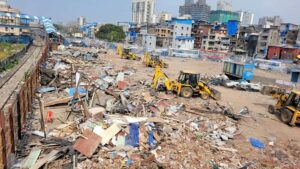

Despite having a dedicated footpath policy, Mumbai continues to struggle with unsafe, obstructed and poorly maintained pedestrian pathways. The problem is particularly severe in suburban neighbourhoods, where a large share of the city’s population lives.
More than half of all journeys in Mumbai are undertaken on foot, while nearly 75% of education-related trips involve walking. In June 2026, the Supreme Court recognised walking on designated footpaths as a fundamental right under Article 19(1)(d) of the Constitution. Yet, usable pavements remain unavailable across several parts of the city.
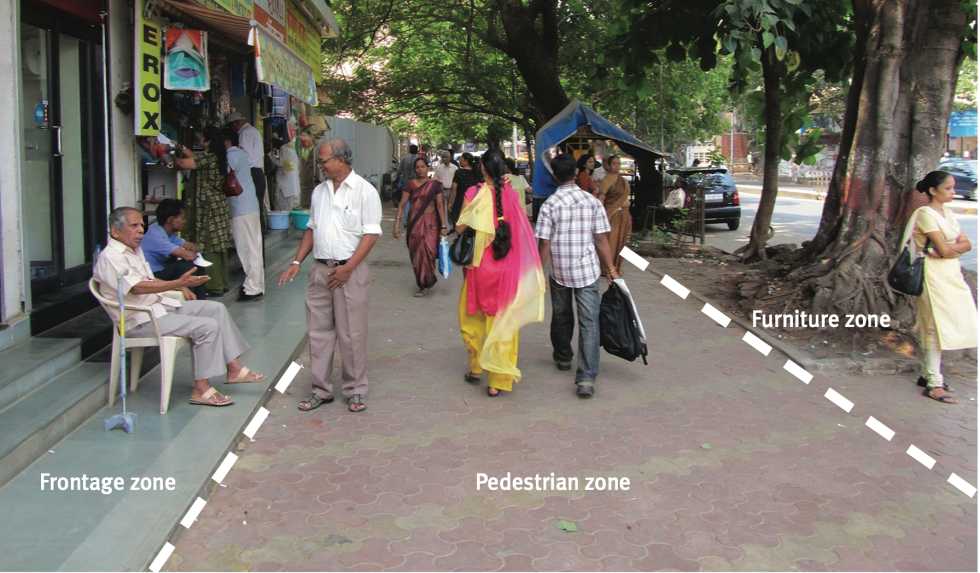
Indian Road Congress guidelines identify safety, security, continuity, comfort and liveability as essential features of pedestrian infrastructure. They recommend three distinct pavement sections: a frontage buffer, a minimum two-metre-wide unobstructed walking area and a utility zone for trees, bus stops, vendors and street furniture.
Architect and environmental planner Shriya Bhatia stresses the importance of raised pavements, guardrails, adequate lighting, shade, drainage and resting spaces. However, parked vehicles, vendors, uneven surfaces and poorly positioned utilities frequently obstruct pedestrian movement.
Dadar’s Hindu Colony offers an example of better infrastructure, with wide cast-in-situ concrete footpaths and benches. In contrast, several suburban stretches, including parts of Goregaon, have narrow or discontinuous pavements. Urban Centre Mumbai’s Pankaj Joshi points out that suburban areas housing nearly 75% of the city’s population lack proper walkable footpaths.
The BMC adopted its Universal Footpath Policy in 2023, promising continuous, accessible pathways, kerb ramps, guiding tiles and adequate space for wheelchairs and strollers. However, implementation remains inconsistent. Disability rights activist Jasmina Khanna has highlighted barriers such as closely spaced bollards that prevent wheelchair access.
Experts argue that pedestrian infrastructure must receive greater priority alongside roads, trains and buses. Residents can report footpath-related problems through MyBMC, MyBMC MARG, the civic helplines 1800221293 and 1916, or the BMC website.
A sustained focus on accessible design, regular maintenance and enforcement is essential to make Mumbai safer for pedestrians.
Source: Citizen Matters