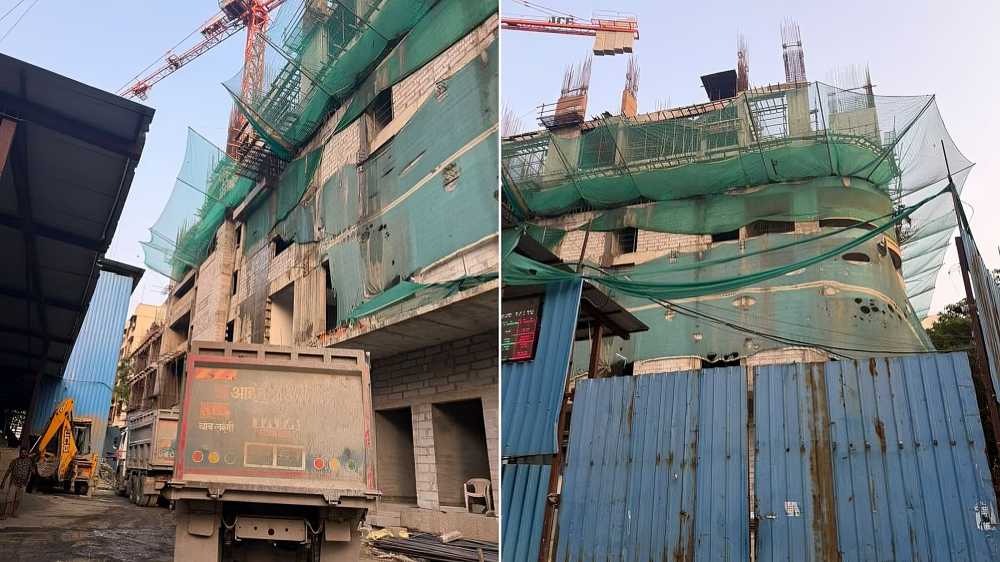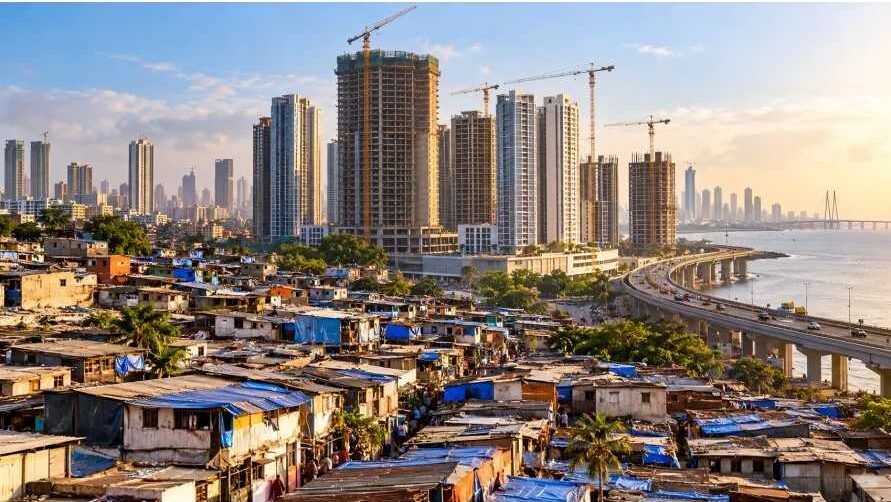

Mumbai’s slum redevelopment landscape is moving towards larger, integrated projects as Maharashtra seeks to attract major corporate developers and address longstanding housing and infrastructure challenges. The State Housing Policy 2025 estimates that approximately 52 lakh people live in the city’s slum settlements.
The revised approach promotes the redevelopment of multiple settlements together, offering incentives to make projects more financially viable while creating opportunities for improved housing, roads and civic facilities. Maharashtra’s urbanisation rate stands at 45 per cent, with infrastructure shortages, high construction expenses, land disputes and funding limitations continuing to affect housing development.
Cluster Redevelopment as an Infrastructure Solution
The policy allows two or more slum settlements within a ward to be combined when individual redevelopment is not technically or financially practical.
An ANDPL spokesperson said, “Mumbai cannot solve urban planning challenges simply by replacing old buildings with new ones. City growth has pressured existing infrastructure. Cluster redevelopment is, therefore, the way forward for Mumbai.”
The spokesperson added, “The strategy is to bring multiple societies together to create larger land parcels, enabling better-planned buildings, wider roads, improved drainage, open spaces, public amenities and essential infrastructure that piecemeal redevelopment cannot deliver.”
Greater Scope for Corporate Participation
For private plots exceeding 10 acres, the policy proposes a 50 per cent reduction in infrastructure, MRTP and land-use conversion charges. It also states that individual slum-dweller consent will not be required for these schemes.
Vikas Chaturvedi, Co-founder and CEO of Xanadu Realty, said, “The November 2025 new slum cluster redevelopment policy is attracting conglomerates. It allows consolidation of fragmented plots into large contiguous clusters, eliminates the need for individual resident consent in large clusters and allows profitable mixed-use developments. This helps solve litigation problems that plagued projects in the past.”
He noted, “Developers fund construction, transit rent, approvals, maintenance and other rehabilitation obligations, while cash inflows are negligible initially.” Projects can take a decade or longer, making financial strength essential.
Balancing Commercial Viability and Rehabilitation
The state has identified 228 stalled or pending slum rehabilitation projects across the Mumbai Metropolitan Region for implementation through joint ventures involving government and semi-government agencies.
Binitha Dalal, Founder and Managing Partner of Mt K Kapital, said, “SRA redevelopment requires balancing rehabilitation, infrastructure and residents’ livelihoods. Society terms, development costs, infrastructure requirements and market demand determine whether projects can be delivered successfully.”
She added, “Aggressive commercial commitments may win a deal short-term; realistic agreements and sound project economics protect residents and developers over time.”
Impact on Housing Markets and Livelihoods
Anarock data shows Matunga residential values increased around 37 per cent between 2021 and the end of 2025, reaching an average of Rs 43,470 per sq ft. Dalal said, “Improved connectivity and infrastructure can support property values and rental demand in Matunga, Andheri and Wadala, although additional housing supply may moderate price growth in some segments.”
Chaturvedi highlighted the mismatch between housing and employment locations, noting, “Over 20 years much residential expansion went north/east, employment centres further south; housing/infrastructure lagged demand, creating long commute distances.” He added that “many residents spend 2–4 hours/day commuting”.
Dharavi illustrates the scale of rehabilitation involved, with 99,068 homes numbered and 91,325 surveyed under its redevelopment project. An ANDPL spokesperson said, “Rehabilitation housing for eligible residents is free of cost. For the first time, housing is being provided to all, not just eligible residents.”
The spokesperson added, “The project will support Dharavi’s existing businesses and industries via better commercial spaces and livelihood opportunities,” highlighting the importance of protecting local economic activity alongside housing transformation.
Source: Bussiness World