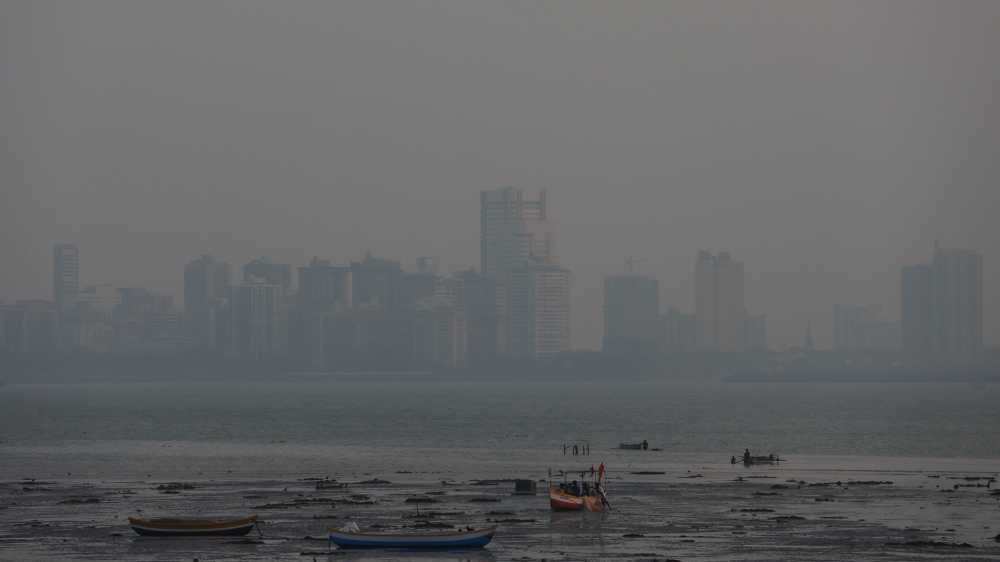

Mumbai’s worsening air quality has raised concerns over the Brihanmumbai Municipal Corporation’s (BMC) decision to delay restrictions on construction activities, despite several parts of the city recording poor Air Quality Index (AQI) levels for three or more consecutive days this month.
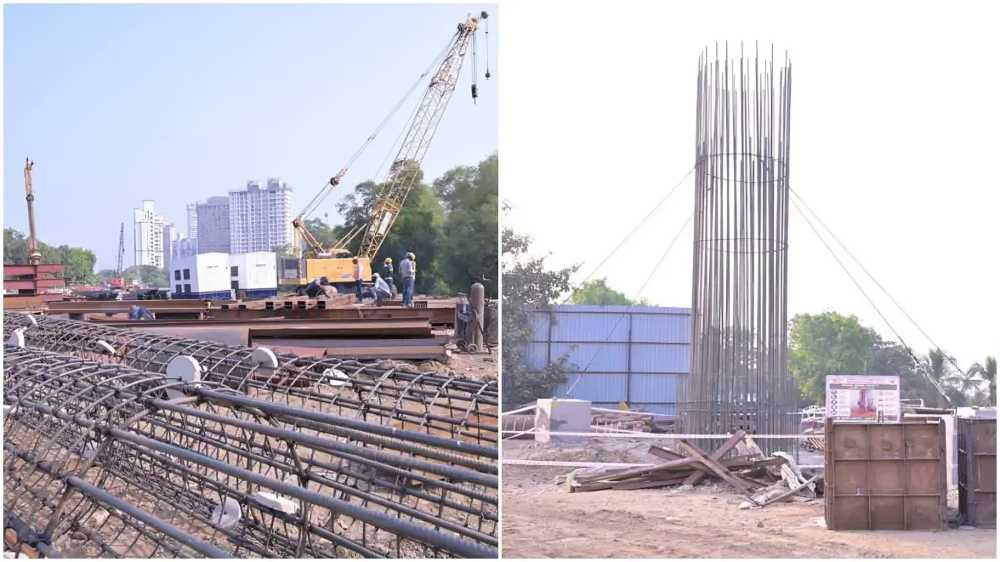
Under a notification issued in December 2024, the civic body had prescribed a halt to construction work in areas where AQI remained above 200 for three successive days. The provision was introduced as part of its Graded Response Action Plan (GRAP).
According to Central Pollution Control Board (CPCB) data, Navy Nagar in Colaba recorded AQI levels of 248, 266 and 222 between November 22 and 24. The monitoring station had also registered poor air quality for five consecutive days between November 14 and 18, with readings ranging from 208 to 286. Between November 7 and 24, Colaba recorded poor AQI on 11 days.
“The BMC rules state that action will be taken only after observing the 24-hour average readings for three consecutive days. Tuesday is the third day and, after observing the readings tomorrow, we will consider taking action,” Avinash Dhakane, additional municipal commissioner, told The Indian Express.
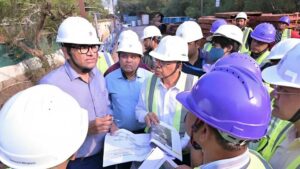
Dhakane added that construction activities underway in the Navy Nagar defence area had already been brought to the attention of the concerned authorities by BMC and Maharashtra Pollution Control Board (MPCB) officials.
Other locations have also reported similar conditions. Malad recorded AQI readings above 200 between November 10 and 12, while Bandra Kurla Complex (BKC) registered poor air quality for three consecutive days between November 16 and 18.
Different BMC Guidelines Create Confusion
However, the civic body’s November 2025 standard operating procedures (SOPs) prescribe stopping construction only when AQI exceeds 300 for three consecutive days. Readings above 200 require corrective steps such as water sprinkling, road washing and preventing garbage burning.
“AQI is not influenced solely by human activities; meteorological factors also play a role. Mumbai currently has thousands of government, private development and infrastructure projects underway. Therefore, stopping all activities immediately after AQI crosses 200 would be arbitrary,” another civic official told The Indian Express.
Construction activity is also an important revenue source for the BMC. Development premiums generated ₹10,400 crore in the previous financial year, contributing 24% of its total revenue of ₹43,240 crore.
Experts Call for Scientific Pollution-Control Measures
Environmental specialists believe construction restrictions alone cannot provide a lasting solution.
IIT Bombay environmental engineer and professor Abhishek Chakraborty said that while halting construction could reduce pollution, it was difficult to establish whether improvements resulted from reduced activity or changing weather conditions.
“We need data-backed, evidence-based interventions rather than ad hoc decisions. Local emission sources are also responsible for pollution. It is not just construction activity, but vehicular emissions and several other sources that need to be addressed. There needs to be a scientific understanding of what is driving pollution and whether the measures being implemented are actually working,” Chakraborty said.
He emphasised that Mumbai requires a scientific assessment of different pollution sources and their impact on local air quality.
Source: The Indian Express