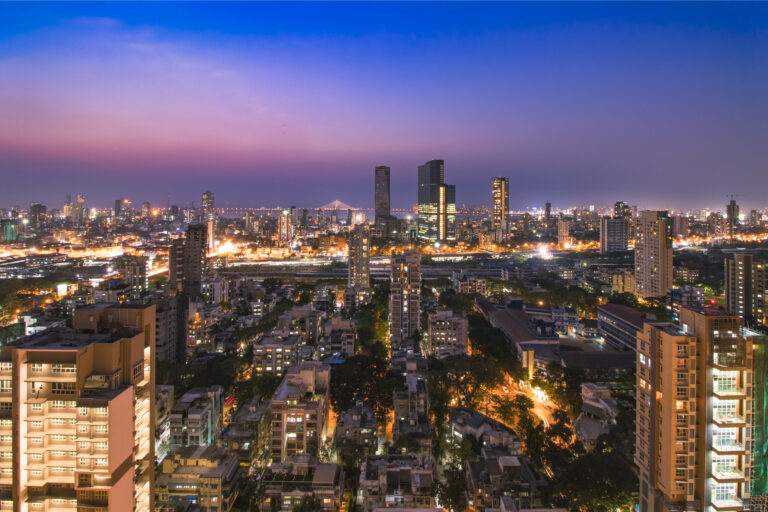
Redevelopment in Mumbai’s western suburbs is no longer moving at the same pace across premium neighbourhoods. While Khar and Bandra are witnessing rapid transformation driven by infrastructure and FSI economics, Juhu’s low-density character and regulatory complexities continue to slow large-scale redevelopment.
The explanation begins with urban form itself.
Large parts of Bandra and Khar consist of mid-rise residential buildings constructed between the 1960s and 1980s. Many are now over 40–60 years old, maintenance-heavy, and occupied by cooperative housing societies increasingly open to redevelopment under the DCPR 2034 framework. Revised FSI incentives have significantly improved project feasibility. In several western suburban redevelopment projects, effective FSI can rise to 3.0–4.0 after fungible FSI and premium loading, compared to older base FSI levels of around 1.0–1.33.
This has translated into visible supply growth. Bandra, Khar, and Santacruz have emerged as some of Mumbai’s most active redevelopment-led micro-markets, especially for boutique luxury housing projects on smaller land parcels.
Juhu’s urban landscape is fundamentally different. The locality has a larger concentration of standalone bungalows, low-density plots, and family-owned properties. Plot consolidation is harder because many parcels are controlled by individual owners rather than large housing societies. High land values alone do not guarantee redevelopment velocity.
Density economics also differ sharply. A typical redevelopment plot in Bandra or Khar may accommodate 15–40 residential units, allowing rehabilitation obligations and free-sale inventory to be balanced efficiently. In Juhu, several bungalow plots involve only one or two families, reducing the scale efficiencies developers depend on to justify high acquisition and approval costs.
Connectivity is the second major differentiator.
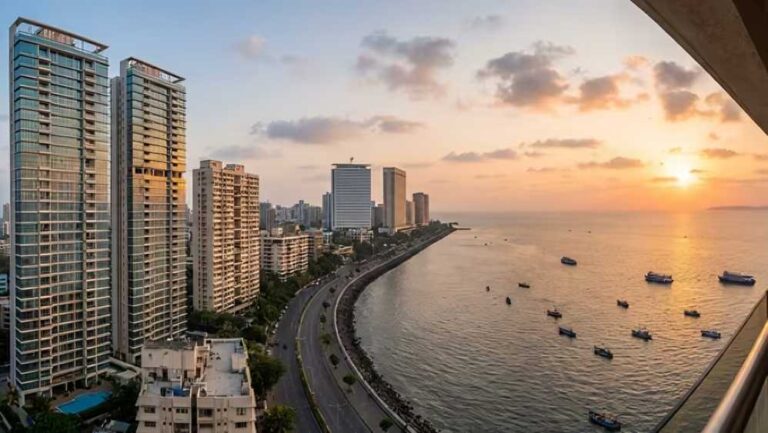
Bandra and Khar sit at the intersection of Mumbai’s most valuable infrastructure corridors. The 5.6-km Bandra-Worli Sea Link reduced peak-hour travel time between Bandra and Worli from nearly 45–60 minutes to roughly 10–20 minutes after opening. As of recent traffic estimates, the corridor now handles over 90,000 vehicles daily following expanded Coastal Road connectivity.
Most importantly, Bandra directly benefits from proximity to BKC, Mumbai’s primary financial district and one of India’s largest commercial office hubs. The concentration of office space, multinational firms, banks and consulates continues to sustain strong executive housing demand in nearby Bandra and Khar micro-markets.
Juhu lacks this level of integrated commercial adjacency. Despite its social prestige, connectivity remains comparatively constrained during peak traffic periods. Travel time from Juhu to BKC can often stretch close to an hour despite the relatively short physical distance.
Environmental and regulatory sensitivities add another layer. Parts of Juhu remain affected by Coastal Regulation Zone (CRZ) norms, aviation-related height restrictions due to airport proximity, and tighter development controls. These factors extend approval timelines and reduce redevelopment flexibility.
The larger lesson is that Mumbai’s redevelopment cycle is now becoming infrastructure-selective rather than uniformly geography-driven. Capital is increasingly flowing towards neighbourhoods where transit connectivity, commercial demand, planning incentives, and plot economics align most efficiently.
Khar and Bandra currently sit at that intersection. Juhu, despite its prestige and pricing power, does not—at least not yet.
Mumbai’s redevelopment story today is less about rebuilding homes and more about managing expectations. What looks like a clear policy framework often…
Learn moreIn Mumbai, the idea of home ownership is being steadily reshaped by capital. What was once largely a need-based decision is now…
Learn moreMumbai’s expansion is often measured in new infrastructure and rising skylines, but its most pressing challenges lie beneath the surface, in how…
Learn moreMumbai’s streets are increasingly being used not for movement, but for storage. The growing scramble for parking space is quietly reshaping how…
Learn more