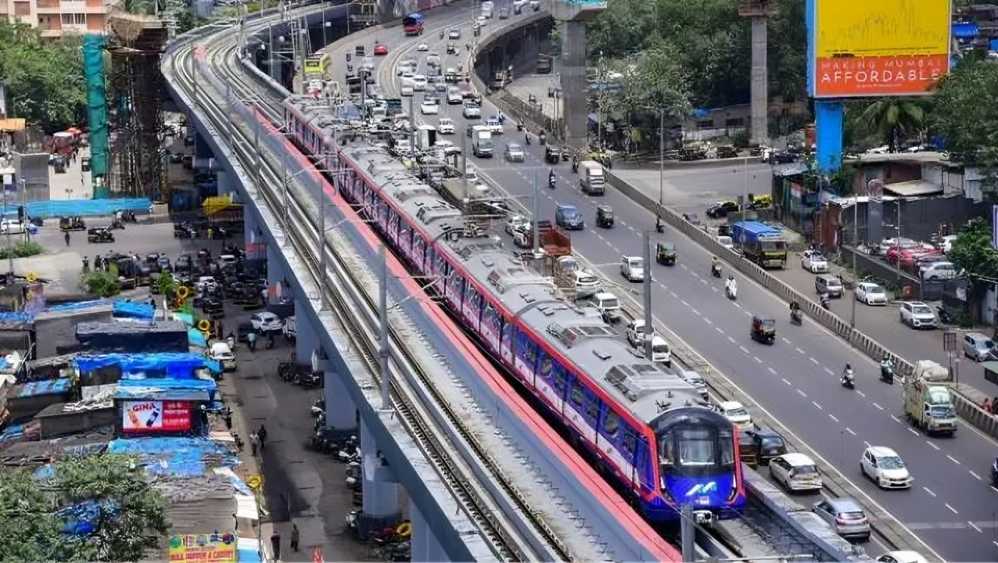

Mumbai’s metro network is set for a significant expansion in 2025, with the partial inauguration of four new lines—2B, 4, 4A, and 9—aimed at improving connectivity across the city’s eastern suburbs, Thane, and Mira Road. Additionally, the second phase of Metro Line 3, linking Bandra Kurla Complex (BKC) to Acharya Atre Chowk in Worli, is anticipated to become operational by March.
According to Maharashtra government officials, 19 stations spanning a total of 20.3 kilometres are nearing completion. The most extensive of these new routes is part of Thane’s inaugural metro line, which will allow commuters to travel from Cadbury Junction to Gaimukh, covering ten stations.
In Mumbai’s eastern suburbs, the initial segment of Line 2B will operate between Mandale in Mankhurd and Diamond Garden in Chembur, extending 5.3 kilometres and encompassing five stations. Once fully completed, this line will stretch to DN Nagar in Andheri West, connecting with the operational Line 2A that runs between DN Nagar and Dahisar. Line 2B will also link to the Central Railway’s suburban network at Kurla and the forthcoming Line 8, which will provide a direct connection between Mumbai and Navi Mumbai airports.
Metro Line 9 is designed to enhance transportation in the western suburbs by connecting Mira Road and Bhayandar. The first segment, spanning 4.5 kilometres from Dahisar to Kashigaon, will feature four stations and serve as an extension of the existing Line 7. Future plans include linking this line with Line 10, which will run from Gaimukh to Shivaji Chowk in Mira Road.
To expedite the completion of these projects, the Mumbai Metropolitan Region Development Authority (MMRDA) has been directed to accelerate construction efforts. However, a significant challenge remains: the absence of dedicated car depots for these new lines at the time of their launch. As a temporary measure, officials have established inspection pits beyond the Gaimukh terminal station and plan to optimise existing viaducts and station infrastructure until permanent depots are constructed.
Transport experts have welcomed these developments, emphasising the need for innovative solutions in urban transit planning for a city like Mumbai. They also highlight the importance of ensuring affordability and addressing last-mile connectivity to maximise the benefits of these new metro lines.
Source: Native Planet