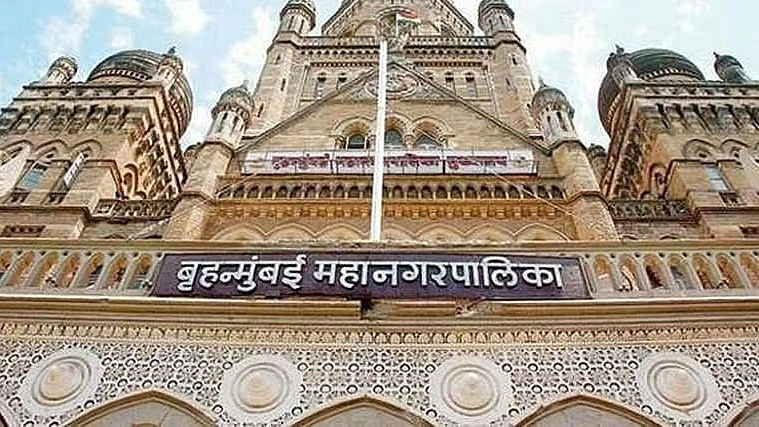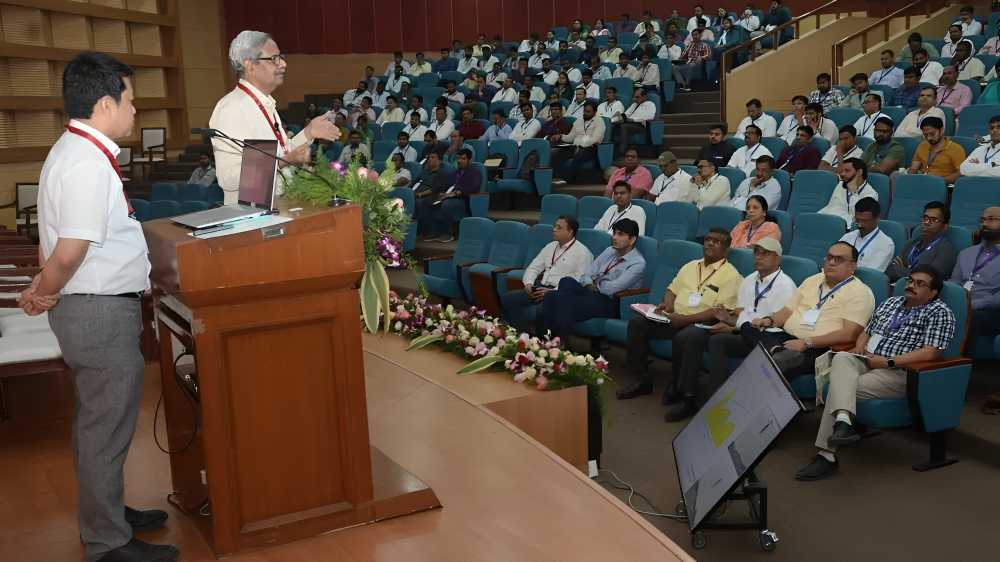

In a move aimed at strengthening the quality and durability of Mumbai’s road network, engineers from the Brihanmumbai Municipal Corporation (BMC) participated in a one-day technical and brainstorming workshop at the Indian Institute of Technology (IIT) Bombay on Saturday. The initiative is part of the civic body’s broader effort to improve execution standards and ensure longer-lasting cement concrete (CC) roads across the city.
According to civic officials, more than 300 BMC engineers attended the programme, which focused on evaluating both completed and ongoing CC road projects. The workshop was designed to provide engineers with scientific, technical, and practical insights into the planning, execution, and quality control processes involved in concrete road construction. By addressing on-ground challenges and reviewing existing works, the session sought to align field practices with established engineering standards.
The programme brought together multiple stakeholders involved in road construction. Representatives from the Quality Monitoring Agency (QMA) and contracting firms were also present, enabling detailed discussions on quality benchmarks, compliance requirements, and execution-related issues. Officials said this collaborative approach was intended to improve coordination among agencies and contractors, which is critical for achieving consistent quality outcomes.
With the BMC undertaking CC road works on a large scale across Mumbai, the workshop placed a strong emphasis on quality assurance and the adoption of best practices. Engineers were trained in the use of modern construction technologies, methods to be followed at project sites, and ways to avoid common errors that can affect road durability. The sessions also focused on identifying solutions to challenges typically encountered during implementation in dense urban environments.
The workshop was inaugurated with a keynote address by Prof. Dr K V Krishna Rao, a senior civil engineering expert from IIT Bombay. Emphasising the role of independent oversight, he said, “A practical, field-orientated approach combined with technical cooperation is essential to make Mumbai’s road infrastructure more robust, sustainable and durable.” His address highlighted the importance of aligning design intent with on-site execution through continuous monitoring.
Addressing the gathering, Additional Commissioner (Projects) Abhijit Bangar provided an update on the city’s CC road programme. He said, “The cement concrete road programme, which began in October 2023, has achieved around 60 per cent completion, with the remaining work progressing despite several challenges.” He noted that Mumbai’s urban context adds complexity to such large-scale infrastructure projects. “Mumbai’s high population density and congested urban environment make this a highly complex project. However, the work is being carried out in a planned and effective manner,” Bangar added.
He also stressed the need for direct supervision at worksites, stating that the presence of engineers during execution is mandatory to ensure quality outcomes. Highlighting long-term benefits, Bangar said, “Good riding quality enhances road lifespan and reduces maintenance costs. Proper utilisation of service ducts can prevent repeated road digging,” urging engineers to factor in both aspects during planning and execution.
During the technical sessions, observations from site visits and inspections were reviewed in detail. Professors K V Krishna Rao and Solomon Debbarma provided guidance on key aspects such as the use of quality materials in concrete mixing, proper transportation of concrete from ready-mix concrete plants to worksites, precautions during pouring, timely joint cutting, and effective curing methods. Experts also suggested the use of protective netting around tree trunks to create additional pedestrian space on footpaths.
Senior BMC officials, including Deputy Commissioner (Infrastructure) Girish Nikam and Chief Engineer (Roads and Transport) Mantayya Swami, were present at the workshop. The civic body said it plans to continue engaging with technical institutions such as IIT Bombay to maintain ongoing technical dialogue, strengthen quality control systems, and deliver safer, smoother, and more durable roads for Mumbai.
Source: Mid-day