
Across India, a number of residential projects are pushing the boundaries of traditional architecture, blending creativity, craftsmanship and sustainability to create distinctive living spaces. From sculptural brick homes in Delhi to landscape-driven residences in Tamil Nadu, these houses demonstrate how functionality and artistic expression can coexist. Through innovative materials, thoughtful planning and unconventional ideas, architects and designers are redefining the way modern homes are imagined.
Hidden among mango and neem trees in Delhi’s prestigious Golf Links neighbourhood, the Trehan family residence is a deeply personal architectural project. Designed by their daughter Shonan and her team, the house reflects the life journey of Madhu and Naresh Trehan through design elements and handcrafted details.
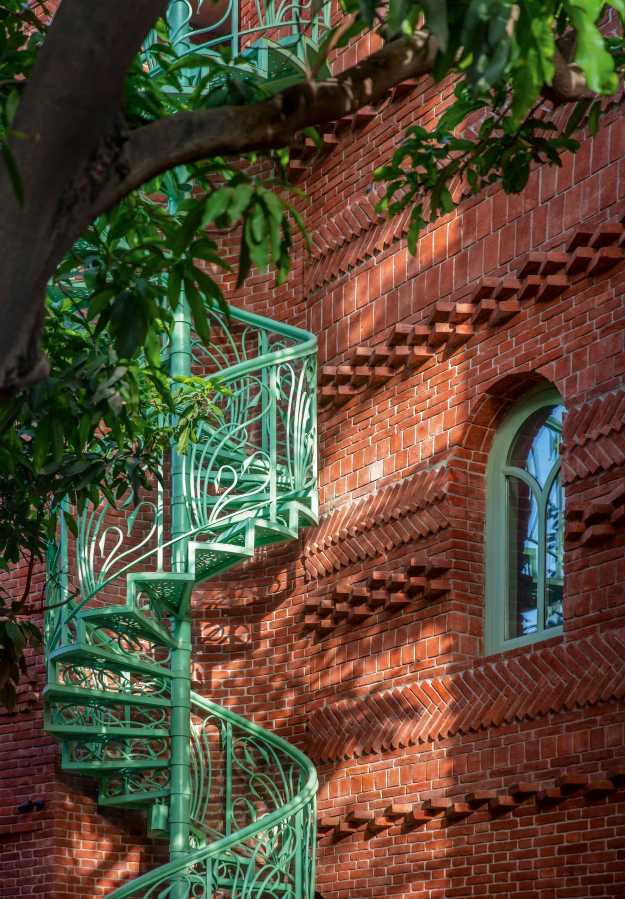
Art Deco influences, colourful furniture, intricate inlaid floors and handcrafted tiles combine with family photographs and artworks to create an expressive interior. Natural light floods the space, while the layout reinterprets the standard rectangular plot into a flowing spatial experience. Gardens, patios and the pool are integrated with the interiors, allowing the home to interact with the outdoors. The sculptural exterior made of hand-laid bricks stands as a testament to meticulous craftsmanship and creative experimentation.
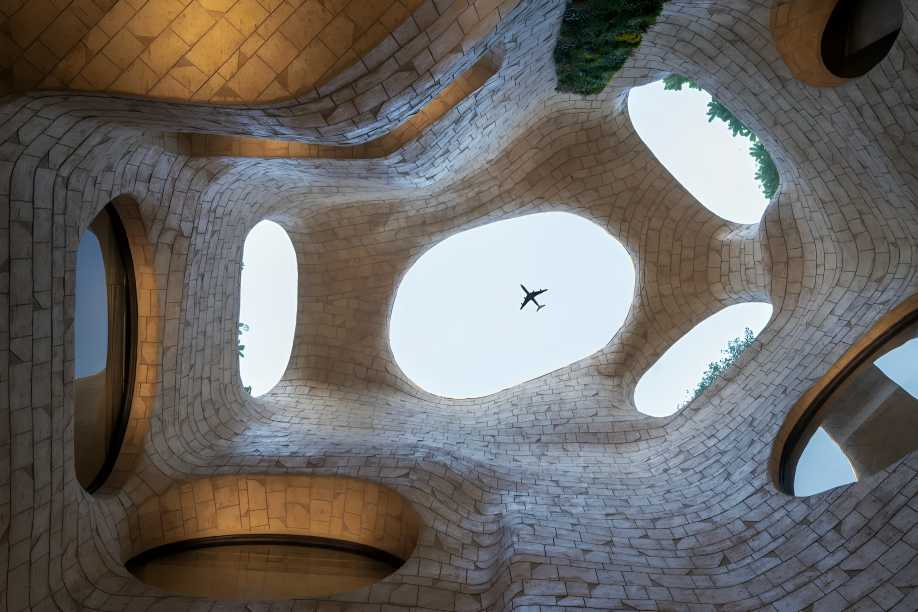
In New Delhi, architect Manish Gulati of M:OFA drew inspiration from the legendary Spanish architect Antoni Gaudí to create a surreal courtyard residence. Using AI-assisted design tools and digital modelling, the project features fluid, sculptural stone forms that evoke Gaudí’s organic style.
“From a proposal at the Trevi Fountain in Rome to countless conversations about Gaudí’s architecture in Barcelona, the design was meant to reflect a blend of references that’ve inspired the homeowners — balancing the formal symmetry of Renaissance architecture with the surreal, organic fluidity found in Gaudí’s work,” shares Gulati. “This fusion of classical order and expressive movement became the foundation of the courtyard’s design, where Gaudí’s architecture served as both a visual and conceptual reference. With the help of AI-generated mood boards and precise digital modelling, we were able to develop fluid, sculptural stone surfaces that bring the courtyard to life. The geometry begins in a symmetrical Renaissance style at the ground level, then gradually transitions into a dynamic, cloud-like form that rises towards the sky.”
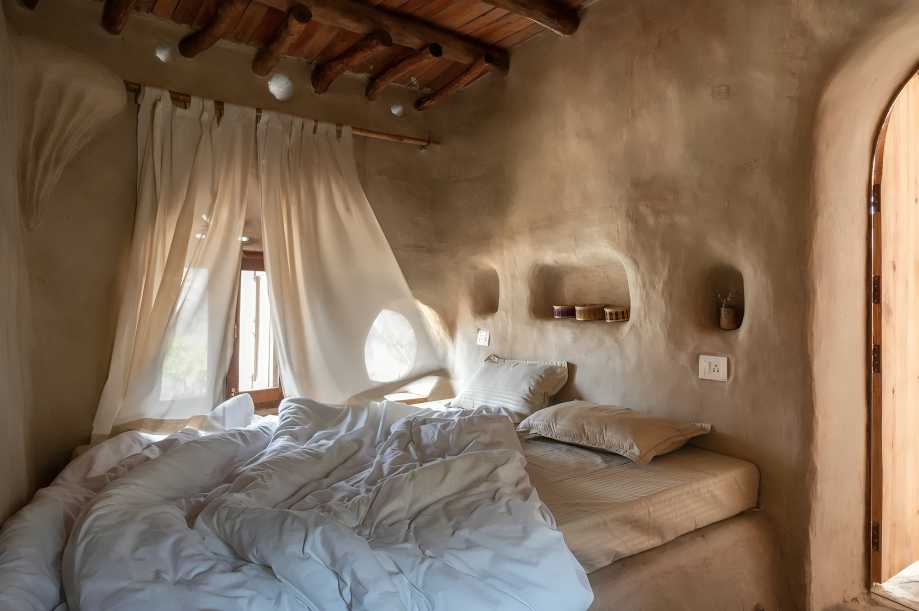
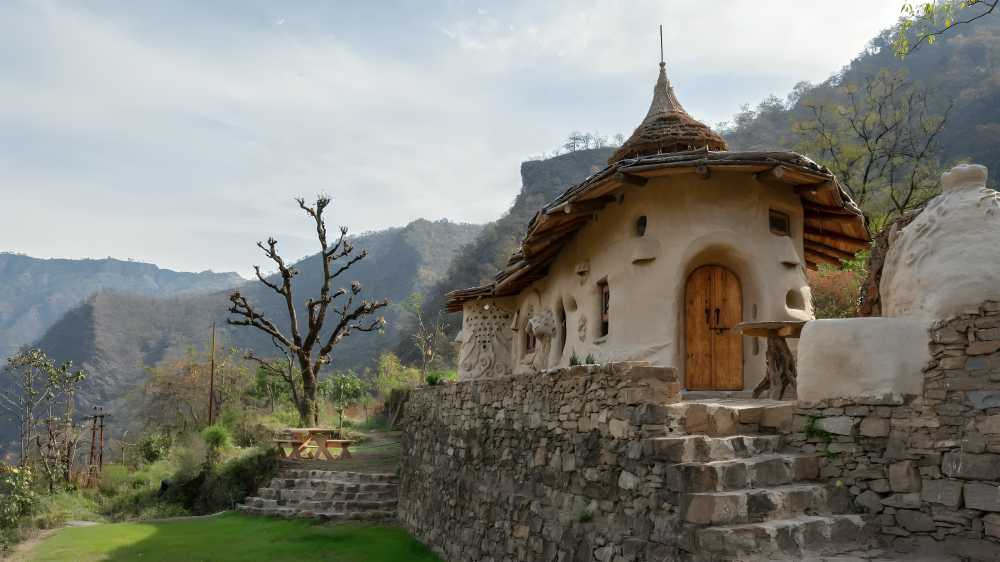
In another remarkable project, siblings Ansh Kumar and Raghav Kumar created a 600-square-foot home using mud sourced from the site itself. Built through a collaborative community process, the structure celebrates natural materials and handmade craftsmanship.
“No one involved in making the house was an architect or an artist, and yet what they created proves otherwise. They say form follows function, but in our case, the form follows the community,” explains Ansh Kumar.
The mud structure is strengthened with straw and water, while a stone masonry base and eucalyptus beams support a carefully designed roof. “Contrary to assumptions, mud is a very safe material to build a house with. We engaged in daily stomping and dancing rituals, mixing the mud with straw and water to give it strength, all while playing music from all over the world,” Raghav Kumar adds.
The house blends seamlessly with nature through a living garden façade and surrounding stone walls, creating what the designers describe as a “hand-sculpted house” inspired by natural forms.
A Rock-Integrated Home in Tamil Nadu
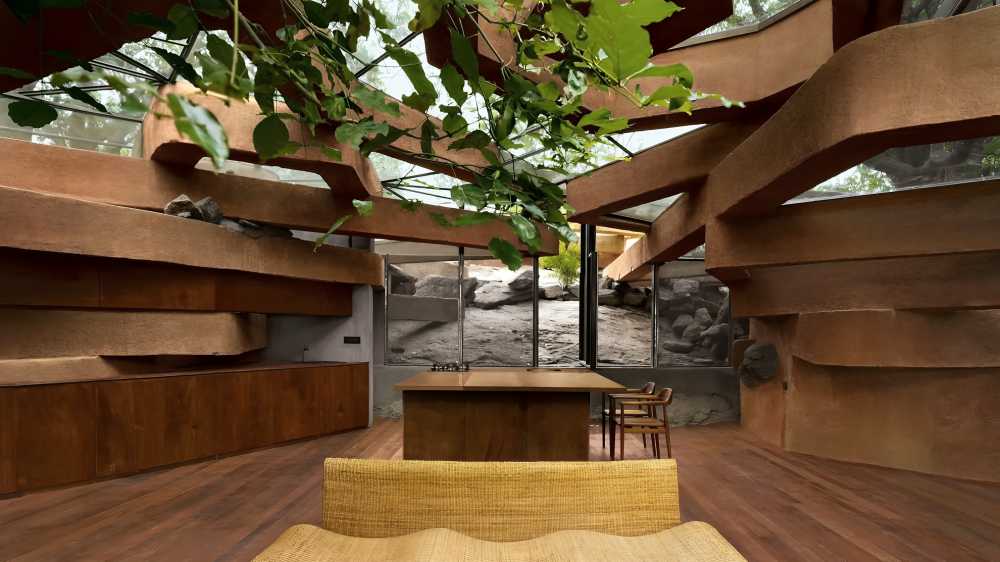
Architect Vinu Daniel of Wallmakers designed the Chuzhi House in Shoolagiri, Tamil Nadu, as a response to the rocky terrain of its site. Built within the Sanctity Ferme community, the 2,122-square-foot home embraces the existing topography rather than altering it.
The structure uses precast composite beams made from recycled PET bottles, while reclaimed wood from timber factories forms the flooring. “While it’s true that Shoolagiri has generally pleasant weather all year round, an abundance of glass can still trap heat. So, we had to carefully angle everything in a way that the shade of the tamarind trees would be enough to keep the interiors cool,” said Daniel.
A Courtyard-Centred Residence
Another contemporary home, designed by Dhanesh Gandhi of Studio Nirbaadh, challenges the architectural principle of connecting interiors directly with their surroundings. Built on a narrow site, the house uses solid exterior walls, minimal openings and slit windows to maintain privacy.
“There were no views to look out at,” says Gandhi. “In fact, the surroundings were quite shabby. Large fenestrations were not a good idea.”
Instead, the design introduces a long central courtyard that brings natural light and ventilation into the home. “It functions not only as a transitional buffer but also as a dynamic space for social interaction, morning rituals, and passive cooling,” he adds.
A Sailboat-Inspired Bungalow
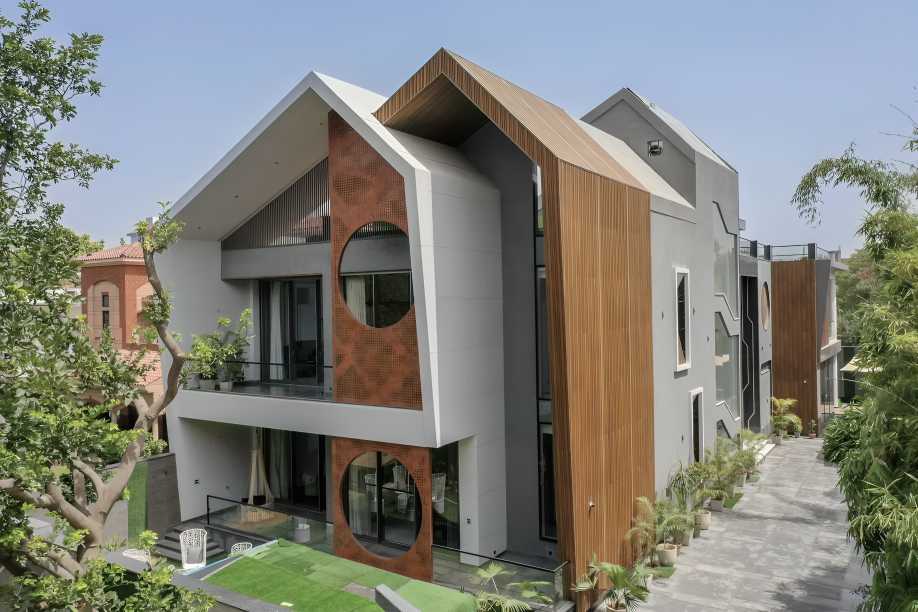
In New Delhi, architects Mayank Khemka and Vishesh Behl of Design Acrolect designed a residence that resembles a sailboat in form. Sharp geometric elements define both the exterior and interior spaces.
“The initial layout sketches and spatial progressions revolved around having well-lit and ventilated spaces,” says Khemka.
Triangular motifs, angular roofs and interconnected interiors create a fluid spatial experience, where living, dining and common areas blend seamlessly while maintaining a strong architectural identity.
Source: Architectural Design