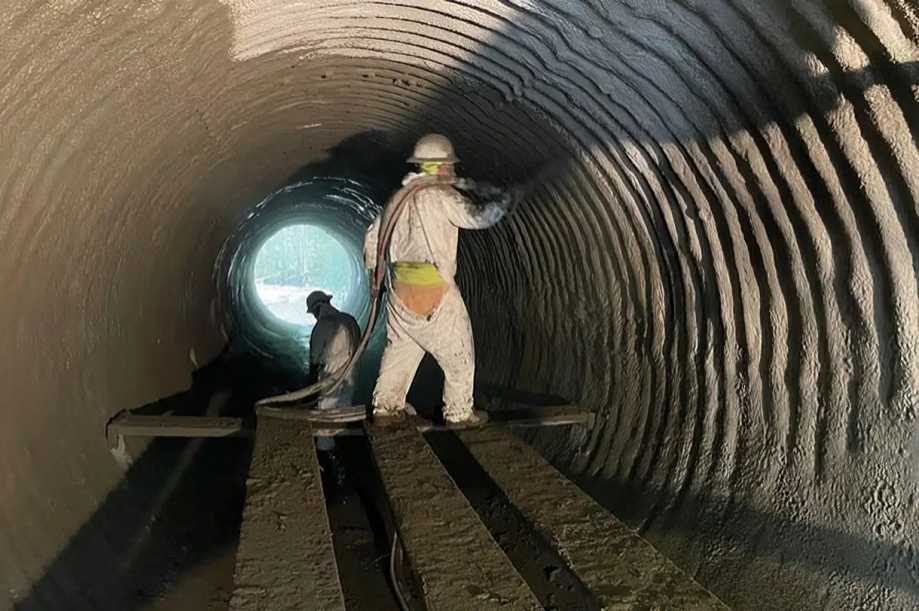

Mumbai’s civic body has initiated the use of advanced geopolymer lining technology to strengthen its century-old underground storm water drainage network, aiming to reduce flooding and extend the lifespan of critical infrastructure. The Brihanmumbai Municipal Corporation (BMC) is implementing this trenchless method for the first time in India, with expectations that it will enhance durability by at least 50 years and improve water discharge during intense rainfall.
Geopolymer is a mineral-based material made from aluminosilicate compounds such as fly ash or metakaolin, combined with an alkaline solution to create a strong, ceramic-like coating. When applied to the interior surfaces of drains, it helps seal cracks, prevent leaks, and facilitate smoother water flow.
The initiative follows a 2022 assessment conducted by experts from IIT Bombay and VJTI, which identified 56 storm water arch drains spanning 23.58 kilometres in poor condition. Of these, 27 drains covering 14.28 kilometres were prioritised for urgent repairs.
The first phase of the project, approved at a cost of Rs 535 crore, began in April 2023. Although progress since November 2023 has been gradual, officials anticipate completion by November 2027. “We inspected the ongoing work on Saturday near Shantiketan storm water outfall at Shamaldas Gandhi Marg near Princess Street flyover to find that 50% of work is completed,” said Sunil D Rasal, deputy chief engineer from BMC’s storm water drains department.
A civic official said, “The trenchless geopolymer lining technology enables repairs from within the drains, minimising excavation and avoiding major disruptions to roads and traffic in densely populated areas of the city,” adding that “similar methods are widely used in USA.”
Earlier CCTV inspections had revealed extensive structural damage, including cracks, displaced bricks, and partial collapses. With Mumbai increasingly experiencing extreme rainfall—sometimes nearing 1,000 mm within just a few days—the upgrade has become crucial to mitigating waterlogging and improving the city’s resilience.
Source: Swarajya