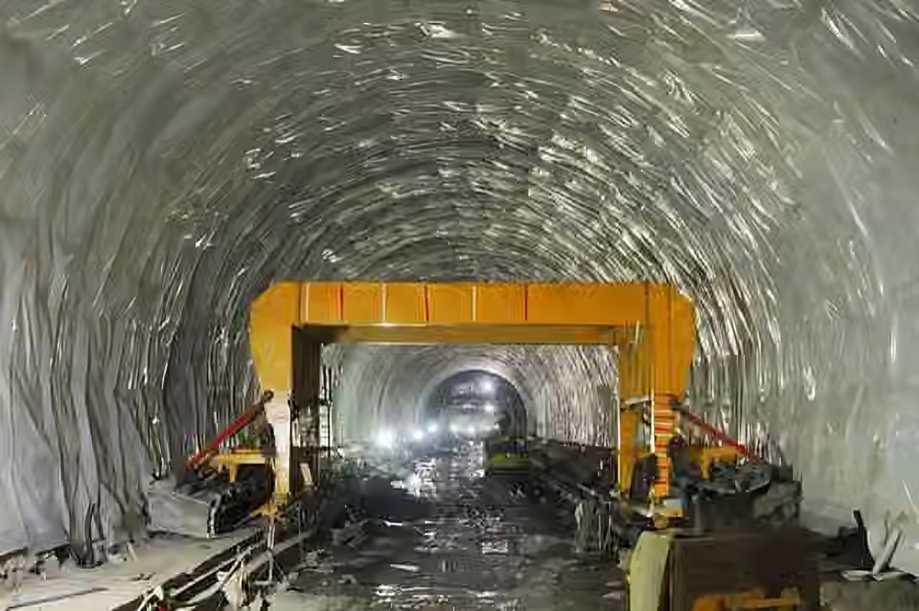

Construction on the Mumbai–Ahmedabad High-Speed Rail Corridor has reached a key milestone in Maharashtra, with the excavation of a 5 km stretch of the planned 21 km tunnel now completed. The National High Speed Rail Corporation Limited (NHSRCL) announced on Thursday (April 2) that work on this section, built using the New Austrian Tunnelling Method (NATM), has moved into the next phase.
In a post on X, the agency confirmed that the 5 km portion of the tunnel has been fully excavated. Following this achievement, work inside the tunnel has progressed to subsequent stages, including the installation of drainage systems, waterproofing, reinforcement, and final lining.
“After excavation of the 5 km NATM section of the 21 km tunnel, work has advanced to the next stages with multiple activities underway — including drainage installation, waterproofing, reinforcement bar cage preparation and final lining,” NHSRCL said.
According to the corporation, drainage infrastructure is being installed using specialised casting gantries to effectively collect and channel seepage water through a dedicated system. At the same time, reinforcement bar cages are being fabricated and placed along the tunnel structure to support the final concrete lining.
This is followed by the use of lining gantries to pour concrete, ensuring long-term structural strength and providing a smooth internal finish to the tunnel. Additionally, dedicated equipment rooms are being constructed within the tunnel to accommodate systems essential for operations and maintenance.
With these works progressing steadily, the underground segment of India’s first high-speed rail corridor is moving closer to completion. The development marks a significant step forward in the execution of the ambitious bullet train project, which aims to transform high-speed connectivity between Mumbai and Ahmedabad.
Source: Swarajya