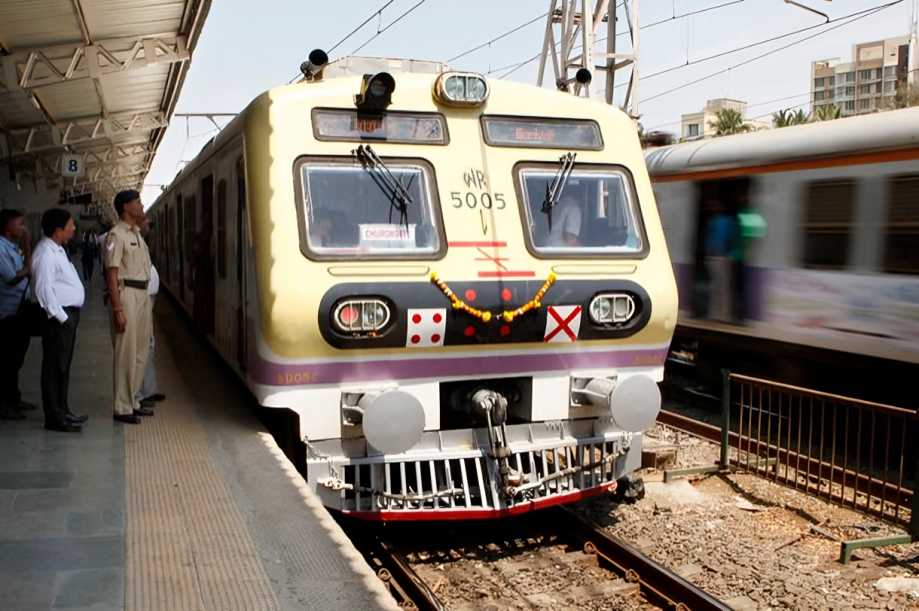

A parliamentary committee has raised concerns over a significant gap between expenditure and on-ground progress in the long-delayed rail expansion project between Chhatrapati Shivaji Maharaj Terminus and Kurla. The project involves the addition of a fifth and sixth railway line to ease congestion on one of Mumbai’s busiest corridors.
According to a report by the Public Accounts Committee tabled in Parliament on April 17, the Railway Ministry had spent 56.22% of the sanctioned project cost of Rs 890.89 crore by January 2024. However, physical progress stood at only 26%, highlighting what the panel described as a serious imbalance between financial outlay and actual execution.
The project, launched in 2009 under the Mumbai Urban Transport Project-II, is being implemented jointly by the Railway Ministry and the Mumbai Railway Vikas Corporation in collaboration with the Maharashtra government. It aims to improve capacity on the heavily congested CST–Kurla stretch by separating suburban train operations from long-distance and freight traffic.
Originally scheduled for completion by March 2021, the project has faced repeated delays due to land acquisition hurdles, weak coordination among agencies, contractual issues and continued encroachments along railway land.
The committee has recommended that the ministry establish a stricter financial monitoring framework, including monthly reviews to align spending with construction progress. It has also called for regular internal and external audits, along with timely corrective action to address discrepancies ahead of the revised Phase I deadline of December 2026, covering the Kurla–Parel section.
For Phase II, which will extend from Parel to CST, the panel has urged an early feasibility study, including options for elevated or underground alignments to minimise disruption and optimise costs.
Additionally, the committee has suggested setting up dedicated coordination groups involving all relevant agencies at the outset of such projects to prevent delays arising from approval and clearance bottlenecks.
Source: Swarajya