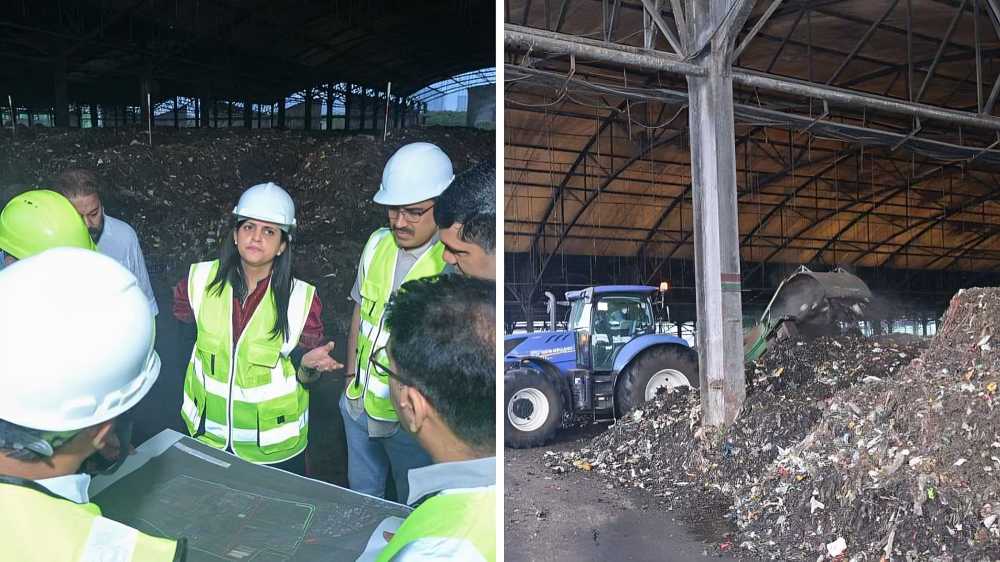

Brihanmumbai Municipal Corporation (BMC) Commissioner Ashwini Bhide conducted an early morning surprise inspection at Mumbai’s Kanjurmarg solid waste management facility on Wednesday to assess odour-control systems and waste-processing operations at the site.
The inspection lasted nearly 90 minutes, during which the commissioner reviewed several sections of the large-scale project and evaluated measures being implemented to reduce foul smell and improve environmental management. Officials also briefed her on operational systems and ongoing initiatives aimed at addressing complaints from nearby residential areas.
During the visit, Bhide inspected the waste segregation unit, composting section, waste-to-energy plant, and bio-reactor landfill zone. Civic officials informed her that multiple odour-control methods are currently being used across the facility.
According to the BMC, bio-enzyme-based liquid is being sprayed regularly over garbage to minimise foul smell. In addition, aromatic misting systems have been installed around waste unloading and processing areas. Officials stated that 11 misting cannon systems are currently operational at different points within the project site to control odour levels.
The commissioner also reviewed the civic body’s complaint redressal helpline established for residents living near the Kanjurmarg facility who report foul smell and environmental concerns.
Spread across nearly 118 hectares, or around 292 acres, the Kanjurmarg project is among Mumbai’s largest solid waste management facilities. Officials said approximately 5,200 metric tonnes of municipal solid waste are processed daily using scientifically managed bio-reactor technology, while another 1,000 metric tonnes are treated through composting methods for manure production.
Authorities further stated that methane gas generated during waste decomposition is partially utilised for electricity generation within the project. Excess methane is scientifically burnt to minimise environmental risks and reduce harmful emissions.
As part of environmental safeguards, soil-covering methods are also being used over waste layers to limit exposure to air and reduce the spread of odour and gases. During the inspection, Bhide directed officials to continue strict monitoring of environmental protection measures and improve operational efficiency wherever necessary.
Senior BMC officials, including Deputy Commissioner Prashant Gaikwad and Deputy Commissioner for Solid Waste Management Kiran Dighavkar, were also present during the inspection.
Source: The Free Press Journal