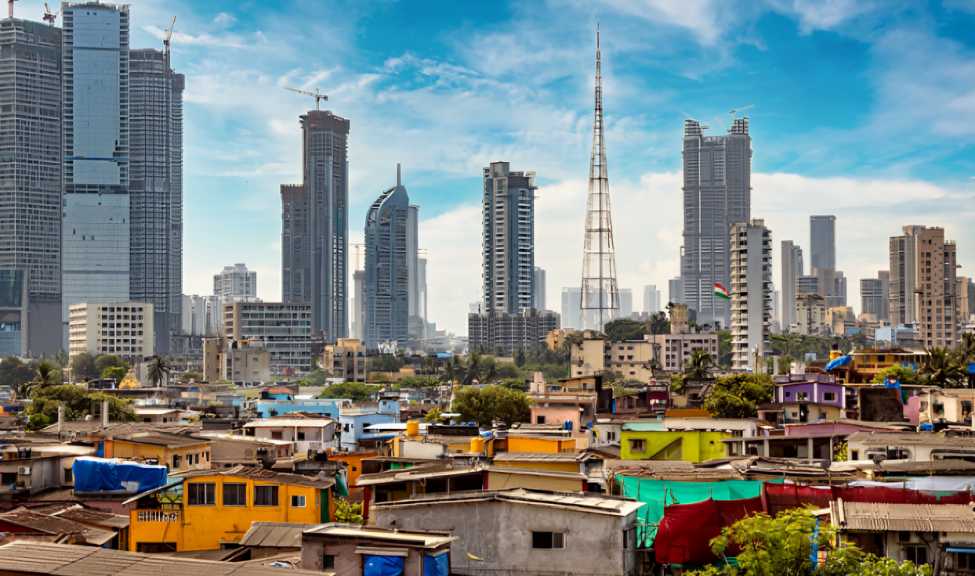

Mumbai’s urban landscape is undergoing one of its biggest transformations in decades as ageing chawls, old housing societies, and low-rise residential buildings make way for high-rise towers, cluster redevelopment projects, and mixed-use developments across the city.
What initially began as an effort to replace structurally weak buildings and address land scarcity has now evolved into a large-scale urban renewal movement that is changing how Mumbai lives, grows, and functions.
With limited land availability and some of the highest real estate prices in India, redevelopment has increasingly become the city’s primary strategy for creating new housing stock, upgrading ageing infrastructure, and unlocking land value without expanding Mumbai’s physical boundaries.
The redevelopment surge is largely driven by the condition of Mumbai’s ageing housing stock. A significant number of residential buildings across the city are over 30 years old and suffer from poor maintenance, outdated layouts, and inadequate safety infrastructure.
At the same time, demand for housing in established and well-connected neighbourhoods remains strong. For many residents, redevelopment offers an opportunity to upgrade living standards while continuing to stay close to workplaces, schools, transport corridors, and existing social networks.
Policy changes under the Development Control and Promotion Regulations (DCPR) 2034, including higher Floor Space Index (FSI) incentives and relaxed development norms, have further improved project viability for developers.
Redevelopment activity is now visible across several parts of Mumbai, including Girgaon, Byculla, Mazgaon, Andheri, Goregaon, Borivali, Kandivali, Chembur, Mulund, and Ghatkopar. Large-scale projects such as the Bhendi Bazaar redevelopment, Dharavi redevelopment plan, and multiple society redevelopment schemes are contributing to the city’s shift towards vertical urban growth.
The impact extends beyond the skyline. Redevelopment is influencing property prices, infrastructure demand, commercial activity, and urban mobility patterns across Mumbai. Residents often gain larger homes, modern amenities, and improved safety standards, while developers are increasingly focusing on integrated projects combining residential, retail, and office spaces.
However, concerns around affordability, infrastructure pressure, congestion, and displacement continue to remain central to the redevelopment debate.
Despite the risks associated with delays, financing, and execution challenges, redevelopment is now emerging as one of the defining forces shaping Mumbai’s future urban growth trajectory.
Source: Realty Plus