
Marking World Environment Day on June 5, environmental organisations and citizen groups from across the Mumbai Metropolitan Region (MMR) came together to launch Climate Action Now (CAN), a collaborative platform aimed at addressing some of the region’s most pressing ecological challenges. The initiative focuses on issues including shrinking green cover, redevelopment-related environmental concerns, degradation of wetlands and mangroves, and the growing risks posed by climate change and rising sea levels.
The launch event, hosted by NatConnect Foundation, brought together representatives from several environmental groups, including Sagar Shakti, Swarnsrishti Habitat Restorer Foundation, Parsik Greens, Sajag Nagrik Manch, Powai ALM, Save Flamingos/Mangroves, Save Belapur Hills and Human Chain Online.
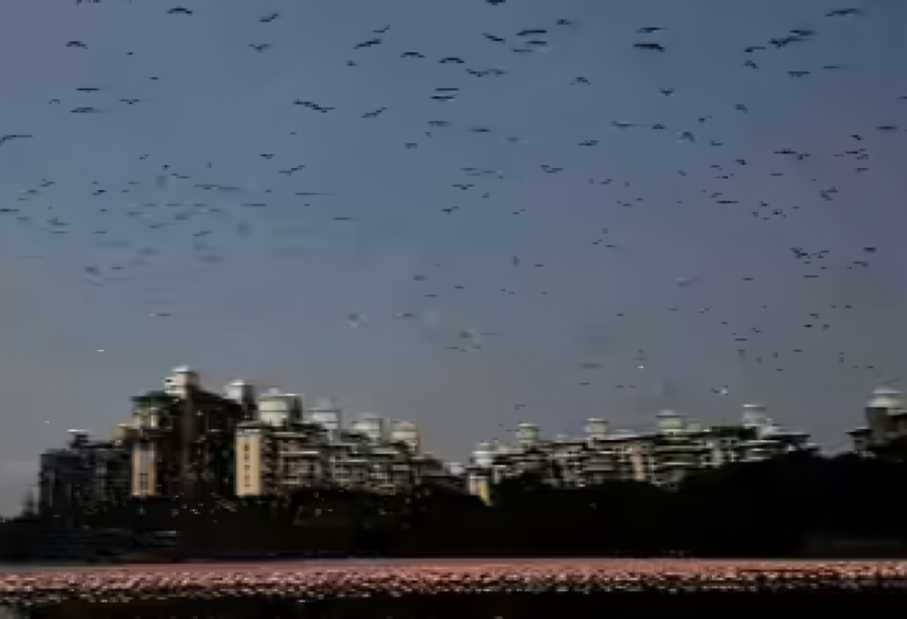
A key proposal emerging from the roundtable was the creation of a “Flamingo Blue Carbon Urban Complex,” which seeks to transform mangroves, wetlands and mudflats into a sustainable ecological asset capable of generating long-term environmental and economic value. Participants suggested that Maharashtra could establish a dedicated “Blue Carbon Credit Bank” or carbon-credit exchange, enabling industries with significant carbon footprints to purchase certified credits linked to the protection of the region’s coastal ecosystems.
According to the proposal, funds generated through such a mechanism could support mangrove conservation, wetland restoration, biodiversity protection, flood mitigation measures and climate-resilience projects across the MMR.
In a declaration issued at the conclusion of the event, CAN described wetlands, mangroves, rivers, forests, floodplains and biodiversity-rich zones as “critical ecological infrastructure” necessary for urban resilience, environmental security and public well-being.
“Mangroves are among the world’s most effective natural carbon sinks, absorbing an estimated six to 10 tonnes of carbon dioxide per hectare annually while storing massive quantities of carbon underground in coastal mud and sediment systems for decades and even centuries,” the declaration said.
The platform also advocated climate-sensitive redevelopment, stronger environmental governance and greater public participation in conservation efforts. “We seek to build a future where development and ecology coexist responsibly, where environmental protection becomes central to governance, and where climate resilience becomes the foundation of urban planning and public policy,” the declaration stated.
Participants concluded by emphasising that proactive conservation is far more cost-effective than rebuilding after environmental disasters, urging governments, businesses and citizens to act before ecological damage becomes irreversible.
Soure: The Times of India