
Navi Mumbai is taking steps to strengthen its sustainability agenda, with the Navi Mumbai Municipal Corporation (NMMC) evaluating a series of recycling and environmental management initiatives aimed at promoting resource recovery and reducing waste generation across the city.
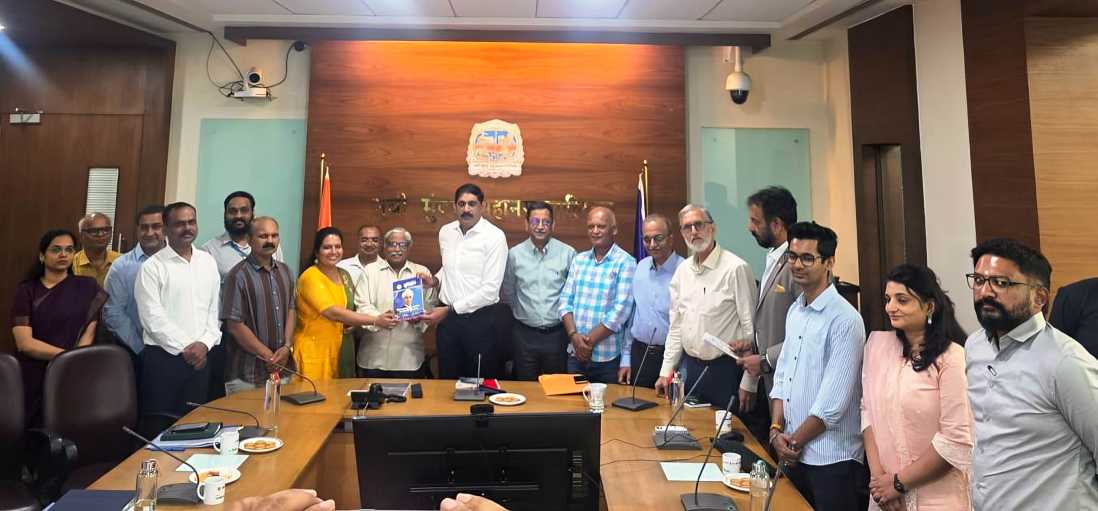
The proposals were discussed during a special meeting chaired by Municipal Commissioner Dr. Kailas Shinde, which brought together environmental groups, researchers, academic institutions and civic stakeholders to explore practical solutions for urban environmental challenges. Among the key focus areas was the recycling and reuse of plaster of Paris (POP) idols after festival immersions.
Representatives from the Institute of Chemical Technology (ICT), Mumbai, presented concepts related to waste recovery, decentralised waste management systems and compact waste-processing technologies. The institute also proposed setting up a dedicated recycling project in Navi Mumbai, with civic authorities indicating that the feasibility of the proposal would be examined.
Sculptors’ associations participating in the discussions expressed support for using recycled POP in the production of new idols, potentially creating a circular ecosystem for idol manufacturing and disposal.
Environmental organisation Nuotera proposed converting recovered POP into products such as school furniture, including study tables. The organisation also suggested a formal collaboration with NMMC for the collection and recycling of immersed idols.
Project Mumbai presented plans for a citizen-volunteering platform to encourage public participation in environmental initiatives, along with an “Agni Suraksha Vision” programme focused on fire safety awareness and community engagement.
The meeting also reviewed preparations for Maharashtra Climate Week 2027 and highlighted biodiversity management efforts. According to Dr. Shinde, a recent tree census recorded more than 1.5 million trees across over 225 locations within Navi Mumbai, with a focus on increasing native species plantation.
Additional proposals included biodegradable alternatives to single-use plastics and biomass briquettes made from garden and agricultural waste for cremation purposes. Discussions also covered a Textile Recycling Facility being developed jointly by NMMC and the Ministry of Textiles’ Textile Committee, which is being positioned as the first project of its kind in India.
Officials said the initiatives reflect Navi Mumbai’s broader goal of emerging as a centre for recycling, resource recovery and sustainable urban management.
Source: Prop News Time