
The Navi Mumbai International Airport (NMIA) is reshaping the region’s real estate market, bringing previously disconnected residential and investment pockets into a broader growth corridor. The airport, which had remained a long-promised infrastructure project, was inaugurated in October 2025, followed by its commercial launch in December 2025. International operations began in 2026.
The airport’s influence is now extending beyond its immediate surroundings to Ulwe, Panvel, Kharghar, Taloja, Karanjade, New Panvel and Dronagiri.
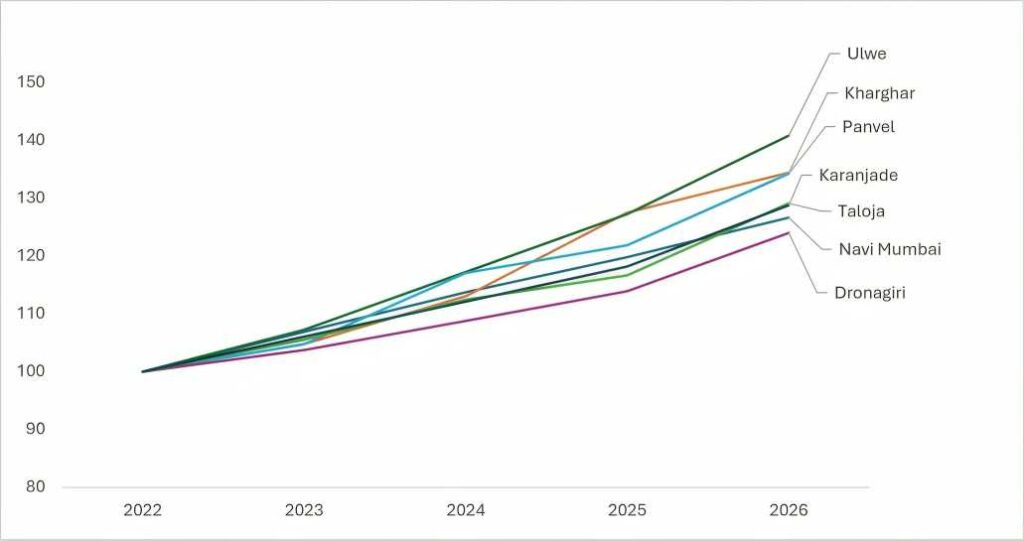
Residential markets have been among the biggest beneficiaries. Average property prices across Navi Mumbai have increased by about 27% over five years, while locations closer to the airport, including Ulwe and Panvel, have recorded stronger growth. Improved connectivity and expectations of rising employment have contributed to the increased demand.
The airport is also benefiting from other infrastructure projects. Atal Setu has strengthened the road connection between Mumbai and Navi Mumbai, while Navi Mumbai Metro Line 1 has improved movement within the region. The NAINA development zone, planned metro extensions and Ulwe coastal road are further expanding areas considered accessible to the airport.
Ulwe and Panvel currently remain among the leading markets, supported by investor demand and employment opportunities linked to the airport ecosystem. Kharghar, already an established residential node, is gaining renewed interest because of improving connectivity.
Taloja and Karanjade are emerging as relatively affordable alternatives as property prices in Ulwe rise. New Panvel and Dronagiri are also attracting interest from investors looking at logistics, land and future development potential.
The airport’s impact is therefore spreading beyond individual locations and creating a larger interconnected real estate corridor.
As international operations expand and supporting infrastructure develops, demand could gradually move towards areas that currently offer lower entry prices. Metro extensions, coastal roads and NAINA development are expected to play a role in determining the next phase of growth.
Ulwe, Panvel and Kharghar currently offer greater market activity and liquidity, while Taloja, Karanjade, New Panvel and Dronagiri may appeal more to investors willing to take a longer-term view. The broader trend suggests that connectivity, employment and infrastructure will remain key factors shaping Navi Mumbai’s property market.
Source: JLL