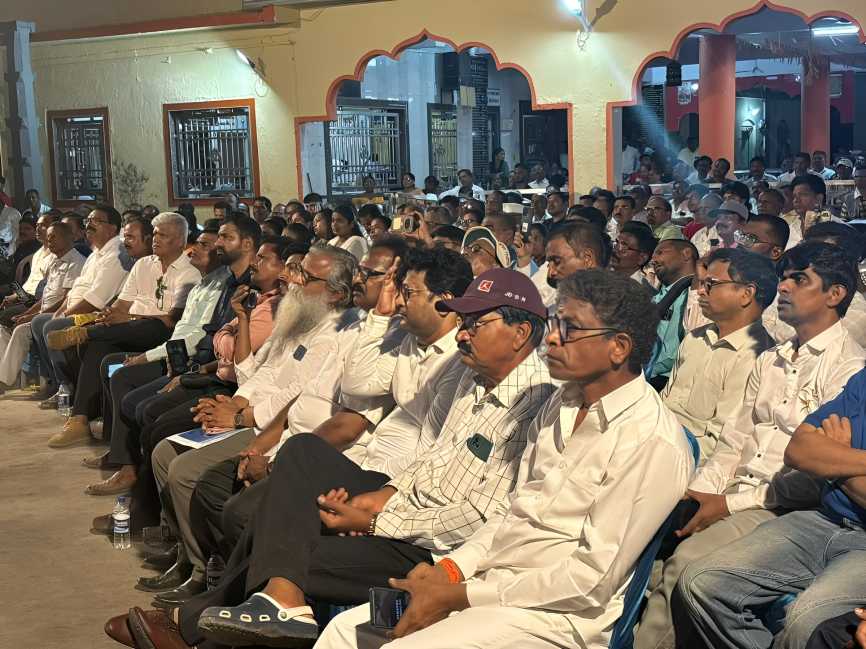

Opposition to the proposed Third Mumbai project in Raigad district gained momentum on Sunday as farmers, activists and local representatives voiced concerns over land acquisition and compensation provisions linked to the large-scale urban development initiative.
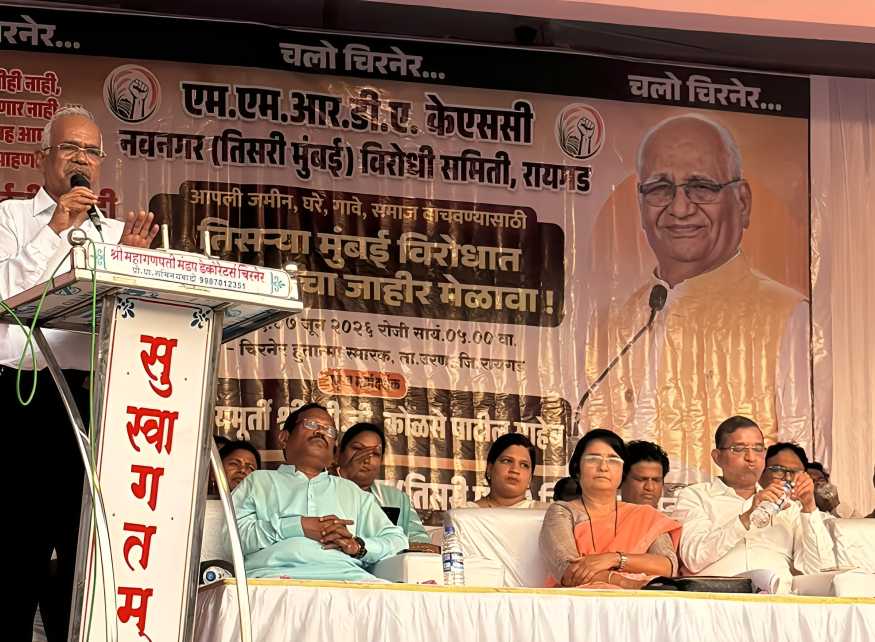
Addressing a gathering organised by the MMRDA KSC Navnagar (Third Mumbai) Virodhi Samiti, social reformer and former judge B.G. Kolse Patil strongly criticised the project and urged farmers to resist it.
“A ‘Third Mumbai’ will be built only over our dead bodies,” Kolse Patil said while addressing attendees, calling on them to take a collective oath against the proposed development.
The Karnala-Sai-Chirner (KSC) New Town project, commonly referred to as Third Mumbai, covers 124 villages across Uran, Panvel and Pen talukas in Raigad district. Planned over approximately 323 square kilometres, the project is being developed by the Mumbai Metropolitan Region Development Authority and is expected to benefit from connectivity through the Atal Setu.
A key point of contention remains the compensation framework proposed for affected landowners. Under a government resolution issued in March, landowners can either receive 22.5% developed land in exchange for acquired land or opt for compensation through Floor Space Index (FSI) and Transferable Development Rights (TDR).
Several speakers at the meeting alleged that the compensation package does not adequately address the concerns of local farmers and residents. Social activist Ulka Mahajan criticised the implementation process, stating, “The project has given short shrift to laws; democracy and constitutional norms are missing from the process.”
Pen-based activist Nanda Mhatre questioned the public consultation process. “They submitted reports with objections that are convenient to them and left out all the problematic issues,” she said.
Farmer and Samiti representative Rupesh Patil urged residents to carefully consider the long-term consequences of selling their land. “If we sell today, we won’t be able to buy even half a gunta of land. Our land is no more farmland but has become a real estate hub,” he said.
The project continues to face resistance from sections of local communities even as planning and land acquisition processes move forward.
Source: The Hindu