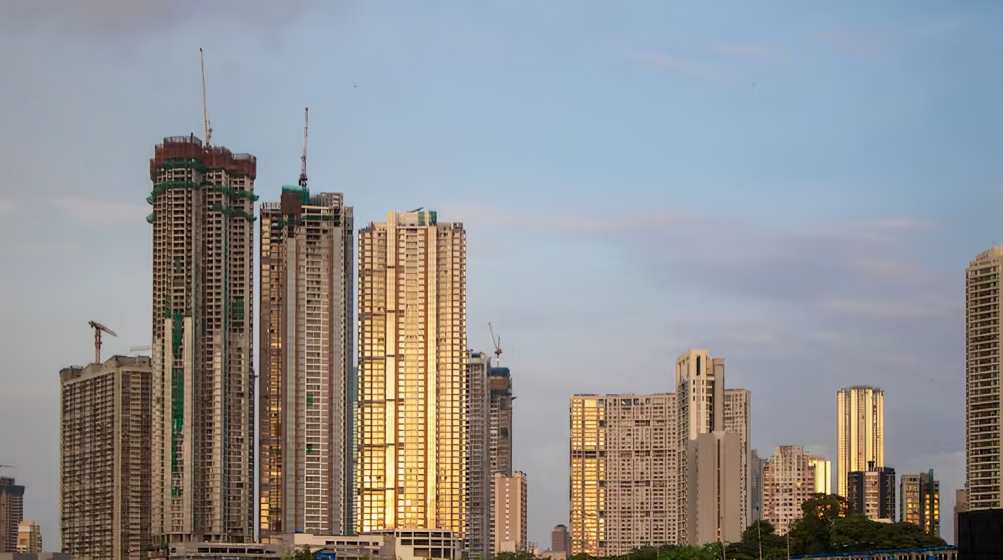

India’s biggest business conglomerates, including groups linked to Ambani, Adani, JSW, Shapoorji Pallonji and Lodha Developers, are increasingly shifting their real estate focus away from peripheral greenfield developments and toward the redevelopment of ageing housing societies and slum clusters in Mumbai. The strategy reflects a growing recognition that scarce and expensive urban land is pushing developers to unlock value within existing city limits.
According to an ET report, redevelopment projects across prime Mumbai locations such as Worli, Bandra and large slum rehabilitation zones are now being viewed as high-value assets. What was once a fragmented, society-level activity is rapidly evolving into large-scale urban regeneration, potentially offering a model for other Indian cities.
Mumbai, constrained by limited land availability, has effectively become the country’s primary redevelopment testing ground. Developers are now targeting densely populated neighbourhoods where old structures, inadequate infrastructure and high population density make renewal both necessary and complex. Industry leaders say redevelopment is emerging as the most viable long-term growth engine for well-capitalised players capable of managing large-scale rehabilitation and lengthy project cycles.
The Maharashtra Housing and Area Development Authority (MHADA) has outlined one of India’s largest urban renewal pipelines, spanning 925 acres across 11 projects with an estimated investment of ₹4 lakh crore. The programme envisions around 75,000 rehabilitation homes and 30,000 additional housing units, with several major developers already expressing interest.
Recent activity highlights the intensity of competition. Adani Properties emerged as the highest bidder for MHADA’s Adarsh Nagar project in Worli and the Bandra Reclamation cluster redevelopment. Reliance has also entered the segment through the redevelopment of the 101-acre Juhu Galli slum cluster in Andheri, which alone is expected to accommodate over 28,000 rehabilitation homes.
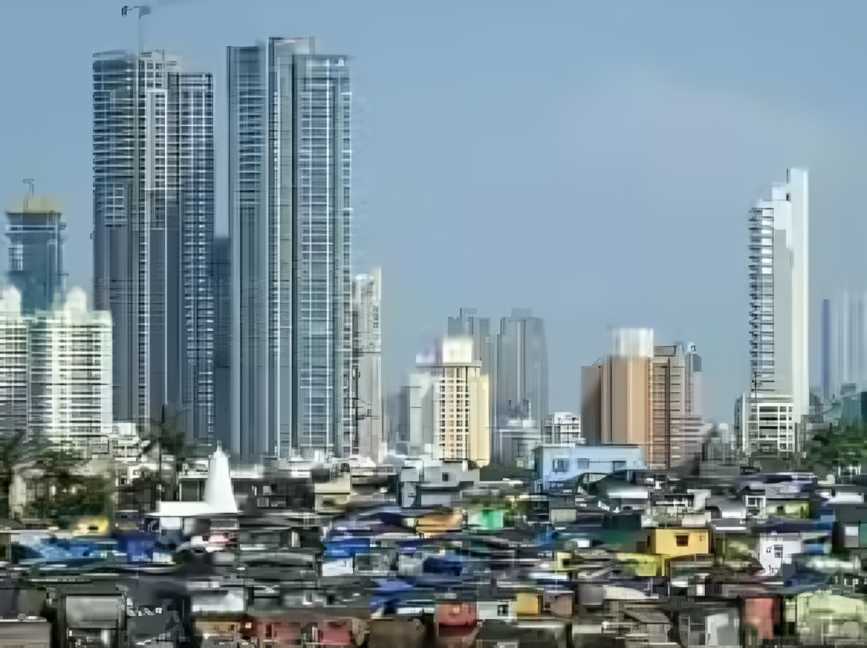
For years, Dharavi remained the most prominent example of slum redevelopment in India. Today, it is part of a wider shift. Using advanced technologies such as drone mapping, LiDAR and digital twin modelling, authorities are planning large-scale transformation of entire urban clusters. Similar redevelopment zones have been identified in Antop Hill, Majaswadi and Behrampada, signalling a shift from isolated projects to neighbourhood-scale restructuring.
Experts note that this transition is reshaping Indian real estate into a more institutional and capital-intensive sector. As Niranjan Hiranandani, Chairman of NAREDCO, has highlighted, the industry is moving toward a more structured and governance-driven framework, attracting larger pools of investment.
The appeal for corporates is clear: redevelopment unlocks prime urban land without the challenges of land acquisition, while offering long-term, stable pipelines of projects. For governments, it reduces infrastructure pressure; for residents, it promises improved housing and amenities.
The implications extend beyond Mumbai. Cities such as Delhi, Kolkata, Bengaluru, Chennai and Hyderabad also contain large pockets of ageing or informal housing situated on high-value land. Mumbai’s evolving model demonstrates a hybrid approach where public agencies, private developers and residents collaborate to finance transformation through land value itself.
If successful, this redevelopment-driven framework could reshape how Indian cities address urban decay. Instead of expanding outward, cities may increasingly rebuild inward, converting outdated and overcrowded neighbourhoods into planned urban districts.
Mumbai’s ongoing transformation suggests a potential shift in urban thinking—one that replaces fragmented slum narratives with integrated redevelopment-led growth, setting a possible blueprint for India’s next phase of urban evolution.
Source: The Economic Times