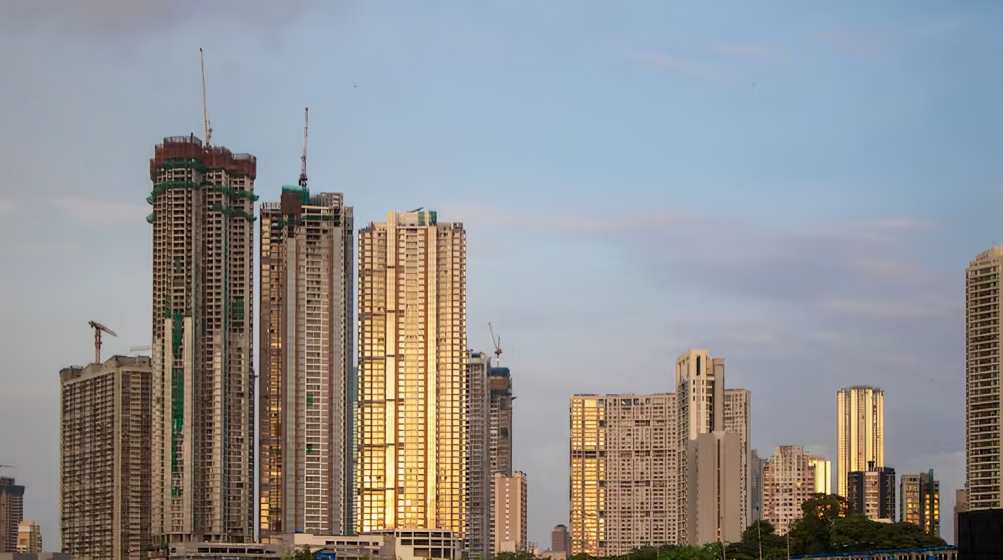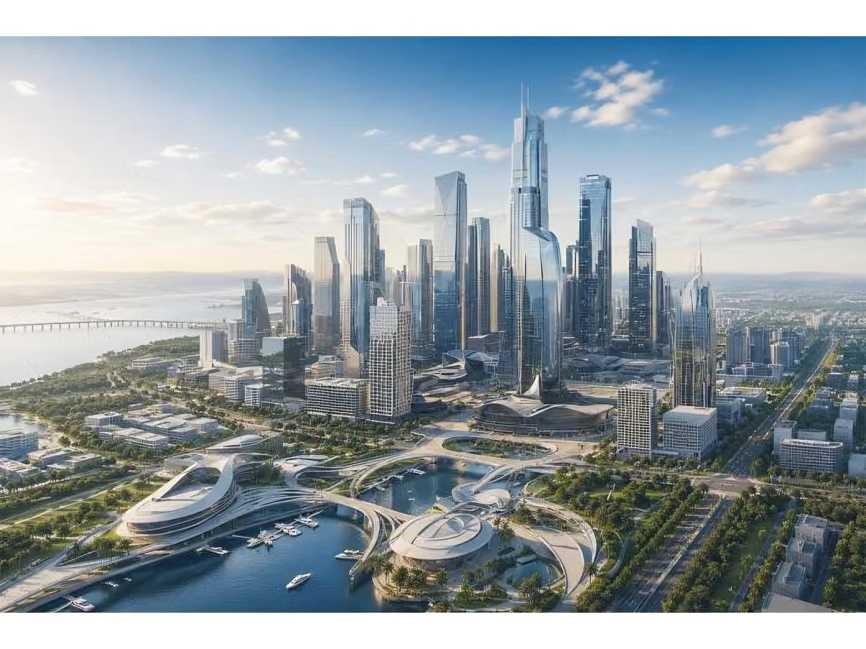

Mumbai’s real estate market has consistently demonstrated one defining principle behind major wealth creation—timing. Historically, the strongest appreciation across locations such as South Mumbai, Bandra, Powai, and Navi Mumbai was not driven by full development, but by early phases when infrastructure, connectivity, and economic activity began to align ahead of mainstream recognition.
A similar pattern is now being observed in what is being referred to as “Mumbai 2.5,” a developing investment corridor positioned between Mumbai’s established urban core and its next phase of expansion. This zone is increasingly being viewed as a strategic midpoint connecting the maturity of Navi Mumbai with the future-forward growth vision of the Mumbai Metropolitan Region.
Mumbai 2.0, led by Navi Mumbai, is already a well-structured urban ecosystem supported by strong transport and social infrastructure. Its growth trajectory is being further strengthened by major drivers such as the Navi Mumbai International Airport, the Mumbai Trans Harbour Link, metro expansions, coastal road projects, ferry systems, and an extensive rail and highway network. Key arteries like the Sion-Panvel Highway, Mumbai-Pune Expressway, JNPT corridor, Palm Beach Road, and Thane-Belapur Road further reinforce its connectivity and economic activity.
On the other side, Mumbai 3.0—introduced at the World Economic Forum in Davos—represents a long-term urban expansion vision aimed at creating new economic hubs across sectors such as technology, education, healthcare, logistics, and sports. Anchored by the upcoming Navi Mumbai International Airport, the plan includes major developments such as Navi Mumbai Aerocity, a 667-acre master plan designed with Japanese infrastructure expertise, and a 300-acre Innovation City focused on next-generation technology ecosystems.
Additional proposed components include an International Business District, Global Capability Centre zones, Edu City, MedCity for advanced healthcare research, a Sports City featuring a proposed 1,00,000-capacity international cricket stadium along with Olympic-standard facilities, and a 374-hectare Integrated Logistics Park designed to enhance regional trade infrastructure.
Against this backdrop, Mumbai 2.5 emerges as a unique investment proposition. It is neither limited to existing infrastructure nor dependent solely on future development. Instead, it benefits from immediate connectivity while being positioned close to upcoming economic engines, creating a rare balance of present utility and future potential.
This positioning makes it relevant for homebuyers seeking access to emerging growth corridors, for businesses looking at strategic connectivity, and for investors focused on timing-led real estate appreciation.
Developers such as Kanakia Group are also highlighting this emerging narrative. The company, which has delivered over 22 million sq. ft. across 85+ projects spanning residential, commercial, township, education, entertainment, and hospitality segments, believes such transitional corridors often define the next phase of urban value creation.
“At Kanakia, we have always believed that real estate value is created by identifying the right location at the right time, and then building with a long-term vision. Mumbai 2.5 represents that rare inflection point where infrastructure, connectivity and future economic growth are coming together. We believe this corridor is Mumbai’s biggest blue-chip investment opportunities,” said Mr. Himanshu B. Kanakia, Managing Director, Kanakia Group.
Source: The Print