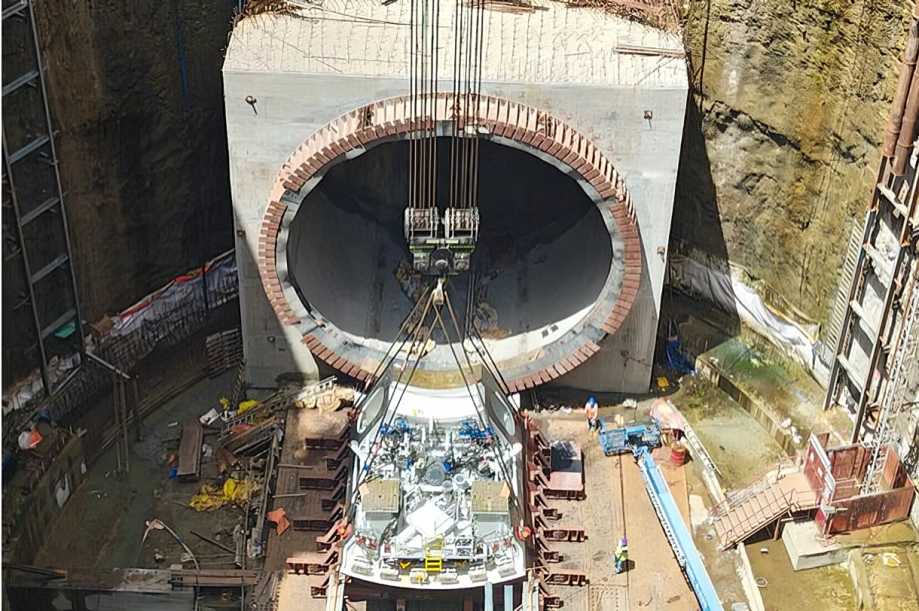

Construction of one of the most technically demanding sections of the Mumbai–Ahmedabad Bullet Train project has officially commenced, even though the formal inauguration of underground tunnel-boring operations has been postponed due to heavy rainfall in Mumbai.
The Ministry of Railways deferred the ceremonial launch after the India Meteorological Department (IMD) issued Red and Orange alerts for Mumbai and adjoining regions, warning of intense rainfall over the next few days.
Railway Minister Ashwini Vaishnaw was scheduled to inaugurate the country’s first tunnel boring machine (TBM)-based excavation for the high-speed rail corridor. However, to prevent any delay in project execution, the Ministry directed the National High Speed Rail Corporation Limited (NHSRCL) to begin tunnelling immediately without waiting for the official launch.
The underground package is being executed by Afcons Infrastructure Limited using two specially customised German-manufactured tunnel boring machines (TBMs), which were imported to India earlier this year.
The first TBM has now started excavating the 5.8-km stretch from Vikhroli towards the Bandra Kurla Complex (BKC). The second machine, currently being assembled at Sawli, will undertake the 9.7-km section from Sawli to Vikhroli, including the project’s 7-km undersea tunnel beneath Thane Creek.
Once both machines are fully operational, they are expected to excavate approximately 600 metres of tunnel every month, significantly boosting the pace of construction.
The entire underground tunnel extends 20.37 km between BKC and Shilphata. Of this, 15.4 km will be excavated using tunnel boring machines, while the remaining 4.8-km stretch has already been completed through the drill-and-blast method.
The Mumbai–Ahmedabad High-Speed Rail Corridor, India’s first bullet train project, is expected to transform intercity connectivity between Maharashtra and Gujarat by enabling trains to operate at speeds of up to 320 kmph.
Source: Swarajya