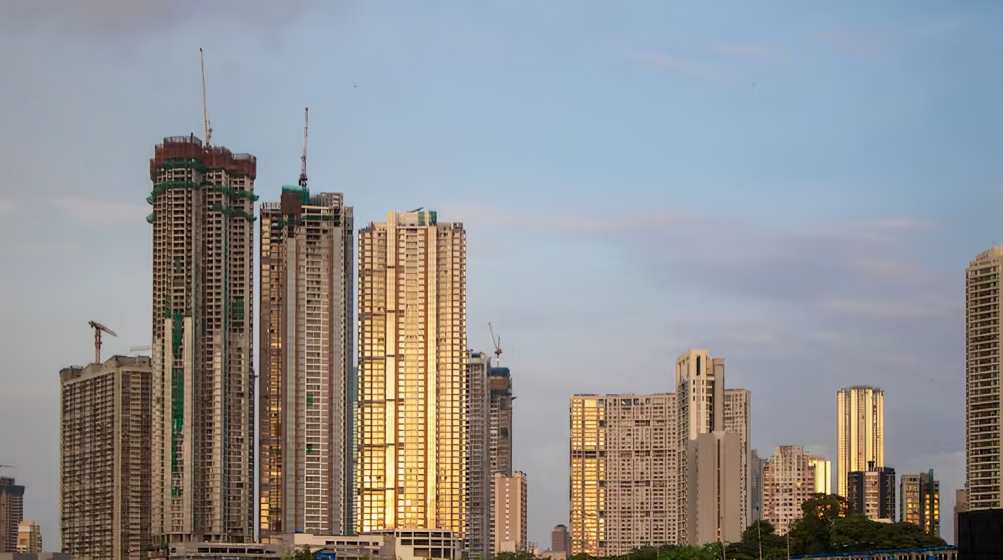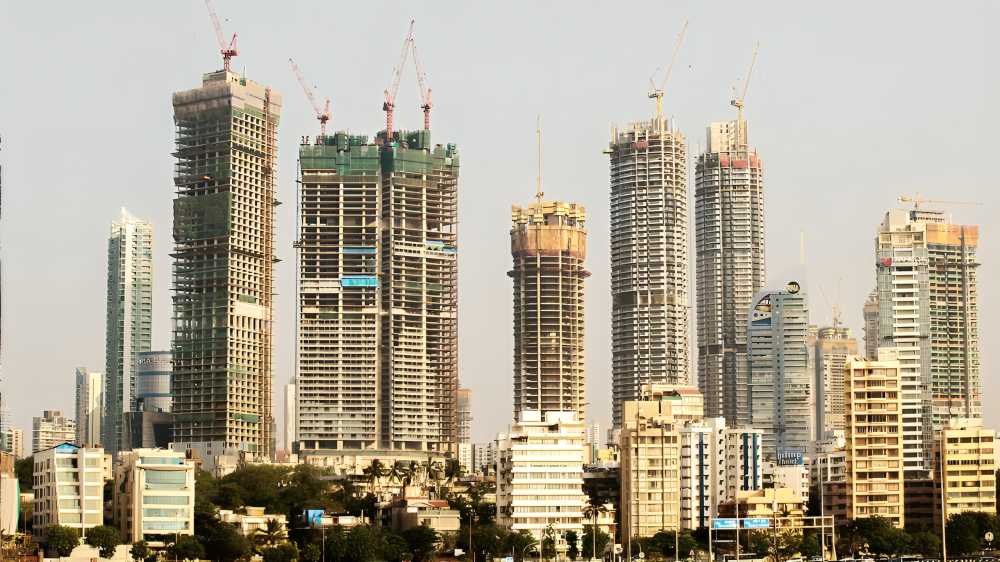

Mumbai can build a 60-storey tower before a redevelopment file completes its own floor-wise journey through government departments.
Every few months, Mumbai proudly unveils another skyscraper. Glass facades rise into the skyline, cranes dance across the horizon, and brochures confidently promise possession in four years.
The approval file, meanwhile, is still looking for its next signature.
In Mumbai’s real estate sector, there are two kinds of construction. One involves steel, concrete, and engineering. The other involves stamps, initials, and forwarding notes. Strangely enough, the second usually takes longer.
The redevelopment of Motilal Nagar in Goregaon, one of Mumbai’s largest housing renewal projects, illustrates the point well. While the project has finally gathered momentum after the master developer (Adani Group) was appointed in 2025, the proposal spent years moving through planning, policy approvals and administrative processes before work could begin. The engineering challenge was always significant, but getting the project off the drawing board proved equally demanding. Fire approvals, environmental clearances, airport height permissions, traffic NOCs, and multiple civic departments all have legitimate roles. Together, however, they can make the approval process feel less like coordination and more like a relay race where every runner insists on starting from the same line.
Or the complete file.
Mumbai today has more than 19,700 buildings that are over 30 years old, many awaiting redevelopment. Residents want safer homes before the next monsoon reminds them why. Developers are willing to invest. Banks are prepared to lend. Governments regularly announce new redevelopment policies.
Everyone agrees redevelopment should happen.
The file, however, prefers further consultation.
There is something oddly reassuring about its consistency. Governments change. Development Plans change. FSI rules evolve. Technology transforms construction. Yet the redevelopment file remains deeply committed to tradition. It still enjoys travelling from desk to desk, occasionally stopping long enough to become part of the office furniture.
Meanwhile, Mumbai’s skyline continues climbing.
The paperwork prefers level ground.
The economic cost of this leisurely pace is no laughing matter. Yet, the underlying demand for housing and investor confidence remain remarkably strong despite these delays. The city recorded 80,221property registrations in H1 2026, reflecting one of the strongest housing markets in recent years. Institutional investment in Indian real estate touched around USD 6.5 billion last year, with Mumbai remaining among the biggest beneficiaries. Capital is available. Demand exists. Construction technology has advanced dramatically.
Time, unfortunately, is still processed manually.
Many redevelopment projects spend 18 to 36 months navigating approvals before meaningful construction begins. During that period, cement becomes costlier. Steel prices fluctuate. Borrowing costs continue accumulating with admirable punctuality. Families waiting for rehabilitation simply continue waiting.
The approval process, however, never seems rushed.
Perhaps it understands something the rest of us don’t.
Mumbai frequently debates higher FSI, premium incentives and redevelopment reforms. Every few months another policy promises to unlock housing supply. Yet adding more FSI to a project trapped in approvals is rather like installing a faster lift in a building whose foundation hasn’t been approved.
You still aren’t going anywhere.
This is not an argument for fewer regulations. A city building taller and denser every year cannot compromise on safety, engineering or environmental scrutiny. Nobody wants approvals to disappear.
They just want them to meet each other occasionally.
Digital governance has certainly improved matters. MahaRERA has brought greater transparency. Online applications have replaced many paper submissions. Governments continue speaking about single-window clearances.
Mumbai, it appears, interpreted that rather creatively.
It built a single window.
Behind it are several more.
Perhaps bureaucracy has become the city’s most successful heritage structure. Unlike old buildings awaiting redevelopment, it shows remarkable resistance to change. It neither requires structural audits nor fears redevelopment.
It simply asks for one more document.
Mumbai has never lacked engineering talent. Its skyline proves that every single day. What the city now needs is governance that moves with the same urgency as the cranes towering above it.
Because the biggest obstacle to redevelopment is no longer how high Mumbai can build.
It is how long a file can stay grounded before someone allows the building to rise.