
Construction of the Mumbai-Ahmedabad High-Speed Rail Corridor has reached another key milestone, with the second Tunnel Boring Machine (TBM) commencing excavation on July 18 for India’s first undersea railway tunnel.
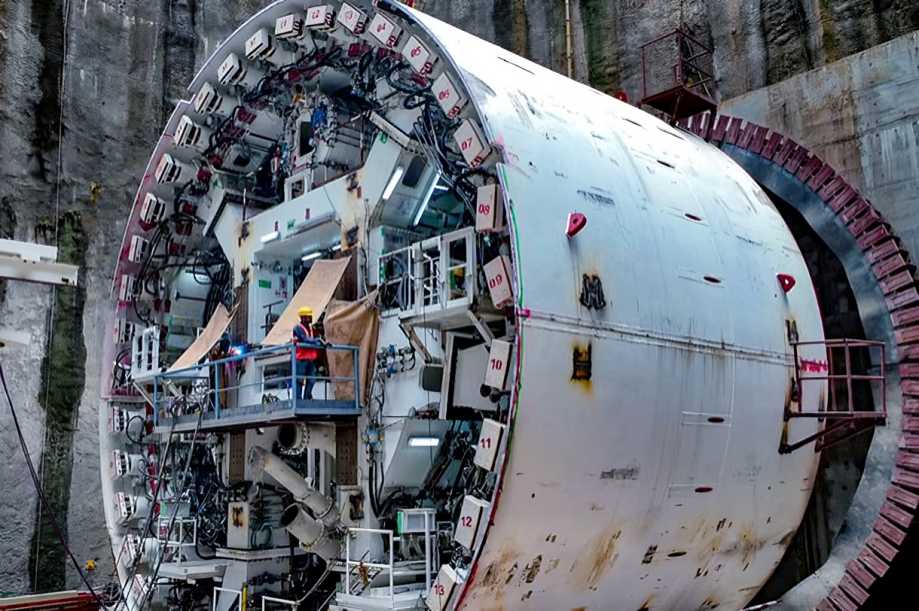
The giant Mixshield TBM has begun tunnelling from Sawli in Ghansoli towards Vikhroli, where it will excavate a 10 km stretch, including a seven-kilometre section beneath Thane Creek.
Designed to handle Mumbai’s complex geological conditions, the TBM is equipped with a 13.6-metre cutterhead and weighs nearly 3,200 tonnes. The advanced machine has been engineered to minimise ground disturbance while ensuring safe and efficient tunnelling.
The development follows the launch of the first TBM, which started excavation from Vikhroli towards Bandra Kurla Complex (BKC) on July 5.
The 21-km underground alignment between BKC and Sawli is considered one of the most technically challenging sections of the Mumbai-Ahmedabad bullet train project. Of the total underground stretch, 16 km will be excavated using two large TBMs, while the remaining five kilometres has already been completed through the New Austrian Tunnelling Method (NATM).
To facilitate the launch of the second TBM, engineers constructed a 39-metre-deep shaft at Sawli. Owing to limited surface space, the machine’s components were lowered into the shaft individually before being assembled underground.
The TBM incorporates several advanced safety systems, including real-time gas monitoring, automatic fire suppression mechanisms and emergency refuge chambers for workers.
Project officials also confirmed that the tunnel has been designed with a comprehensive waterproofing system featuring double-layer EPDM gaskets and hydrophilic seals to prevent water leakage during operations.
Construction activities are being closely monitored through an extensive network of sensors that continuously track ground movement, vibration levels and structural behaviour. The monitoring system is intended to ensure safe tunnelling beneath one of Mumbai’s busiest urban regions while maintaining the structural integrity of surrounding infrastructure.
The latest progress marks another significant step towards the completion of India’s first high-speed rail corridor connecting Mumbai and Ahmedabad.
Source: Swarajya