
Nearly 650 families living in the Bhoiwada Village Swapnaputi Cooperative Housing Society in central Mumbai continue to reside in crumbling transit homes more than two decades after being promised permanent rehabilitation flats, with deteriorating structures posing a serious safety risk during the monsoon.
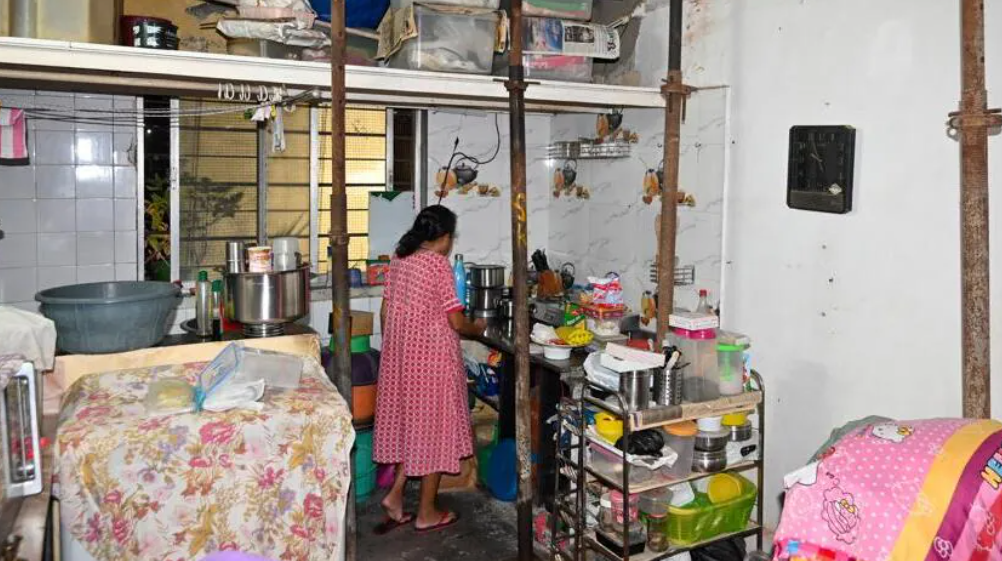
Residents say several flats have developed severe structural damage, forcing authorities to install iron props to support weakening ceilings. Despite these temporary measures, families fear that portions of the buildings could collapse at any time.
Fifty-year-old Lillianette D’Souza, who lives in a 225-sq-ft transit apartment, said she fears the ceiling of her home could give way despite the installation of nearly a dozen iron supports. Similar concerns have been raised by Shubhangi Kajarle, who lives in the apartment directly above and has spent the past 22 years in the transit accommodation.
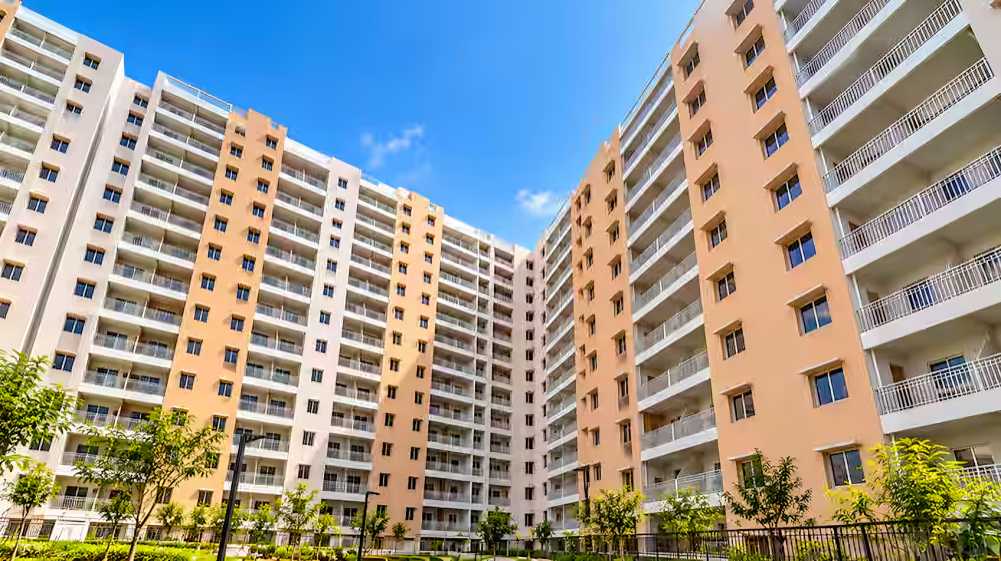
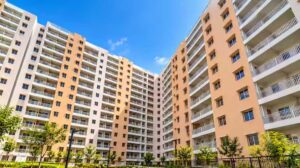
The transit camp was developed in 2004 by Vighnaharta Builders and Projects after securing redevelopment rights from the Brihanmumbai Municipal Corporation (BMC) for the 5.5-acre Bhoiwada village land parcel. Around 800 families were shifted into 225-sq-ft transit flats with the assurance that they would soon receive 500-sq-ft rehabilitation apartments in newly constructed high-rise buildings on the same site.
However, the redevelopment project stalled after construction of a two-wing rehabilitation building was halted midway. The BMC subsequently terminated the developer’s contract, leaving residents stranded in temporary accommodation that has steadily deteriorated over the years.
Pravin Phatak, Secretary of the Bhoiwada Village Swapnaputi Cooperative Housing Society, said residents have been living with uncertainty ever since they were shifted into the transit camp.
Society treasurer Dilip Shinde alleged that the incomplete rehabilitation structure has since been encroached upon and claimed repeated requests to the BMC for action have not yielded results.
According to society member Namdev Bane, around 125 families were later relocated to transit accommodations in Mulund, Kurla and Dharavi, where they too continue to face poor living conditions while awaiting permanent rehabilitation.
The redevelopment dispute has remained tied up in legal proceedings for several years. In 2015, Vighnaharta Builders challenged the BMC’s decision to terminate the contract before the Bombay High Court. An out-of-court settlement was reached in 2022, allowing the developer to resume the project subject to certain conditions.
Society president Tanaji Bagal said the developer later received a Letter of Intent in 2025 permitting the project under the Development Control and Promotion Regulations (DCPR) 2034, subject to depositing over ₹200 crore with the BMC. The developer has challenged the deposit requirement before the Bombay High Court, where the matter remains pending.
Earlier this month, authorities installed iron beams in several transit flats after ceilings showed signs of severe structural distress. A structural audit of the buildings has also been completed, with the report expected shortly. Residents hope the findings will determine whether they can be shifted to safer accommodation while the long-delayed rehabilitation project remains unresolved.
When contacted, the developer’s representative did not respond to queries on responsibility for the deteriorating transit buildings. Additional Municipal Commissioner Avinash Dhakne declined to comment, citing the matter’s pendency before the Bombay High Court.
Source: Hindustan Times