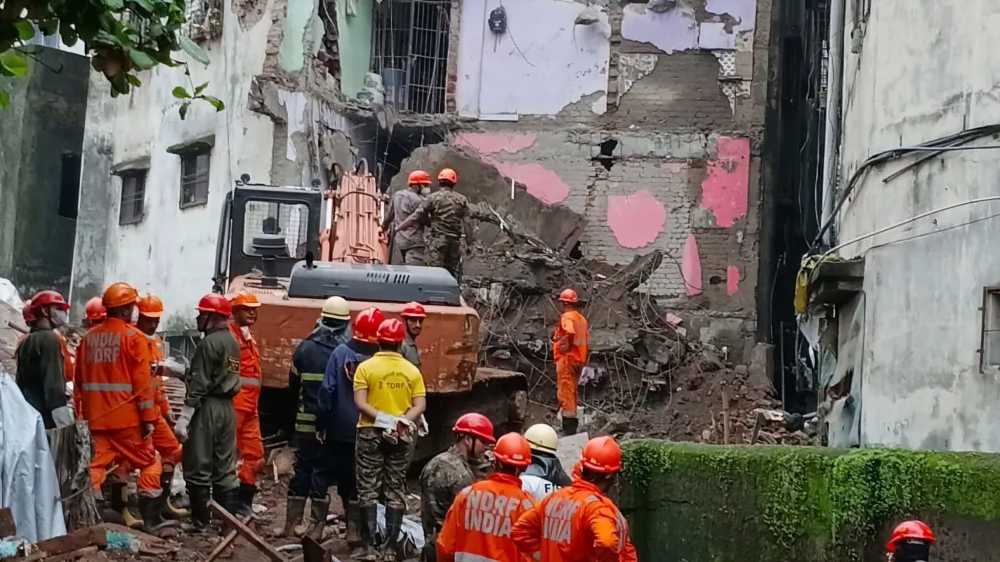

The collapse of a four-storey building in Bhiwandi has once again highlighted the town’s long-standing issues of ageing structures, unauthorised construction and delayed redevelopment. Despite being much smaller than Mumbai, Bhiwandi continues to face a far more severe building safety challenge, with thousands of structures requiring attention.
Located around 50 km north of Mumbai, Bhiwandi has witnessed rapid urban expansion over decades, but much of the growth has taken place without adequate planning and enforcement of construction norms. Ahead of the 2026 monsoon, the Bhiwandi Nizampur City Municipal Corporation (BNCMC) identified 1,790 dangerous buildings across the city. Of these, 227 structures fall under the C1 category, requiring immediate evacuation and demolition.
In comparison, the Brihanmumbai Municipal Corporation (BMC) identified 174 C1 category dangerous buildings in Mumbai this year. While Mumbai has a population of more than 1.25 crore spread across 603 sq km, Bhiwandi has around 7.5 lakh residents within an area of approximately 27 sq km. The disparity reflects the seriousness of the town’s structural safety concerns.
Experts attribute the crisis to Bhiwandi’s transformation from a powerloom centre into one of India’s biggest warehousing hubs. Residential buildings, warehouses and industrial units developed close to each other, often without proper planning or compliance with building regulations.
A large number of these structures are several decades old and have seen limited maintenance. Redevelopment has remained slow due to ownership disputes, the pagdi tenancy system, legal battles and disagreements between landlords and tenants. Even after buildings are declared unsafe, many occupants continue living there due to the lack of affordable alternative housing options.
Illegal construction has further intensified the problem. The Bombay High Court has repeatedly criticised civic authorities in the Mumbai Metropolitan Region for failing to control unauthorised structures. During hearings concerning Bhiwandi, the court questioned the BNCMC’s inaction and described the situation as one of “lawlessness”.
The court also remarked, “The municipal corporation was still in a state of deep slumber”, while questioning why stronger steps were not taken to remove illegal structures.
Every monsoon, the civic body issues notices to residents of dangerous buildings, but evacuation remains difficult as many families struggle to find alternate accommodation.
Bhiwandi has witnessed several deadly building collapses in recent years. In September 2020, the three-storey Jilani Building in Patel Compound collapsed, killing 41 people. The tragedy led the Bombay High Court to initiate a suo motu PIL regarding illegal and dilapidated structures.
In April 2023, an eight-storey godown-cum-residential building at Wardhaman Compound in Valpada, Mankoli, collapsed, resulting in eight deaths and several injuries.
“There are many such buildings in Bhiwandi that have been declared dangerous. While we are trying to rescue those trapped, I would advise people living in such buildings to vacate them immediately,” Bhiwandi Nizampur City Municipal Corporation Mayor Narayan Chaudhary said.
Source: The Indian Express