
Mumbai’s office market witnessed a sharp slowdown in leasing activity during the second quarter of 2026, even as overall demand during the first half of the year remained stronger than in the corresponding period of 2025, according to JLL.
Gross office leasing declined 59.7% quarter-on-quarter to 1.69 million sq ft in Q2. Despite the quarterly dip, leasing activity during H1 2026 stood at 5.88 million sq ft, marking a 17.8% increase over H1 2025. JLL said the moderation was largely due to companies delaying real estate decisions amid uncertainty and limited availability of suitable office space.
The banking, financial services and insurance (BFSI) sector emerged as Mumbai’s biggest demand contributor, accounting for 29.5% of quarterly leasing. Flexible workspace providers followed with a 23.8% share, while IT and ITeS companies contributed 20.3%.
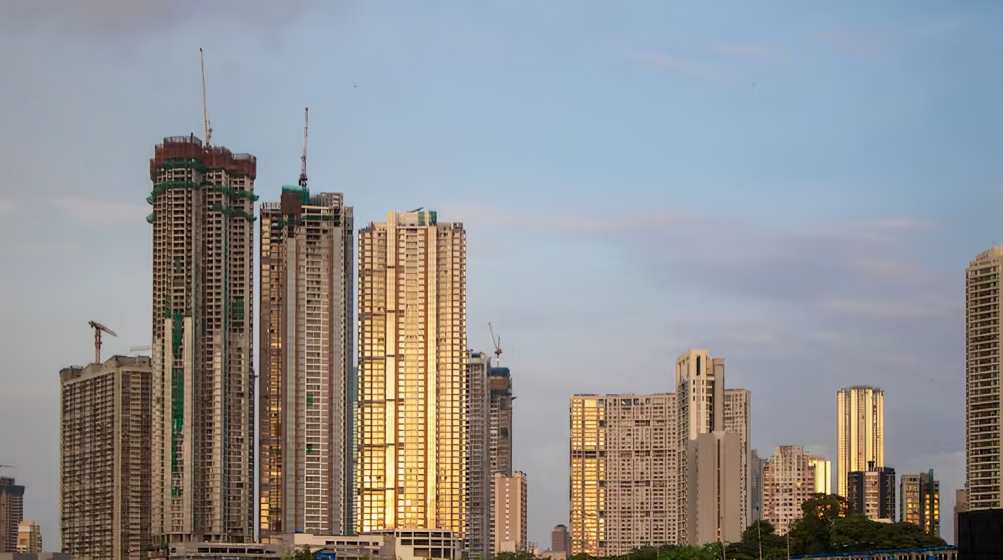
Net absorption remained higher than fresh supply during the quarter. Mumbai added around 1.11 million sq ft of office space, mainly in the Eastern Suburbs and SBD North, taking the city’s overall office stock to 163.8 million sq ft. Vacancy declined by 10 basis points from the previous quarter to 10.8%, marking its lowest level in 16 years.
Limited availability also pushed rents higher. Average gross rentals rose 1% quarter-on-quarter and 3.4% annually. The Eastern Suburbs recorded the strongest quarterly increase at 1.71%, followed by SBD BKC at 1.41% and the Western Suburbs at 1.38%.
JLL noted that capital values continued to rise alongside rentals, improving the appeal of core, value-added and under-construction office assets in major business districts.
The consultancy expects demand to remain supported by substantial pre-commitments in upcoming developments. However, geopolitical uncertainty and the potential impact of AI on business operations and workforce needs could delay some leasing decisions.
JLL projects annual office supply at about 8 million sq ft in the medium term, compared with estimated yearly net absorption of 7.5 million-7.7 million sq ft. BFSI, IT/ITeS, flexible workspaces and consulting firms are expected to remain key demand drivers.
Source: Real Estate Asia