
India’s first high-speed rail project, connecting Mumbai and Ahmedabad, is moving closer to operations nearly a decade after it was announced. The project is expected to begin its first services later this year, with the Surat-Bilimora section being prepared for launch. The entire corridor is targeted for completion by 2030.
The Rs 1.1 lakh crore Mumbai-Ahmedabad High-Speed Rail project is being implemented by the National High Speed Rail Corporation Limited (NHSRCL), with financial assistance from Japan International Cooperation Agency (JICA) and Japanese technological support.
India-made bullet trains
A major development is the planned introduction of domestically manufactured high-speed trainsets. Integral Coach Factory (ICF), Chennai, has awarded BEML Limited an Rs 866.87 crore contract to design, manufacture and commission two eight-coach prototype trains.
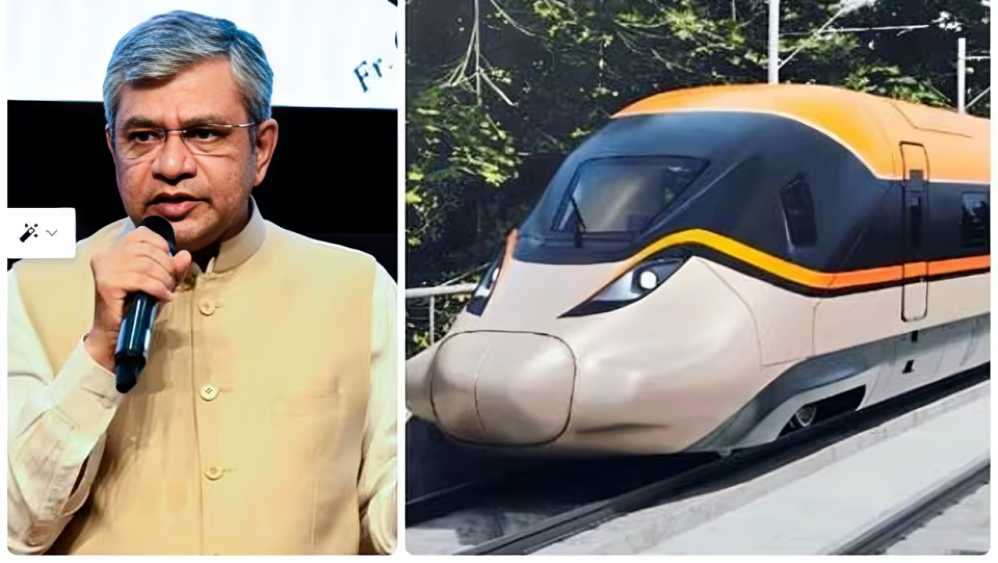
Developed under the codename B-28, the trains are being built at BEML’s dedicated ‘Aditya’ High-Speed Rail Complex in Bengaluru. The trainsets will be capable of reaching speeds of up to 280 kmph.
The proposed trains will feature fully air-conditioned chair cars, reclining and rotatable seats, infotainment systems and dedicated facilities for divyangjan passengers. Each indigenous trainset is expected to cost approximately Rs 390-400 crore.
Designed for India’s climate
Unlike high-speed trains developed primarily for colder regions, India’s indigenous trainsets are being designed to operate in the country’s hot, dusty and monsoon-prone conditions.
The trains will incorporate technologies suited to India’s tropical climate while maintaining international standards for passenger comfort and safety.
The Mumbai-Ahmedabad project has faced delays because of land acquisition, statutory approvals and other implementation challenges. Meanwhile, the government is also planning additional high-speed rail corridors, including Bengaluru-Chennai, Bengaluru-Hyderabad and Bengaluru-Pune-Mumbai.
Railway Minister Ashwini Vaishnaw has said future-generation bullet trains could be developed to operate at speeds of up to 350 kmph, signalling India’s broader ambitions in high-speed rail technology.
Source: Mint