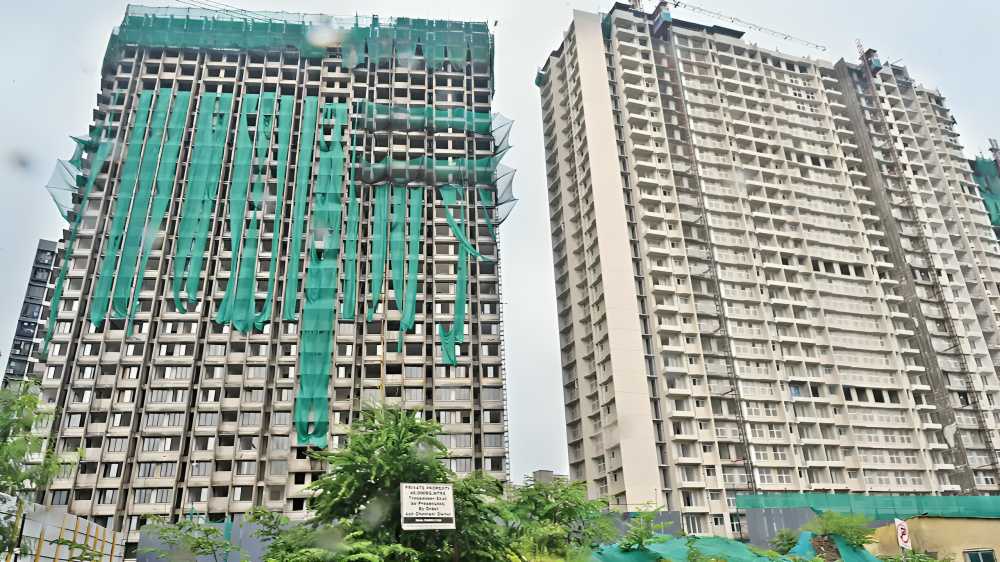

Developers in Mumbai have forfeited Rs 4.25 crore in tree-related deposits between 2022 and May 20, 2026, according to data obtained through an RTI application covering six Brihanmumbai Municipal Corporation (BMC) wards.
Under the civic body’s rules, developers seeking to remove trees for construction are generally required to transplant or replant an equivalent number of trees. A security deposit is collected for this purpose and is refunded after the stipulated plantation or transplantation is completed.
“As per the set rules, when developers buy land and need to remove trees to make way for construction, they are required to replant or transplant the same number of trees that are removed.
When developers buy land and need to remove trees to make way for construction, they must transplant the same number of trees they remove.
An amount starting from Rs 10,000 per tree that can go up to Rs 20,000 to Rs 25,000 per tree, depending on the type, age, and size of the tree, is required to be deposited with the BMC at each ward level. The money is refunded once the required replantation or transplantation is completed,” said an official from the BMC’s garden department.
The RTI response, obtained by Whistleblower’s Foundation founder and activist Jeetendra Ghadge, showed the scale of forfeitures.
“Imagine what the numbers will be if we consider all the wards. While we had demanded data for all wards, only those of six had been provided. The BMC records prescribe a Rs 10,000 security deposit per tree for transplantation, while the deposit for tree cutting is Rs 6000 per tree,” said Ghadge.
Questions Over the Deposit System
Ghadge said the financial amount involved may not always be sufficient to discourage tree removal during large development projects.
“A typical plot may have only a handful of trees. Even if four trees are removed, the deposit would work out to a maximum of roughly R1 lakh – an amount that may not act as a significant deterrent in a large development project. A mature tree is not an object that can be replaced overnight. It takes years – and often decades – to develop a substantial canopy and provide the ecological benefits associated with a mature urban tree. Its removal can mean the loss of shade, cooling, carbon absorption, storm-water interception and habitat. Developers are getting away by paying R10,000 per tree; the BMC should stop this deposit system and force the developers to make sure that they plant and care for the transplanted tree,” said Ghadge.
Environmentalist Adityanath Das said the concern extends beyond the financial aspect.
“The bigger concern is what happens to the trees. In the past, there have been concerns over trees being cut within Mumbai’s limits and compensatory plantation being carried out outside the city. Now, if developers can effectively choose to forfeit the deposit instead of completing the mandated replacement, even that compensatory measure risks becoming meaningless,” said environmentalist Adityanath Das.
Calls for Stronger Conservation Measures
Tree expert and conservationist Dr Nagesh Tekale also questioned whether monetary deposits can adequately compensate for the ecological value of mature trees.
“A tree that has stood on a Mumbai plot for decades cannot simply be replaced by money deposited with the civic body. Nor can a sapling planted elsewhere immediately compensate for the loss of a mature tree that provided shade, absorbed pollutants and helped regulate the city’s increasingly harsh urban environment. Increasing the deposit amount and charging high monetary penalties can be quick and immediate solutions, but, ideally, this should be the last resort.
Tekale suggested dedicated land parcels for transplantation and replantation, citing a model used in Bali, where such green spaces have also become visitor attractions. He also proposed making the creation of such sites part of developers’ CSR responsibilities.
Source: Mid-day