
A recent statement by Mumbai Municipal Commissioner comparing the city’s green-space availability with New York and London has renewed debate over how Mumbai measures and provides public open spaces.
On September 13, the Municipal Commissioner said: “…given the kind of land area which we have, we are more than enough. We are better than New York and London, if you see the per capita availability of green space. But yes, we can do better.”
However, comparisons depend heavily on how cities define “green space” and “open space”, as well as the geographical areas being compared. Using the administrative boundaries of Greater Mumbai, Greater London and New York City, Mumbai has the smallest land area but the largest population of the three.
Mumbai’s 2012 land-use data indicates that 31.5% of the city is classified as green space. But much of this comprises forests, mangroves, water bodies and other natural areas that are not necessarily available for recreation. Only 3.7% is classified as open space, including playgrounds, beaches, gymkhanas and swimming pools.
By comparison, developed open-space shares are considerably higher in New York and London. Calculations cited in the analysis suggest that Mumbai has about 10.5 sq. m. of green space and just 1.22 sq. m. of planned open space per person, compared with 17.5 sq m and 11.9 sq. m. respectively in New York, and 81.3 sq. m. and 25.8 sq. m. in London.
An MMREIS study found that only 0.84 sq. m. per capita was actually freely accessible to the public in Mumbai.
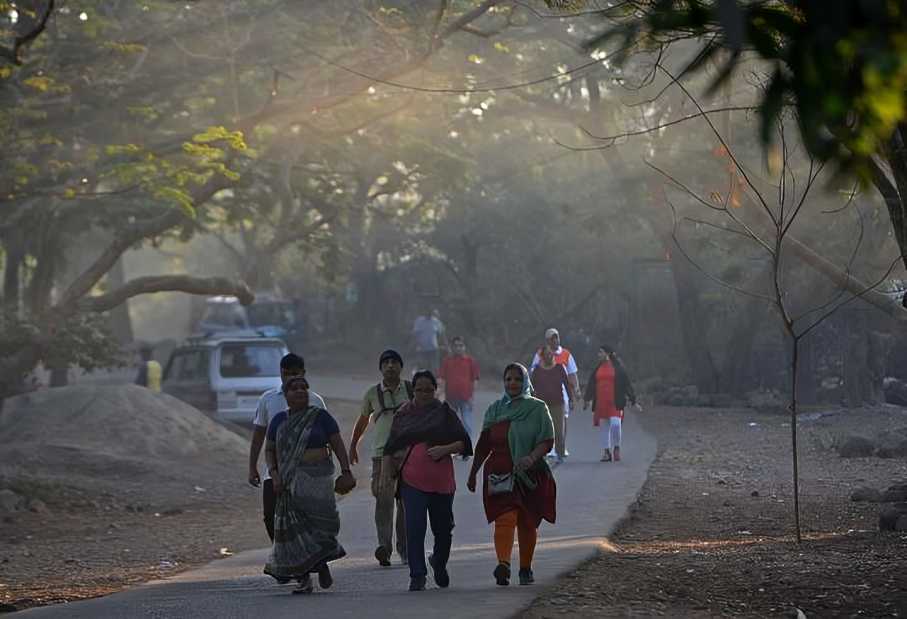
The larger issue, therefore, is not simply the amount of land designated as green or open space, but whether residents can realistically access it. Changes in development regulations, redevelopment practices and private control over certain spaces can further reduce publicly available areas.
Mumbai’s development plan seeks to increase open space to 2 sq. m. per person in the Island City and 6 sq m in the suburbs, but questions remain over implementation.
Ultimately, per-capita averages can obscure large differences between neighbourhoods and income groups. As Raoul Vanegiem put it, “Mumbaikars don’t live somewhere in the city, they live somewhere in the hierarchy.”
Source: Mumbai Mirror