
The Maharashtra government has granted prior approval to the Brihanmumbai Municipal Corporation’s (BMC) proposed Pise-Panjrapur dedicated water tunnel, clearing an important step towards upgrading Mumbai’s water transmission network.
The Urban Development Department issued the required Government Resolution (GR) on Monday, citing the ageing infrastructure and severe space constraints affecting the existing water-main corridor as key reasons for the proposed underground link.
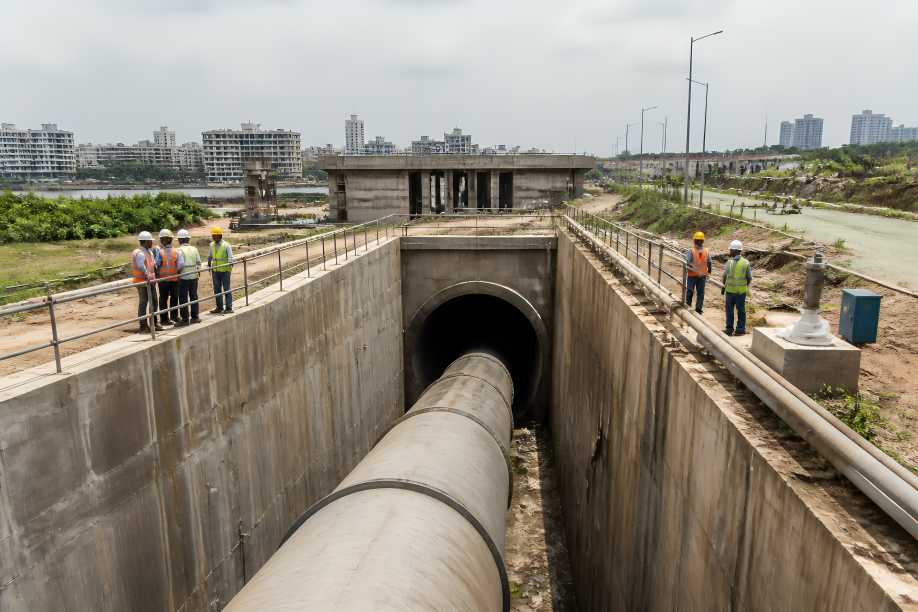
At present, water transported from Bhatsa Dam to Pise Waterworks is carried to the Panjrapur Water Treatment Plant through open channels. The existing system is vulnerable to leakage, transmission losses and possible contamination from external sources. The proposed tunnel is expected to create a protected, enclosed route for carrying water directly to Panjrapur.
Underground Link to Strengthen Water Transmission
The new tunnel is intended to reduce water losses and improve the reliability of transmission, particularly during periods of heavy rainfall and emergency situations.
Before construction begins, the BMC has been directed to conduct a detailed geological investigation of the proposed alignment. The survey will determine underground soil and rock conditions and help authorities select an appropriate Tunnel Boring Machine (TBM) for the excavation work.
The state government has also instructed the civic body to ensure that tunnelling activities do not threaten nearby residential or commercial structures.
Clearances Required Before Construction
The BMC will need to obtain all necessary environmental and technical approvals from the relevant Central and Maharashtra government departments before work can commence.
“The underground tunnel will protect the water supply from external pollution and pilferage, while reducing losses from ageing and leaky channels. It will also help ensure uninterrupted transmission to the Panjrapur Water Treatment Plant during the monsoon and emergencies,” said a senior civic official.
The proposed tunnel is being viewed as a long-term infrastructure intervention to improve the security and resilience of Mumbai’s water supply system.
With the state government’s preliminary approval now in place, the project can move towards its next stages, including detailed technical studies, preparation of tender documents and eventual appointment of an agency for construction.
The shift from an open-channel transmission route to an underground tunnel is expected to provide a more secure pathway for bulk water movement while addressing some of the limitations of the existing ageing network.
The project therefore represents an important proposed upgrade to one of Mumbai’s critical water-supply links, subject to completion of surveys, statutory clearances and subsequent implementation procedures.
Source: The Free Press Journal
Pic Credit: Urban Acres