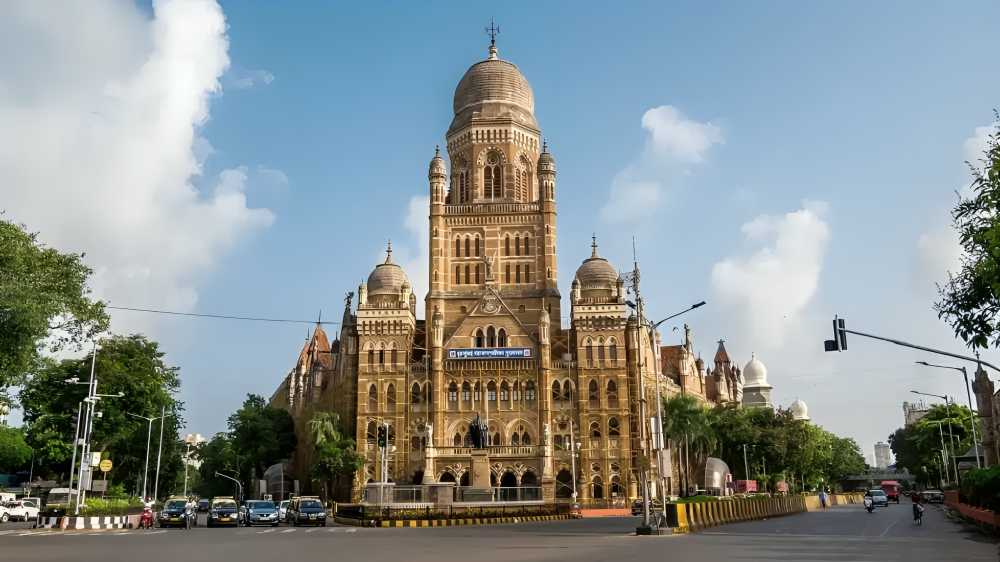

The Brihanmumbai Municipal Corporation (BMC) has approved the appointment of IIT-Roorkee to independently review the design and structural plans for a proposed new reservoir at Malabar Hill, following earlier recommendations to repair the existing facility.
The BMC Standing Committee cleared the proposal on Wednesday. Under the arrangement, IIT-Roorkee will examine the structural designs and technical documents prepared by the civic body’s project consultant, Pednekar Associates, for a professional fee of Rs 22 lakh.
The latest plan also significantly reduces the proposed loss of trees at the site. According to Additional Municipal Commissioner Vipin Sharma, the number of trees earmarked for removal has been brought down from 389 to 82, allowing 307 trees to be saved.
Existing Reservoir Could Be Repaired
The revised approach follows an earlier IIT-Roorkee assessment that found the existing Malabar Hill reservoir could be repaired rather than completely demolished and reconstructed. The recommendation could reduce the environmental impact associated with rebuilding the ageing structure.
However, the institute also suggested developing an alternative reservoir because repairs to the existing tank cannot be undertaken while it remains operational for water storage and distribution.
To address this constraint, the BMC explored a new design involving a three-tier reservoir with a capacity of 52 million litres on the western side of the existing facility. The proposed site currently includes staff quarters and a pumping station.
The original reconstruction proposal had faced objections from residents and environmental activists, particularly over the number of trees that would have to be felled. The modified design seeks to reduce that impact while retaining the additional storage requirement.
138-Year-Old Water Infrastructure
The existing Malabar Hill reservoir was constructed in 1887 and supplies water to several parts of South Mumbai through 19 distribution systems.
The reservoir was originally built with three compartments — 1A, 1B and 2A — before two more, 1C and 2B, were added in 1907. In 1916, the facility was converted into a storage reservoir.
Given the technical complexity of combining the existing structure with a new reservoir, the BMC has opted for an independent technical review before proceeding with the project.
IIT-Roorkee’s assessment is expected to help the civic body finalise the structural design while balancing water-supply requirements, engineering considerations and the preservation of trees at the Malabar Hill site.
Source: The Free Press Journal