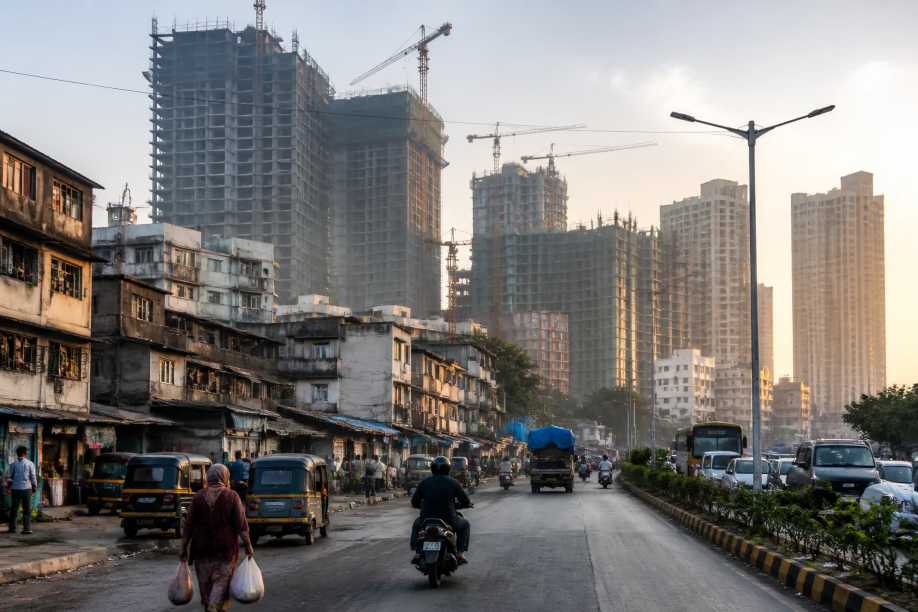

Maharashtra’s plan to potentially add around 30 lakh homes across the Mumbai Metropolitan Region (MMR) over the next 15 to 20 years is placing cluster redevelopment at the centre of the region’s future housing strategy.
Deputy Chief Minister Eknath Shinde outlined the projection while attending the groundbreaking ceremony of the Siddheshwar Nagar Cluster Redevelopment Scheme in Thane. He linked the proposed housing expansion with employment opportunities, walkable neighbourhoods and wider regional development.
The projected housing supply is expected to emerge through government-backed initiatives, including cluster redevelopment and projects undertaken by the Slum Rehabilitation Authority (SRA), rather than through a single large township. This approach would involve restructuring existing neighbourhoods while accommodating higher residential density and rehabilitating current occupants.
The government is also looking to expand cluster redevelopment beyond Mumbai and Thane. Mira-Bhayandar, Bhiwandi, Kalyan-Dombivli and Ulhasnagar have been identified for potential implementation, reflecting the growing importance of peripheral MMR cities in meeting regional housing demand.
The Siddheshwar Nagar project offers a more immediate example of this strategy. Described as Thane’s second cluster redevelopment initiative after Kisan Nagar, the project is planned across approximately 20 hectares and is expected to benefit more than 6,000 families.
Shinde has also proposed incorporating a “walk-to-work” approach into future developments by providing commercial spaces within redevelopment projects. The objective is to bring employment closer to residential areas and reduce dependence on long-distance commuting.
Changes to the Unified Development Control and Promotion Regulations are expected to facilitate faster execution of cluster and SRA projects, although details of the proposed regulatory changes and their implementation have not been provided.
The scale of the housing ambition also raises questions around infrastructure capacity. Additional homes will require corresponding expansion of roads, public transport, water supply, drainage, healthcare, schools and open spaces.
The government is additionally considering incentive FSI for iconic structures and affordable additional living space for existing residents. The success of the broader plan will ultimately depend on how effectively housing delivery, rehabilitation, employment, infrastructure and civic amenities are coordinated across the MMR.
Source: Urban Acres