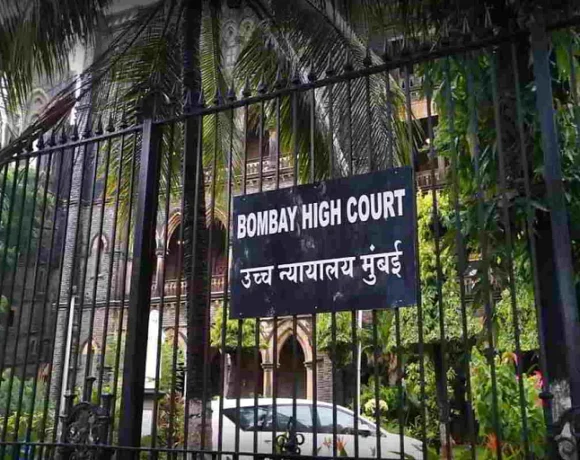

The Bombay High Court has ruled that recreational open spaces (ROS) in certain Navi Mumbai redevelopment projects can be provided on podium levels, provided they remain completely open to the sky.
A bench of Justices Ajey Gadkari and Kamal Khata dismissed a public interest litigation challenging concessions granted by the Navi Mumbai Municipal Corporation (NMMC) to five housing societies.
The PIL was filed by Navi Mumbai resident Sandeep Thakur, who argued that mandatory recreational open spaces should be located at ground level. He contended that podium-based spaces could push residents towards public recreational facilities in the surrounding neighbourhoods, potentially increasing pressure on them.
The court, however, held that the Unified Development Control and Promotion Regulations (UDCPR) permit ROS to be provided on podiums in appropriate circumstances. Referring to the applicable provisions, the bench said, “100% ROS can be provided on podium level, provided it is entirely open to sky.”
The court observed that the regulations do not specifically require recreational open spaces to be situated on “natural ground”, “mother earth”, “virgin soil” or an “at-grade location”. It said additional conditions could not be read into the regulations when they were not expressly prescribed.
The bench also upheld NMMC’s authority to grant relaxations under Regulation 2.4, while stressing that such powers must be exercised on a case-to-case basis. The housing societies had cited constraints including height restrictions, road setbacks, rehabilitation obligations and mandatory parking requirements.
The petitioner had not provided material demonstrating that the constraints cited by the societies were fabricated or incorrect, the court noted.
The bench further rejected the argument that Navi Mumbai-specific provisions under the UDCPR completely supersede general regulations. It held that both sets of provisions should be interpreted harmoniously, with general regulations continuing to apply where no conflict exists.
On concerns that podium-level ROS could increase the use of public recreational facilities, the court found no supporting factual material. “This narrative of the Petitioner is only a bare assertion, without any substantiation thereof,” it observed.
At the same time, the court underlined the importance of transparency in civic planning decisions. “The State Authorities must be transparent in their functions. They cannot play hide and seek with the public,” the bench said, while also suggesting stronger public participation mechanisms for local planning matters.
Source: The Free Press Journal