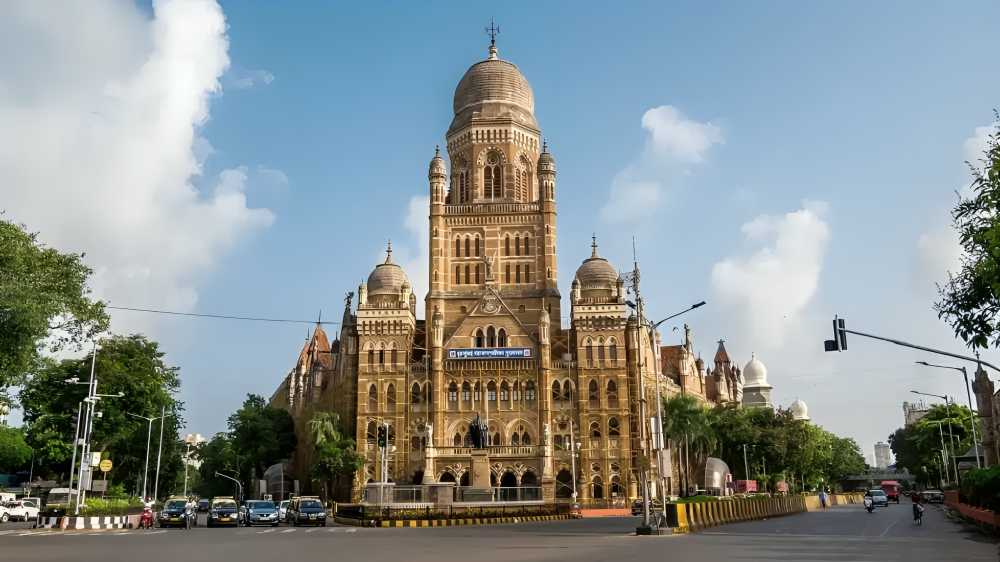

The Brihanmumbai Municipal Corporation (BMC) has proposed a revamped trenching policy aimed at preventing repeated road excavation and improving accountability among agencies undertaking underground utility works across Mumbai.
The proposed Comprehensive Trenching and Reinstatement Policy 2026 introduces a five-times penalty for unauthorised digging, mandatory GIS-based mapping of underground utilities and longer defect-liability periods for roads restored after trenching. The proposal is expected to be placed before the Standing Committee for consideration.
Under the draft framework, the reinstatement charge for utility work carried out alongside ongoing road construction would be reduced from Rs 6,711 to Rs 2,300 per metre. The BMC said the lower rate is intended to encourage agencies to coordinate their utility projects with road construction and avoid cutting into newly completed roads.
Fivefold Penalty for Unauthorised Digging
Agencies excavating roads without the required permission would face a penalty equivalent to five times the applicable reinstatement fee. Trenching would also be allowed only during designated time periods. Work outside these windows would require approval from the municipal commissioner and attract an additional 10% reinstatement charge.
Emergency repairs could be undertaken through an online application after coordination with civic officials. Assistant commissioners would have to report such work to the municipal commissioner within 24 hours.
The policy also seeks greater use of existing underground utility ducts. Low-voltage electrical and telecommunications agencies laying cables up to 100mm would be required to use available ducts. Where ducts are absent, agencies would either construct them or request the Roads Department to undertake the work.
Road Defects to Remain Agency Responsibility
The proposed rules extend the defect-liability period to 10 years for cement-concrete roads and five years for non-concrete roads, compared with the existing three-year period for all surfaces.
Diamond cutters would be mandatory for trenching on concrete roads, while reinstatement charges would be calculated according to the actual trench dimensions.
The BMC also plans to replace the existing 16 road-surface categories with two broad classifications: cement-concrete and non-cement-concrete. A common access charge of Rs 20 per metre, plus GST, has also been proposed.
Mandatory Digital Utility Mapping
All underground utility works would have to be recorded through a GIS-based Web Map Service. Agencies would need to update the digital records within 30 days of completing their work. Those failing to submit the required information could be denied permission for further trenching.
For horizontal directional drilling, which reduces surface excavation, a security deposit of Rs 15 lakh per km has been proposed. Regular trenching would require a deposit equivalent to 50% of the applicable reinstatement fee, subject to prescribed conditions.
The proposed framework is intended to improve coordination, reduce repeated road cuts and strengthen long-term accountability for Mumbai’s road infrastructure.
Source: The Free Press Journal