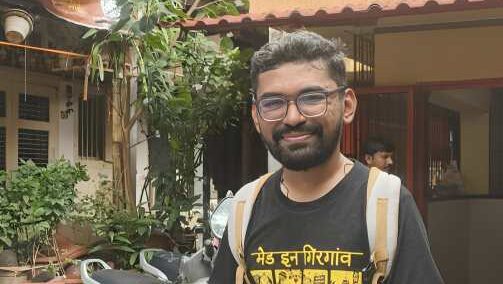

Mumbai’s historic chawls are facing the threat of disappearance as redevelopment replaces traditional neighbourhoods with towering residential buildings. Architect and urban designer Mihir Vaidya, a 26-year-old Girgaon resident, is working to preserve their architectural character and social history through detailed illustrations, maps and guided heritage walks.
American anthropologist Maura Finkelstein, in her 2011 essay The Chronotope of the Chawl: A Ghost Story in Three Acts, explored how these buildings preserve the memory of Mumbai’s industrial past. Chawls expanded during Bombay’s growth as a cotton-trading and textile hub following the opening of the Suez Canal in 1869. Designed to accommodate migrant families, they featured individual rooms, shared toilets and closely connected communities.
Born and raised in Girgaon’s historic Datta Mandir Wadi, Vaidya studied architecture in Mumbai before earning a gold medal at the School of Planning and Architecture in New Delhi. He now works with infrastructure consultancy Surbana Jurong while documenting the neighbourhood’s distinctive built environment through his Instagram page, @Chawls.of.Girgaon.
“For Girgaonkars, our life was moulded by the neighbourhood fabric. Chawls provided not just the means to live social, interactive lives but also allowed one to cut off from the noise, in their small nooks and crannies, and staircase blocks. I believe my illustrations, street elevations, maps visually communicate this vibrant way of life characterised by open doors, eyes on the street, which I wish everyone could feel and experience.”
Vaidya also argues that redevelopment should retain the community-oriented features of traditional housing. He points out that parking podiums and blank walls in modern towers often replace the active corridors and street-facing spaces that once encouraged interaction.
“These chawls are ordinary-looking buildings, but with extraordinary stories,” he says, emphasising the importance of documenting their transformation.
Although many chawls lack formal heritage protection, their courtyards have hosted political gatherings and community events, while their neighbourhoods have nurtured influential personalities and businesses. Through digital storytelling and heritage walks, Vaidya hopes to ensure these architectural and social legacies remain part of Mumbai’s evolving identity.
Source: Mumbai Mirror